
What should you know about cystoscopy process?
Short answer
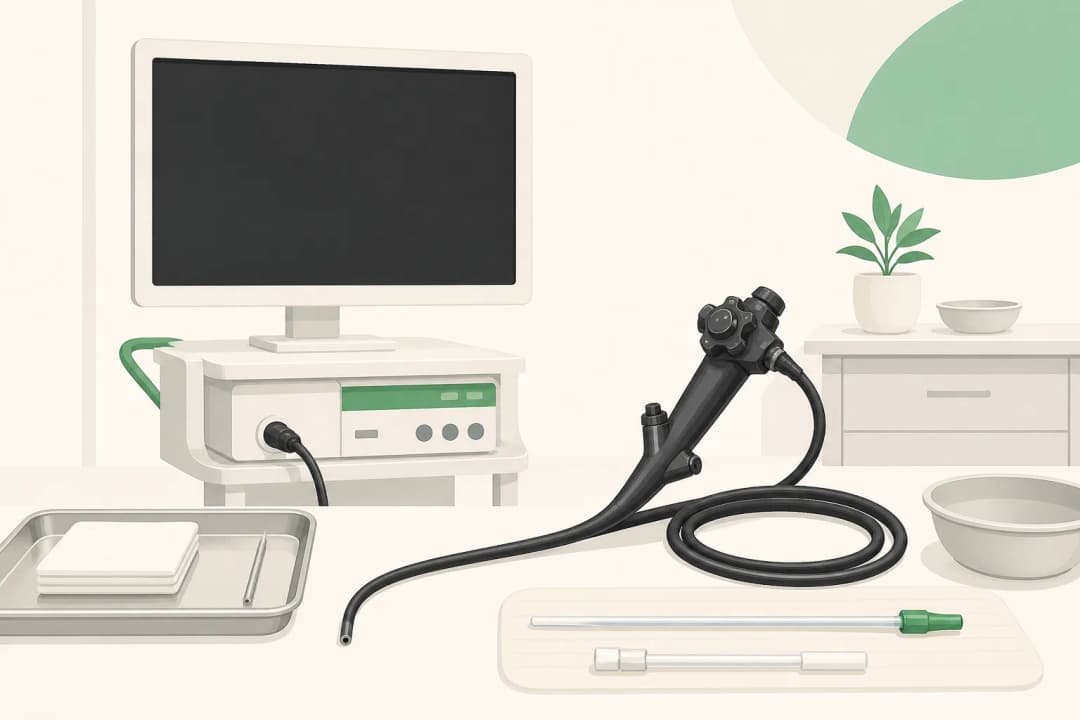
Cystoscopy uses a thin viewing instrument passed through the urethra to inspect the bladder lining.
This answers one question. It is not a diagnosis and does not replace an assessment by a licensed doctor.
At a glance
- Route
- The cystoscope enters through the urethra; no skin incision is needed for a routine examination.
- What it shows
- The instrument lets the clinician directly view the urethra and bladder lining.
- Possible addition
- A biopsy or another planned procedure may be performed through the cystoscope.
The process at a glance
The clinician cleans the opening of the urethra, applies numbing gel or gives anaesthesia when planned, and gently advances the cystoscope into the bladder. Sterile fluid may fill the bladder so its inner surface can be seen clearly. The clinician may take a small tissue sample or perform another planned procedure through the instrument.
What happens during the examination
A flexible cystoscope is often used for an examination with local numbing gel, while a rigid instrument may be chosen when treatment or a larger tissue sample is needed. You may feel pressure, an urge to pass urine, or brief discomfort as the bladder fills. Staff can explain each stage and pause if you need support.
Findings may be described immediately when the examination is visual only. A biopsy goes to a laboratory, so its report comes later and is discussed separately.
Preparing and recovering
Follow the clinic's instructions about eating, drinking, regular medicines, and transport home because these depend on the type of anaesthesia. Tell the team about blood-thinning medicines, allergies, pregnancy, urinary infection symptoms, and previous reactions to anaesthesia. Do not change prescribed medicine unless the treating team directs you.
Afterward, drink fluids if your care team says this is suitable. Mild burning, urinary frequency, and lightly blood-stained urine can occur for a short time. Use only the pain relief recommended for you and follow any restrictions given after sedation or a biopsy.
When to seek medical care
Contact the treating service promptly if burning or bleeding is worsening rather than settling, or if you develop fever, chills, cloudy or foul-smelling urine. Seek urgent care if you cannot pass urine, have heavy bleeding or clots, develop severe lower abdominal or back pain, or feel acutely unwell.
Questions to ask before the test
Ask whether the cystoscope will be flexible or rigid, what pain control or anaesthesia is planned, and whether a biopsy might be taken. Confirm which medicines to take, whether you need someone to drive you home, when normal activities can resume, and how visual findings and laboratory results will be communicated.
Questions people ask
Will I be awake during cystoscopy?
Many flexible examinations use local numbing gel while you remain awake. Sedation or general anaesthesia may be used for some rigid or operative procedures; your team should tell you what is planned.
Is blood in the urine expected afterward?
A small amount of blood-staining can occur briefly, especially after a biopsy. Heavy bleeding, clots, inability to urinate, or bleeding that worsens needs prompt medical advice.
Related
Related reading
Keep reading
Cancer care in the UAE
Hospitals & Medical Centers in Abu Dhabi
Most UAE cancer care is delivered inside hospital services rather than by standalone oncology clinics, so these are licensed hospitals & medical centers listed in Abu Dhabi. Confirm the specific cancer service exists before you travel, and know that asking for a second opinion is routine.
Ahalia Hospital Musaffah Building - Musaffah - Musaffah Industrial - Abu Dhabi - United Arab Emirates
Accepts: Daman, Thiqa, AXA, Cigna +26 more
Al Ruwais Industrial City - Abu Dhabi - United Arab Emirates
Accepts: Daman, Thiqa, AXA, Cigna +30 more
Abu Dhabi, Abu Dhabi
Accepts: Daman, Thiqa, AXA, Cigna +30 more
Second opinions are routine in cancer care and asking for one does not affect your treatment. How to arrange a second opinion in the UAE.
Ordered by verification status and how complete each clinic's public record is, then alphabetically. This is a directory listing, not a ranking — Zavis does not rate or recommend providers.
A factual listing drawn from the DHA, DOH and MOHAP licence registers. It is not a referral, an endorsement, or advice that any of these providers is right for you.
Medical disclaimer. This page is general health information, not medical advice, and it cannot diagnose you. Always consult a licensed healthcare provider about your own symptoms and treatment. In an emergency in the UAE, call 998 for an ambulance.