
What happens during a cystoscopy procedure
Short answer
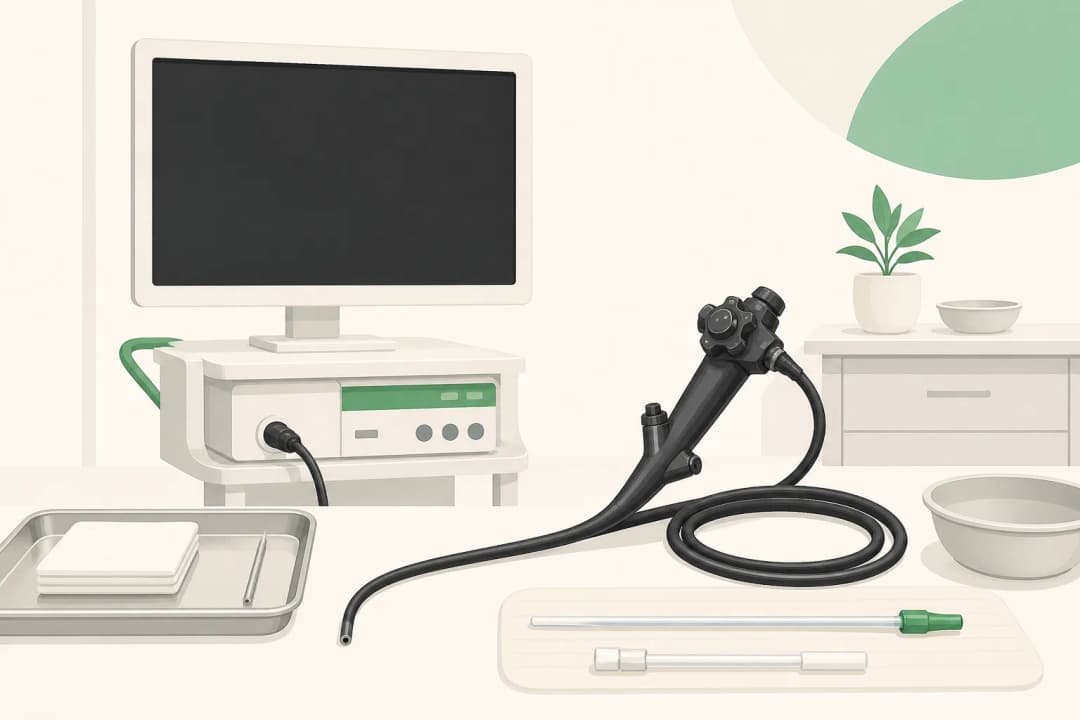
During cystoscopy, a clinician passes a slender camera through the urethra to inspect the bladder and, when needed, collect tissue or carry out treatment.
This answers one question. It is not a diagnosis and does not replace an assessment by a licensed doctor.
At a glance
- Viewed areas
- Urethra and inner bladder surface
- Scope options
- Flexible for many examinations; rigid when instrument access is needed
- Anaesthesia
- Chosen according to the planned procedure and individual needs
Procedure at a glance
A flexible scope is commonly used for inspection with local anaesthetic gel. A rigid scope provides a working channel for instruments and is often paired with sedation, spinal anaesthesia, or general anaesthesia.
From start to finish
You change into suitable clothing, empty your bladder if requested, and lie on an examination or operating table. The team cleans the urinary opening and applies anaesthetic gel or gives the planned anaesthesia. The scope then moves gently along the urethra while sterile fluid expands the bladder for a clear view.
The clinician examines the lining and ureter openings. Any planned washings, biopsy, removal, or other treatment can then be performed. What you remember and how long you remain in recovery depend on the anaesthesia and the work carried out.
Before and after the procedure
Check whether you must fast and whether your usual medicines should be adjusted. Give the team an accurate list of medicines and supplements, especially blood thinners, and mention allergies, pregnancy, urinary infection symptoms, and past anaesthesia problems. Arrange an escort when sedation or general anaesthesia is planned.
Brief burning, frequency, urgency, or lightly blood-stained urine may follow. Drink as directed, take the recommended pain relief, and avoid driving or demanding activity until the discharge instructions permit it. Keep any appointment for biopsy results even if you feel well.
Warning signs after cystoscopy
Get medical advice promptly for fever, chills, worsening pain, foul-smelling urine, increasing bleeding, or clots. An inability to urinate, heavy bleeding, faintness, confusion, severe abdominal pain, or breathing difficulty after anaesthesia warrants urgent assessment. Use the after-hours number supplied by the unit or attend an emergency service if help is not quickly available.
Questions that clarify your plan
Ask which type of scope and anaesthesia will be used, whether tissue may be removed, and what would change the procedure once it begins. Clarify medicine restrictions, expected urinary symptoms, activity limits, result timing, and the correct contact for complications.
Questions people ask
Is an incision made for cystoscopy?
The cystoscope normally reaches the bladder through the natural urinary opening, so examining the bladder does not usually require a skin incision.
Will I receive the result immediately?
The clinician may explain what was seen soon afterward. If cells or tissue were collected, the complete interpretation follows laboratory examination.
Related
Related reading
Keep reading
Cancer care in the UAE
Hospitals & Medical Centers in Abu Dhabi
Most UAE cancer care is delivered inside hospital services rather than by standalone oncology clinics, so these are licensed hospitals & medical centers listed in Abu Dhabi. Confirm the specific cancer service exists before you travel, and know that asking for a second opinion is routine.
Ahalia Hospital Musaffah Building - Musaffah - Musaffah Industrial - Abu Dhabi - United Arab Emirates
Accepts: Daman, Thiqa, AXA, Cigna +26 more
Al Ruwais Industrial City - Abu Dhabi - United Arab Emirates
Accepts: Daman, Thiqa, AXA, Cigna +30 more
Abu Dhabi, Abu Dhabi
Accepts: Daman, Thiqa, AXA, Cigna +30 more
Second opinions are routine in cancer care and asking for one does not affect your treatment. How to arrange a second opinion in the UAE.
Ordered by verification status and how complete each clinic's public record is, then alphabetically. This is a directory listing, not a ranking — Zavis does not rate or recommend providers.
A factual listing drawn from the DHA, DOH and MOHAP licence registers. It is not a referral, an endorsement, or advice that any of these providers is right for you.
Medical disclaimer. This page is general health information, not medical advice, and it cannot diagnose you. Always consult a licensed healthcare provider about your own symptoms and treatment. In an emergency in the UAE, call 998 for an ambulance.