
Pediatric cystoscopy: a guide for families
Short answer
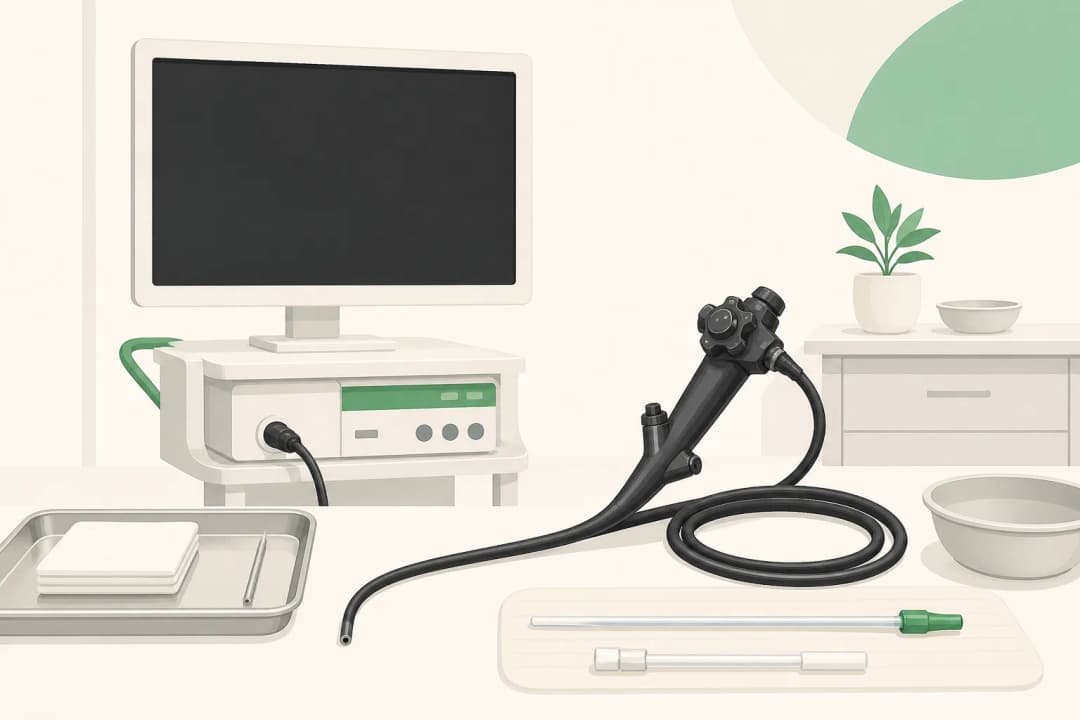
Pediatric cystoscopy lets a specialist examine a child's urethra and bladder with a small camera, usually with anaesthesia chosen for comfort and stillness.
This answers one question. It is not a diagnosis and does not replace an assessment by a licensed doctor.
At a glance
- Route
- Through the urinary opening, usually without a skin incision
- Comfort plan
- Matched to the child's age, health, and procedure
- Home check
- Comfort, alertness, drinking, and urine output
A clear overview for families
The specialist may investigate urinary symptoms, an anatomical concern, or an abnormal imaging result, and may take a sample or perform a small treatment if this was discussed beforehand.
What your child may experience
A narrow cystoscope passes through the urinary opening into the bladder, so no skin incision is usually required. Sterile fluid opens the bladder for viewing. The approach, instrument size, and anaesthesia plan are selected for the child's age, health, and purpose of the examination.
After waking, a child may feel sleepy, need to urinate more often, or notice brief stinging and lightly blood-tinged urine. The team will explain what is expected for the particular procedure and whether a urinary catheter remains in place.
Helping your child prepare and recover
Follow the anaesthesia fasting instructions exactly and tell the team about medicines, allergies, recent fever, cough, vomiting, or urinary symptoms. Use simple, honest language: explain that the team will help the child sleep or stay comfortable and that a parent or caregiver will return as soon as the unit allows.
At home, offer fluids and food according to the discharge plan, give only recommended medicines, and encourage quiet activity. Watch urine output rather than relying only on whether the child says it hurts. Keep the hospital contact details nearby overnight.
When your child needs medical care
Contact the pediatric or urology service for fever, chills, worsening tummy or back pain, repeated vomiting, increasing bleeding, clots, foul-smelling urine, or pain that is not controlled by the advised medicine. Seek urgent assessment if the child cannot pass urine, is unusually difficult to wake, has breathing trouble, or has heavy bleeding.
Questions parents and caregivers can ask
Confirm why cystoscopy is recommended, which anaesthesia will be used, whether sampling or treatment is possible, and how results will be shared. Ask when school, sports, swimming, and bathing can resume and who should be called outside clinic hours.
Questions people ask
Will my child be awake during cystoscopy?
Many children receive general anaesthesia, but the plan varies with age, health, and the intended procedure. The anaesthesia team will explain the chosen approach.
How should I explain cystoscopy to my child?
Use short, truthful phrases suited to the child's age. Focus on what the child will see and feel before sleep, and avoid promising that nothing will feel uncomfortable afterward.
Related
Related reading
Keep reading
Cancer care in the UAE
Hospitals & Medical Centers in Abu Dhabi
Most UAE cancer care is delivered inside hospital services rather than by standalone oncology clinics, so these are licensed hospitals & medical centers listed in Abu Dhabi. Confirm the specific cancer service exists before you travel, and know that asking for a second opinion is routine.
Ahalia Hospital Musaffah Building - Musaffah - Musaffah Industrial - Abu Dhabi - United Arab Emirates
Accepts: Daman, Thiqa, AXA, Cigna +26 more
Al Ruwais Industrial City - Abu Dhabi - United Arab Emirates
Accepts: Daman, Thiqa, AXA, Cigna +30 more
Abu Dhabi, Abu Dhabi
Accepts: Daman, Thiqa, AXA, Cigna +30 more
Second opinions are routine in cancer care and asking for one does not affect your treatment. How to arrange a second opinion in the UAE.
Ordered by verification status and how complete each clinic's public record is, then alphabetically. This is a directory listing, not a ranking — Zavis does not rate or recommend providers.
A factual listing drawn from the DHA, DOH and MOHAP licence registers. It is not a referral, an endorsement, or advice that any of these providers is right for you.
Medical disclaimer. This page is general health information, not medical advice, and it cannot diagnose you. Always consult a licensed healthcare provider about your own symptoms and treatment. In an emergency in the UAE, call 998 for an ambulance.