
Cystoscopy in Men and the Prostate
Short answer
Cystoscopy examines the urethra and bladder, while also showing whether the prostate is narrowing the urinary passage.
This answers one question. It is not a diagnosis and does not replace an assessment by a licensed doctor.
At a glance
- Route
- The scope travels through the urethra into the bladder.
- Prostate relationship
- The scope passes through the urethral segment surrounded by the prostate.
- Possible finding
- The view may show narrowing of the urinary channel.
The short answer
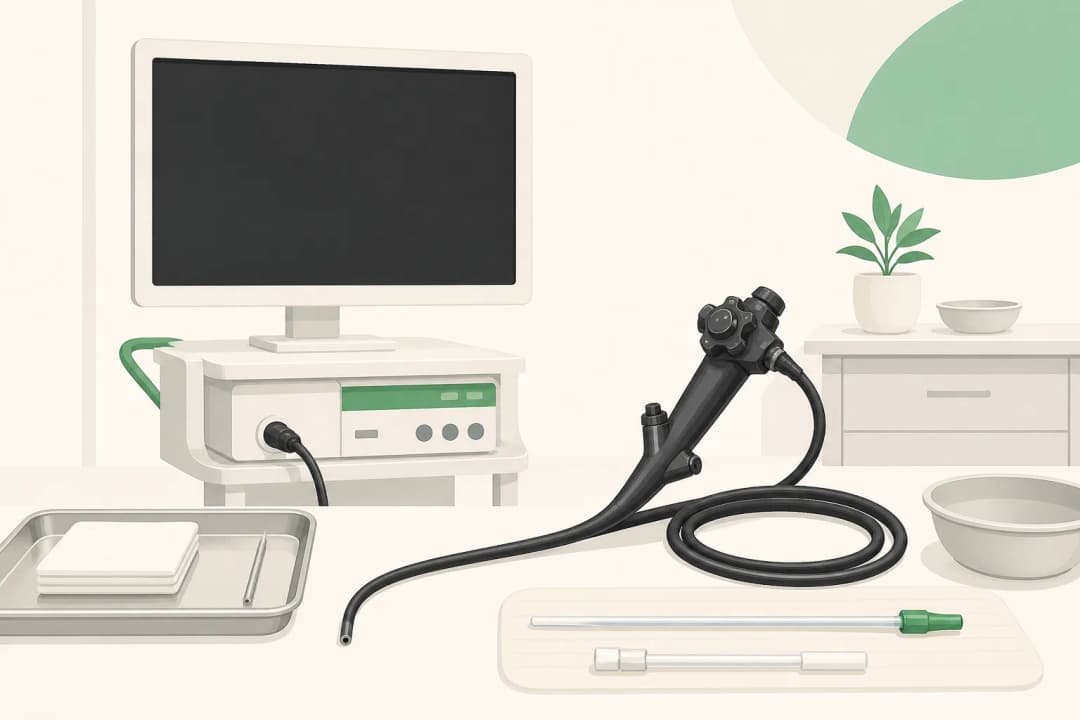
A clinician guides a thin viewing instrument through the opening of the penis and along the urethra into the bladder. The instrument does not enter the prostate itself; it passes through the portion of the urethra surrounded by the prostate.
How the prostate relates to cystoscopy
Because the prostate sits around part of the urethra, enlargement or irregular tissue can change the shape and width of that channel. During cystoscopy, the clinician may see narrowing, obstruction, bleeding, stones, inflammation, or changes inside the bladder that help explain urinary symptoms.
The examination can provide visual information, but it does not by itself settle every prostate diagnosis. Other assessment may include a symptom history, urine testing, a physical examination, imaging, or tissue sampling, depending on the reason for the procedure.
Preparing for the appointment
Tell the care team about medicines that affect bleeding, allergies, previous urinary infections, difficulty passing urine, and any earlier reaction to anesthesia or sedation. Follow the clinic's instructions about eating, drinking, regular medicines, and whether someone must take you home.
After a straightforward examination, mild burning during urination, urgency, or a small amount of blood can occur for a short time. Drink fluids if your clinician has not restricted them, and use only the pain relief recommended for you.
When to seek medical care
Contact the treating team promptly if you cannot pass urine, develop fever or chills, have worsening lower abdominal pain, pass clots, or notice bleeding that is heavy or increasing. These features need assessment because they may indicate urinary retention, infection, or significant bleeding rather than expected irritation.
Questions to take to your doctor
Ask what the examination is intended to clarify, whether a flexible or rigid scope is planned, what comfort medicine will be used, and whether treatment or a biopsy might occur at the same appointment. Also confirm when results will be explained and whom to contact if urination becomes difficult afterward.
Questions people ask
Does cystoscopy examine inside the prostate?
No. The scope views the urethral channel as it passes through the prostate region, then examines the bladder. Prostate tissue may need separate tests if further assessment is required.
Can cystoscopy help explain a weak urine stream?
It can show whether the urethra is narrowed or the bladder outlet appears obstructed. The clinician interprets that view alongside symptoms and other findings.
Will cystoscopy affect urination afterward?
Temporary burning or urgency can follow the procedure. Inability to pass urine is not an expected inconvenience and warrants prompt contact with the care team.
Related
Related reading
Keep reading
Cancer care in the UAE
Hospitals & Medical Centers in Abu Dhabi
Most UAE cancer care is delivered inside hospital services rather than by standalone oncology clinics, so these are licensed hospitals & medical centers listed in Abu Dhabi. Confirm the specific cancer service exists before you travel, and know that asking for a second opinion is routine.
Ahalia Hospital Musaffah Building - Musaffah - Musaffah Industrial - Abu Dhabi - United Arab Emirates
Accepts: Daman, Thiqa, AXA, Cigna +26 more
Al Ruwais Industrial City - Abu Dhabi - United Arab Emirates
Accepts: Daman, Thiqa, AXA, Cigna +30 more
Abu Dhabi, Abu Dhabi
Accepts: Daman, Thiqa, AXA, Cigna +30 more
Second opinions are routine in cancer care and asking for one does not affect your treatment. How to arrange a second opinion in the UAE.
Ordered by verification status and how complete each clinic's public record is, then alphabetically. This is a directory listing, not a ranking — Zavis does not rate or recommend providers.
A factual listing drawn from the DHA, DOH and MOHAP licence registers. It is not a referral, an endorsement, or advice that any of these providers is right for you.
Medical disclaimer. This page is general health information, not medical advice, and it cannot diagnose you. Always consult a licensed healthcare provider about your own symptoms and treatment. In an emergency in the UAE, call 998 for an ambulance.