
Cystoscopy with left ureteroscopy
Short answer
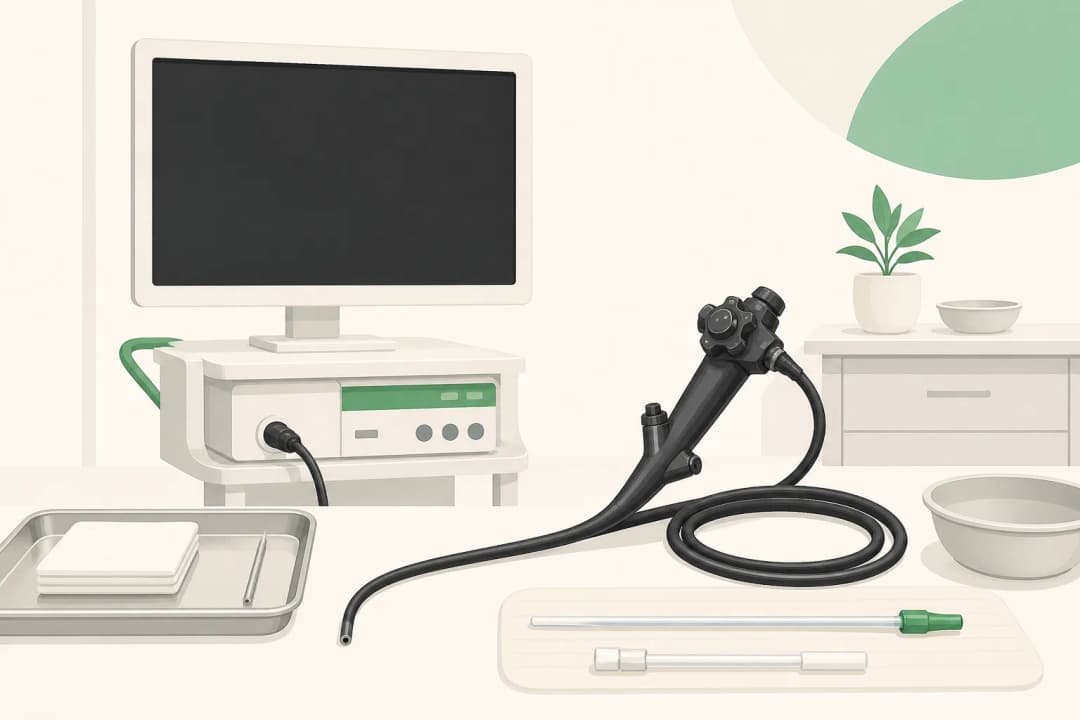
Cystoscopy with left ureteroscopy lets a urologist inspect the bladder, then examine or treat the left ureter and kidney collecting system.
This answers one question. It is not a diagnosis and does not replace an assessment by a licensed doctor.
At a glance
- Route
- The instruments pass through the urethra and bladder without a skin incision.
- Side
- Left refers to the ureter and kidney collecting system examined.
- Stent
- A temporary tube may support urine drainage after the procedure.
What the procedure covers
Cystoscopy reaches the bladder through the urethra. Ureteroscopy continues through the opening of the left ureter with a narrower instrument. The side label is a safety detail: it identifies the urinary tract selected for examination or treatment and should match the consent discussion.
What may happen during ureteroscopy
The urologist may use the ureteroscope to investigate an abnormal image, narrowing, bleeding source, stone or tissue change. Instruments passed through the scope can collect a biopsy or treat certain findings. A temporary stent may be left between the kidney and bladder to maintain urine drainage while swelling settles.
Anaesthesia is commonly required because the instrument travels beyond the bladder. The exact plan depends on the clinical question and what the clinician finds. A diagnostic examination, biopsy and treatment do not have identical recovery needs, so confirm which possibilities are included in your consent.
What to do before and after
Read the fasting directions carefully and tell the team about medicines, allergies, implanted devices and any symptoms of a urine infection. Follow only the personalised instructions you receive for blood thinners and diabetes treatment. Arrange an escort when the anaesthetic plan requires one.
On returning home, use prescribed pain relief as directed and follow the advised activity and fluid plan. Burning, urinary urgency and some blood staining can occur temporarily. A stent can cause frequency, bladder irritation or discomfort in the left side, sometimes more noticeable during urination. Keep the stent removal or review appointment.
When recovery needs review
Notify the urology team about worsening left-sided or bladder pain, increasing bleeding, clots, persistent vomiting, or symptoms that are not following the recovery pattern in your discharge advice. If a stent thread moves or the stent appears to come out, follow the team’s instructions and do not pull it unless specifically directed.
Seek urgent care for inability to urinate, fever accompanied by chills, severe flank or abdominal pain, heavy urinary bleeding, fainting, confusion, or breathing difficulty. Mention the recent ureteroscopy and any stent when you speak with emergency clinicians.
Questions that clarify the plan
Ask why the left ureter needs examination, whether treatment or biopsy might occur, and whether a stent is anticipated. Find out how results will be communicated, what activities to avoid, how stent removal works, and where to call if symptoms arise overnight.
Questions people ask
What is the difference between cystoscopy and ureteroscopy?
Cystoscopy examines the urethra and bladder. Ureteroscopy extends into a ureter and sometimes the kidney collecting system to inspect or treat that upper urinary tract.
Will I always have a stent afterward?
Not always. Placement depends on what was done, swelling, drainage and the urologist’s assessment. If one is placed, obtain a clear removal or follow-up plan.
Related
Related reading
Keep reading
Cancer care in the UAE
Hospitals & Medical Centers in Abu Dhabi
Most UAE cancer care is delivered inside hospital services rather than by standalone oncology clinics, so these are licensed hospitals & medical centers listed in Abu Dhabi. Confirm the specific cancer service exists before you travel, and know that asking for a second opinion is routine.
Ahalia Hospital Musaffah Building - Musaffah - Musaffah Industrial - Abu Dhabi - United Arab Emirates
Accepts: Daman, Thiqa, AXA, Cigna +26 more
Al Ruwais Industrial City - Abu Dhabi - United Arab Emirates
Accepts: Daman, Thiqa, AXA, Cigna +30 more
Abu Dhabi, Abu Dhabi
Accepts: Daman, Thiqa, AXA, Cigna +30 more
Second opinions are routine in cancer care and asking for one does not affect your treatment. How to arrange a second opinion in the UAE.
Ordered by verification status and how complete each clinic's public record is, then alphabetically. This is a directory listing, not a ranking — Zavis does not rate or recommend providers.
A factual listing drawn from the DHA, DOH and MOHAP licence registers. It is not a referral, an endorsement, or advice that any of these providers is right for you.
Medical disclaimer. This page is general health information, not medical advice, and it cannot diagnose you. Always consult a licensed healthcare provider about your own symptoms and treatment. In an emergency in the UAE, call 998 for an ambulance.