
Cystoscopy for urethral stricture
Short answer
Cystoscopy can locate a urethral stricture and show its opening, but treatment may require a separate plan.
This answers one question. It is not a diagnosis and does not replace an assessment by a licensed doctor.
At a glance
- Main finding
- The site and visible opening of the narrowed urethra
- Important limit
- A tight stricture may prevent safe passage of the scope
- Emergency symptom
- A painful full bladder with no urine passing
The short answer
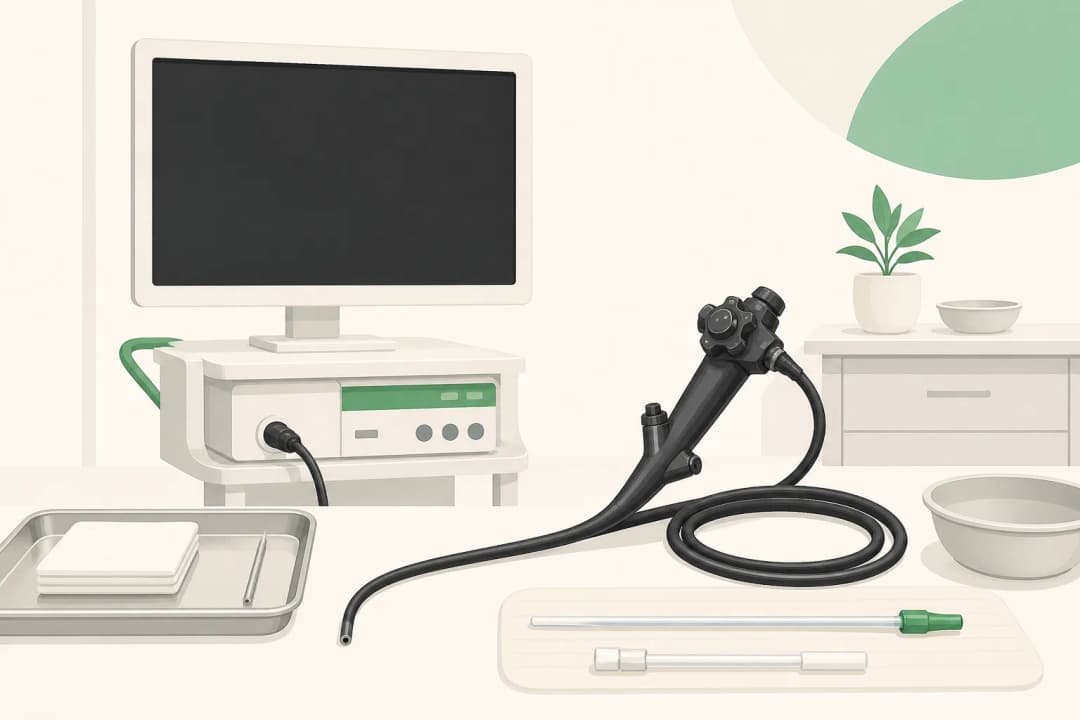
A stricture is scar-related narrowing of the urethra, the channel that carries urine out of the bladder. A small scope can reveal where the channel narrows and allow inspection beyond it only if passage is safe. The clinician should not force an instrument through a tight narrowing.
What cystoscopy adds
The visual examination can help distinguish a narrowed segment from another source of blockage and can inspect the bladder when the scope reaches it. Other tests may be used to map the length and severity of narrowing or to measure how well urine flows and empties.
Finding a stricture does not automatically determine the treatment. Options depend on its position, extent, prior procedures, symptoms, and whether it has returned. Dilation, an internal incision, reconstruction, or monitoring may be discussed in the appropriate clinical setting.
Share details that affect the procedure
Describe changes in stream strength, spraying, straining, incomplete emptying, infections, and any episode of complete retention. Tell the clinician about pelvic injury, catheter difficulties, previous urethral procedures, radiotherapy, allergies, and medicines that affect bleeding.
Confirm whether the appointment is for inspection only or whether dilation or another treatment might occur. Those plans influence consent, anaesthesia, transport, and whether a catheter may be needed afterward. Follow the tailored instructions about food, fluids, medicines, and recovery.
When urinary symptoms cannot wait
Seek urgent care if you cannot pass urine and the lower abdomen is becoming painful or swollen. After cystoscopy, contact the treating service for fever, chills, worsening pain, increasing blood or clots, foul-smelling urine, or a stream that is markedly worse rather than recovering.
If a catheter was placed, ask for immediate advice when it stops draining and the bladder feels full. Do not attempt to remove or reposition it unless the clinical team has taught you to do so.
Questions that clarify the next step
Ask where the narrowing is, whether the scope passed it, and whether another test is needed to define its length. Clarify if treatment is planned now or later, the chance that a catheter will be used, how recurrence would be recognised, and which change in urinary flow warrants an urgent call.
Questions people ask
Can cystoscopy treat a urethral stricture at the same time?
Sometimes treatment is planned as part of a procedure, but diagnostic inspection and treatment are not automatically the same appointment. The clinician should explain the intended intervention before consent.
What happens if the cystoscope cannot pass the narrowing?
The clinician may stop to avoid injury and use other tests to define the stricture. A separate treatment approach can then be selected from the full assessment.
Will I need a catheter afterward?
A catheter may be used after some stricture procedures or when urine drainage is a concern. Whether you need one depends on what was done and how easily you can urinate.
Related
Related reading
Keep reading
Cancer care in the UAE
Hospitals & Medical Centers in Abu Dhabi
Most UAE cancer care is delivered inside hospital services rather than by standalone oncology clinics, so these are licensed hospitals & medical centers listed in Abu Dhabi. Confirm the specific cancer service exists before you travel, and know that asking for a second opinion is routine.
Ahalia Hospital Musaffah Building - Musaffah - Musaffah Industrial - Abu Dhabi - United Arab Emirates
Accepts: Daman, Thiqa, AXA, Cigna +26 more
Al Ruwais Industrial City - Abu Dhabi - United Arab Emirates
Accepts: Daman, Thiqa, AXA, Cigna +30 more
Abu Dhabi, Abu Dhabi
Accepts: Daman, Thiqa, AXA, Cigna +30 more
Second opinions are routine in cancer care and asking for one does not affect your treatment. How to arrange a second opinion in the UAE.
Ordered by verification status and how complete each clinic's public record is, then alphabetically. This is a directory listing, not a ranking — Zavis does not rate or recommend providers.
A factual listing drawn from the DHA, DOH and MOHAP licence registers. It is not a referral, an endorsement, or advice that any of these providers is right for you.
Medical disclaimer. This page is general health information, not medical advice, and it cannot diagnose you. Always consult a licensed healthcare provider about your own symptoms and treatment. In an emergency in the UAE, call 998 for an ambulance.