
Cystoscopy for women: procedure and aftercare
Short answer
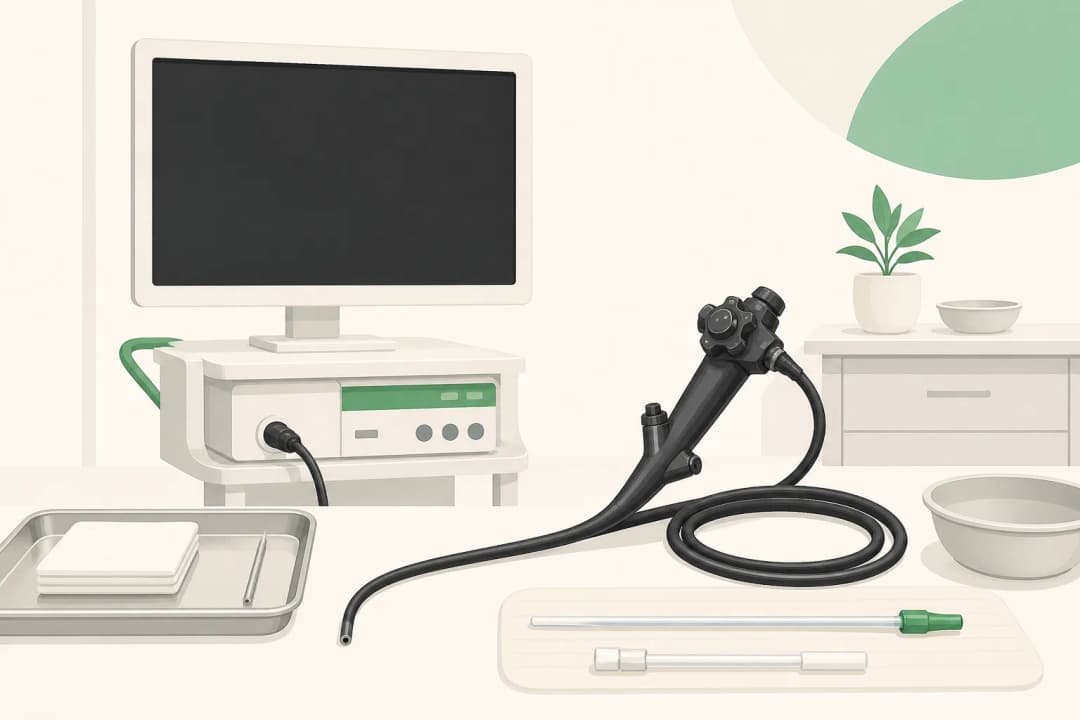
For a woman having cystoscopy, the clinician passes a narrow camera through the urethra into the bladder to inspect its lining and openings.
This answers one question. It is not a diagnosis and does not replace an assessment by a licensed doctor.
At a glance
- Anatomy
- The scope enters the urethra, not the vagina.
- Bladder view
- Sterile fluid opens the bladder and can create temporary fullness.
- Choice and comfort
- Tell the team about pain concerns, positioning needs, or previous difficult examinations.
What happens
For a woman having cystoscopy, the clinician passes a narrow camera through the urethra into the bladder to inspect its lining and openings. The urethral opening is above the vaginal opening, and the scope does not pass through the vagina. Flexible cystoscopy is often performed with local anaesthetic gel, while rigid cystoscopy and procedures involving biopsy or treatment may use sedation or general anaesthesia.
Position, privacy, and possible sensations
You will usually lie on your back with your legs supported or knees apart so the clinician can reach the urethra. A drape covers areas not being examined, and a chaperone may be present according to local practice and your preferences. Anaesthetic gel can reduce urethral discomfort. Sterile fluid expands the bladder for a clear view, which may create pressure or an urge to urinate. Tell the clinician if pain is sharp or difficult to tolerate.
Practical preparation and aftercare
Follow instructions about food, drink, and medicines because these differ with the anaesthetic. Mention urinary burning, fever, current menstruation, pregnancy possibility, allergies, pelvic pain, previous difficult examinations, or past genital trauma so care can be adapted. After a simple flexible examination, fluids may help dilute the urine if your clinician has not restricted them. Use recommended pain relief and observe whether burning or blood-staining is settling.
Reasons to get medical help
Call the care team for fever, chills, worsening pelvic or side pain, increasing urinary burning, heavy bleeding, clots, vomiting, or inability to urinate. Rapid deterioration or feeling severely unwell requires emergency assessment. Light blood-staining can occur after the scope, but menstruation can make its source less clear; persistent or increasing bleeding should still be discussed with a clinician. Follow any extra precautions given after biopsy or treatment.
Questions about comfort and results
You can ask who will be in the room, whether a chaperone is available, which anaesthetic is offered, and how the team will protect privacy. Discuss whether menstruation changes the appointment, whether pelvic conditions could affect positioning, and when sexual activity or exercise can resume. Also confirm whether results are immediate or depend on laboratory analysis of a sample.
Questions people ask
Can cystoscopy be done during a period?
Menstruation does not automatically prevent cystoscopy, but the clinic may have procedure-specific guidance. Contact the unit if bleeding is heavy or if you are unsure whether to attend.
Does cystoscopy affect the vagina or uterus?
The scope follows the urethra into the bladder, so it does not travel through the vagina or uterus. The position used for access may resemble that of a pelvic examination.
Related
Related reading
Keep reading
Cancer care in the UAE
Hospitals & Medical Centers in Abu Dhabi
Most UAE cancer care is delivered inside hospital services rather than by standalone oncology clinics, so these are licensed hospitals & medical centers listed in Abu Dhabi. Confirm the specific cancer service exists before you travel, and know that asking for a second opinion is routine.
Ahalia Hospital Musaffah Building - Musaffah - Musaffah Industrial - Abu Dhabi - United Arab Emirates
Accepts: Daman, Thiqa, AXA, Cigna +26 more
Al Ruwais Industrial City - Abu Dhabi - United Arab Emirates
Accepts: Daman, Thiqa, AXA, Cigna +30 more
Abu Dhabi, Abu Dhabi
Accepts: Daman, Thiqa, AXA, Cigna +30 more
Second opinions are routine in cancer care and asking for one does not affect your treatment. How to arrange a second opinion in the UAE.
Ordered by verification status and how complete each clinic's public record is, then alphabetically. This is a directory listing, not a ranking — Zavis does not rate or recommend providers.
A factual listing drawn from the DHA, DOH and MOHAP licence registers. It is not a referral, an endorsement, or advice that any of these providers is right for you.
Medical disclaimer. This page is general health information, not medical advice, and it cannot diagnose you. Always consult a licensed healthcare provider about your own symptoms and treatment. In an emergency in the UAE, call 998 for an ambulance.