
Cystoscopy and fulguration: procedure and recovery
Short answer
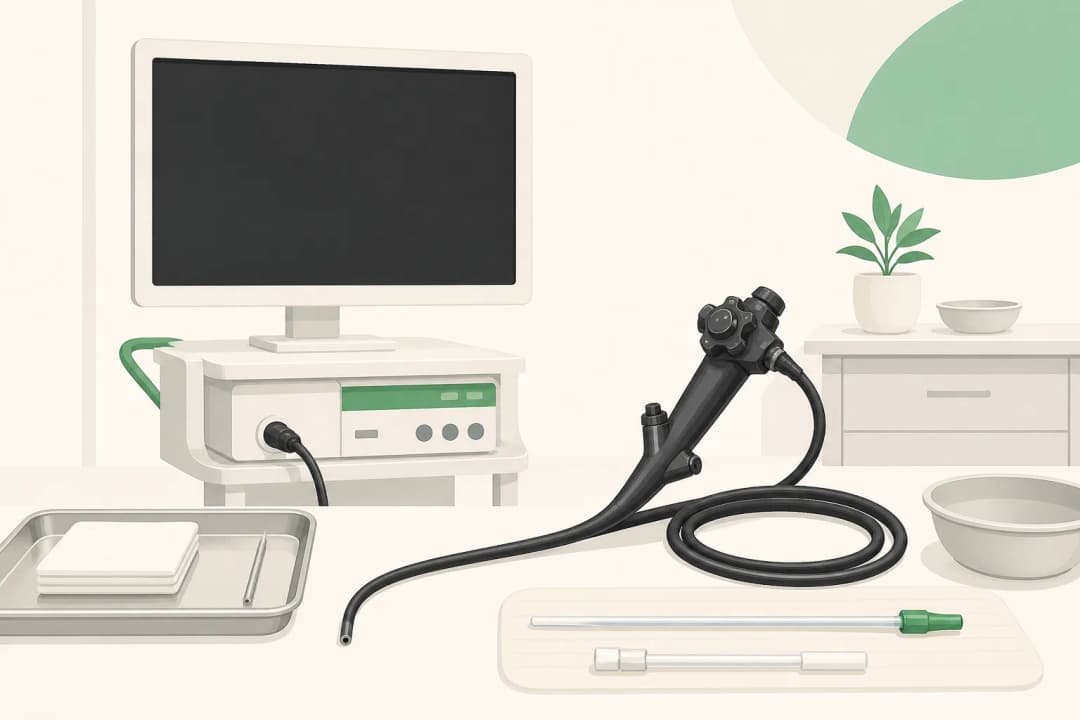
Cystoscopy lets a urologist view the urinary tract, while fulguration uses controlled electrical energy to destroy tissue or stop bleeding.
This answers one question. It is not a diagnosis and does not replace an assessment by a licensed doctor.
At a glance
- Viewing method
- A camera-equipped scope enters through the urethra
- Treatment method
- An electrode delivers controlled electrical energy
- Possible aims
- Destroy selected tissue or seal a bleeding site
What happens during fulguration
The cystoscope passes through the urethra and carries a camera into the bladder. A fine electrode can then deliver energy directly to a selected area, limiting treatment to tissue the urologist can see. Fulguration may seal a bleeding point or destroy a small abnormal area. If a diagnosis is not already established, tissue may need to be collected before it is destroyed because fulguration alone does not provide a specimen for microscopic examination.
How to prepare and look after yourself
Provide an updated list of medicines and supplements, especially anything that affects bleeding, and tell the team about urinary infection symptoms, allergies, or previous reactions to anaesthesia. Follow the personalised directions for fasting and medication; changes to prescribed drugs should come from the treating clinician. After treatment, take the recommended pain relief, maintain fluids if medically permitted, and follow restrictions on driving, exercise, lifting, and sexual activity. Find out whether a catheter will remain temporarily and obtain written care instructions if it does.
When recovery needs urgent review
Temporary burning, frequent urination, or lightly blood-stained urine may follow cystoscopy and fulguration. Contact the service if these effects become more pronounced or last beyond the recovery period they gave you. Go for urgent assessment if urine will not pass, bleeding is heavy, clots block the stream or catheter, fever occurs with chills, pain becomes severe, or you feel dizzy, faint, confused, or rapidly unwell. A painful, swollen lower abdomen with poor catheter drainage also needs immediate attention.
What to confirm before treatment
Ask exactly what area will be fulgurated, whether the aim is to control bleeding or treat abnormal tissue, and whether a biopsy has already confirmed the diagnosis. Clarify the planned anaesthesia, catheter use, expected urinary changes, and the number to call after discharge. If the treated area could return, ask how it will be monitored and what would prompt another cystoscopy, imaging test, or different treatment.
Questions people ask
Is fulguration the same as a biopsy?
These are different procedures. Fulguration destroys or seals tissue with energy, while a biopsy removes tissue for microscopic examination. Both may occur during the same cystoscopy when clinically appropriate.
Is an external incision needed?
The urologist usually reaches the bladder through the urethra, so there is no external bladder incision for this endoscopic procedure.
Why might follow-up cystoscopy be planned?
Follow-up can check healing, look for renewed bleeding, or assess whether an abnormal area has returned or needs further treatment.
Related
Related reading
Keep reading
Cancer care in the UAE
Hospitals & Medical Centers in Abu Dhabi
Most UAE cancer care is delivered inside hospital services rather than by standalone oncology clinics, so these are licensed hospitals & medical centers listed in Abu Dhabi. Confirm the specific cancer service exists before you travel, and know that asking for a second opinion is routine.
Ahalia Hospital Musaffah Building - Musaffah - Musaffah Industrial - Abu Dhabi - United Arab Emirates
Accepts: Daman, Thiqa, AXA, Cigna +26 more
Al Ruwais Industrial City - Abu Dhabi - United Arab Emirates
Accepts: Daman, Thiqa, AXA, Cigna +30 more
Abu Dhabi, Abu Dhabi
Accepts: Daman, Thiqa, AXA, Cigna +30 more
Second opinions are routine in cancer care and asking for one does not affect your treatment. How to arrange a second opinion in the UAE.
Ordered by verification status and how complete each clinic's public record is, then alphabetically. This is a directory listing, not a ranking — Zavis does not rate or recommend providers.
A factual listing drawn from the DHA, DOH and MOHAP licence registers. It is not a referral, an endorsement, or advice that any of these providers is right for you.
Medical disclaimer. This page is general health information, not medical advice, and it cannot diagnose you. Always consult a licensed healthcare provider about your own symptoms and treatment. In an emergency in the UAE, call 998 for an ambulance.