
Cystoscopy and CT: understanding the difference
Short answer
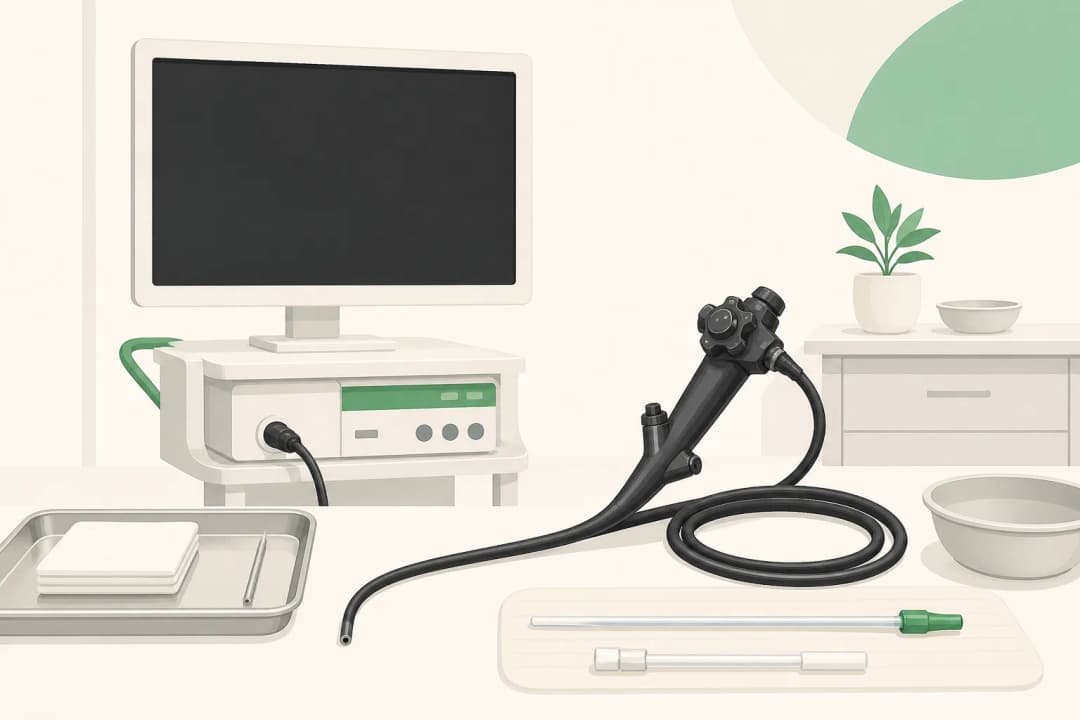
Cystoscopy uses a thin camera to inspect the urethra and bladder directly, while CT creates cross-sectional images; the tests answer different questions and may be used together.
This answers one question. It is not a diagnosis and does not replace an assessment by a licensed doctor.
At a glance
- Cystoscopy
- Direct camera examination of the urethra and bladder
- CT
- Cross-sectional imaging of internal structures
- Biopsy
- May be collected during cystoscopy when clinically needed
The short answer
Cystoscopy can show the bladder lining and allows a clinician to collect tissue or perform certain small procedures. CT can show the urinary tract and surrounding structures but cannot provide the same direct surface view or tissue sample.
What happens during cystoscopy
A clinician passes a cystoscope through the urethra into the bladder. A flexible scope is often used with numbing gel for an examination, whereas a rigid scope may be used when a biopsy or treatment is planned and may require regional or general anaesthesia. Your appointment letter should state which procedure is intended.
The operator looks for causes of bleeding, urinary symptoms or an abnormal imaging finding. An unusual area is not diagnosed by appearance alone when tissue confirmation is needed; a collected sample is examined separately, and the final plan may depend on that report.
Preparing and recovering
Tell the urology team about medicines, blood thinners, allergies, pregnancy, urinary infection symptoms and previous reactions to anaesthesia. Follow the specific fasting and medicine instructions for your type of cystoscopy. Arrange transport and support if sedation or an anaesthetic is planned.
Mild stinging during urination, urinary frequency and a small amount of blood can occur after the procedure. Use the fluids and pain relief advised by your team, and check when normal activities can resume. If tissue was taken, ask how and when you will receive the pathology result rather than assuming the camera finding is final.
Symptoms that need medical attention
Get urgent medical advice if bleeding becomes heavy or worsens, you develop fever or chills, pain is severe or increasing, urine becomes cloudy with worsening burning, or you feel generally unwell. Inability to pass urine with a painful or swollen lower abdomen requires emergency assessment. Tell the clinician that you recently had cystoscopy.
Useful questions before the appointment
Confirm whether the plan is flexible or rigid cystoscopy, whether a biopsy or another procedure is expected, and what anaesthesia will be used. Ask what the earlier CT did and did not show, how the cystoscopy result will be communicated, and which after-hours service to contact if bleeding, fever, pain or urinary retention develops.
Questions people ask
Can a CT scan replace cystoscopy?
Not in every situation. CT and cystoscopy show different features, and cystoscopy provides a direct view of the bladder lining with an option to collect tissue.
Will I be awake during cystoscopy?
That depends on the scope and planned procedure. Flexible examination commonly uses local anaesthetic gel, while rigid cystoscopy may use regional or general anaesthesia.
Does seeing an abnormal area confirm bladder cancer?
No. Cystoscopy can identify an area that needs investigation, but diagnosis may require tissue examination and correlation with imaging and other findings.
Related
Related reading
Keep reading
Cancer care in the UAE
Hospitals & Medical Centers in Abu Dhabi
Most UAE cancer care is delivered inside hospital services rather than by standalone oncology clinics, so these are licensed hospitals & medical centers listed in Abu Dhabi. Confirm the specific cancer service exists before you travel, and know that asking for a second opinion is routine.
Ahalia Hospital Musaffah Building - Musaffah - Musaffah Industrial - Abu Dhabi - United Arab Emirates
Accepts: Daman, Thiqa, AXA, Cigna +26 more
Al Ruwais Industrial City - Abu Dhabi - United Arab Emirates
Accepts: Daman, Thiqa, AXA, Cigna +30 more
Abu Dhabi, Abu Dhabi
Accepts: Daman, Thiqa, AXA, Cigna +30 more
Second opinions are routine in cancer care and asking for one does not affect your treatment. How to arrange a second opinion in the UAE.
Ordered by verification status and how complete each clinic's public record is, then alphabetically. This is a directory listing, not a ranking — Zavis does not rate or recommend providers.
A factual listing drawn from the DHA, DOH and MOHAP licence registers. It is not a referral, an endorsement, or advice that any of these providers is right for you.
Medical disclaimer. This page is general health information, not medical advice, and it cannot diagnose you. Always consult a licensed healthcare provider about your own symptoms and treatment. In an emergency in the UAE, call 998 for an ambulance.