
What should you know about crown breakage?
Short answer
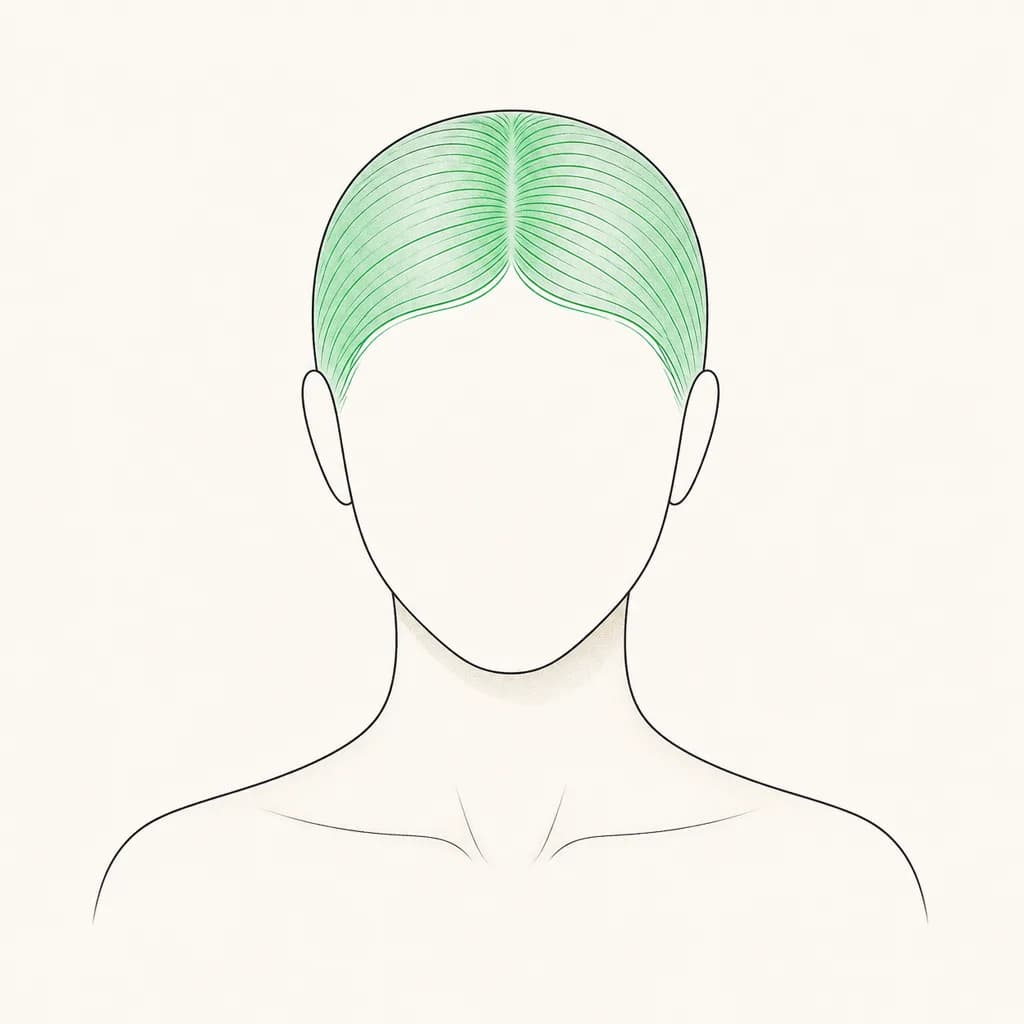
Crown breakage means strands are snapping near the top of the head, often after friction, tension, heat, or chemical processing.
This answers one question. It is not a diagnosis and does not replace an assessment by a licensed doctor.
At a glance
- Main distinction
- Breakage is snapping along the strand; shedding starts at the follicle.
- Common contributors
- Tension, friction, heat, dryness, and chemical processing.
What crown breakage can mean
Broken hairs may look shorter, uneven, frayed, or lighter at their tips, while the scalp can remain covered. Tight styles, rough detangling, repeated brushing, heat tools, dry weather, and rubbing against bedding or headwear can weaken the shaft. Breakage differs from hair loss because the strand breaks after growing from the follicle; a clinician can check whether both processes are present.
Itching, scale, tenderness, redness, or small areas where hairs come out from the root may point to a scalp problem rather than simple shaft damage. Scalp ringworm can affect hair and skin, while traction alopecia is associated with repeated pulling.
What you can do now
Pause tight ponytails, braids, extensions, and styles that pull at the crown. Detangle gently from the ends upward with a wide-tooth comb, reduce high heat, and avoid brushing when hair is soaked unless the method is gentle. Use conditioning products that improve slip, protect hair during sleep with a smooth covering, and trim visibly split ends if they keep catching.
Keep a simple record of styling, chemical services, new products, and changes in the crown. If breakage continues despite gentler handling, a dermatologist can examine the scalp and hair shafts and look for an underlying cause.
When to seek care
Arrange a dermatology assessment if the area is widening, the scalp is painful or inflamed, there is marked scale or discharge, or hairs are coming out from the root. Seek prompt care for rapidly developing smooth patches, significant tenderness, or signs of infection. Earlier review helps distinguish breakage from traction-related loss or a scalp condition.
Questions for your doctor
Could this be shaft breakage, follicle-level hair loss, or both? Is there evidence of traction, inflammation, infection, or scarring? Which styling changes and treatments fit my hair and scalp?
Find care
General Clinics & Polyclinics in Abu Dhabi
That answer is general. If you want it applied to your own case, these are licensed general clinics & polyclinics listed in Abu Dhabi.
27 Ar Ruwwad St - Shakhbout City - MSH4 - Abu Dhabi - United Arab Emirates
Accepts: Daman, Thiqa, Cigna, MetLife +20 more
Al Ruwais, Al Dhafrah
Accepts: Daman, Thiqa, AXA, Cigna +16 more
Al Bahyah - Al Bahyah Old - Abu Dhabi - United Arab Emirates
Accepts: Daman, Thiqa, Cigna, Allianz Care +18 more
Abu Dhabi
Accepts: Daman, Thiqa, AXA, Cigna +27 more
Ordered by verification status and how complete each clinic's public record is, then alphabetically. This is a directory listing, not a ranking — Zavis does not rate or recommend providers.
A factual listing drawn from the DHA, DOH and MOHAP licence registers. It is not a referral, an endorsement, or advice that any of these providers is right for you.
Questions people ask
Can crown breakage grow back?
The follicle can continue producing hair when it is healthy, but damaged lengths must be protected as new growth replaces them.
Does breakage always mean hair loss?
No. Short broken hairs can occur without follicle-level loss, although both can happen together.
Related
Related reading
Keep reading
Medical disclaimer. This page is general health information, not medical advice, and it cannot diagnose you. Always consult a licensed healthcare provider about your own symptoms and treatment. In an emergency in the UAE, call 998 for an ambulance.