
What should you know about cracked skin on face?
Short answer
Cracked skin on the face often reflects a weakened skin barrier from dryness or irritation, but persistent fissures need assessment.
This answers one question. It is not a diagnosis and does not replace an assessment by a licensed doctor.
At a glance
- Common triggers
- Dry air, irritants and repeated washing
- Helpful first step
- Gentle cleansing followed by bland moisturiser
- Watch for
- Oozing, crusting, swelling or spreading redness
What facial cracking can mean
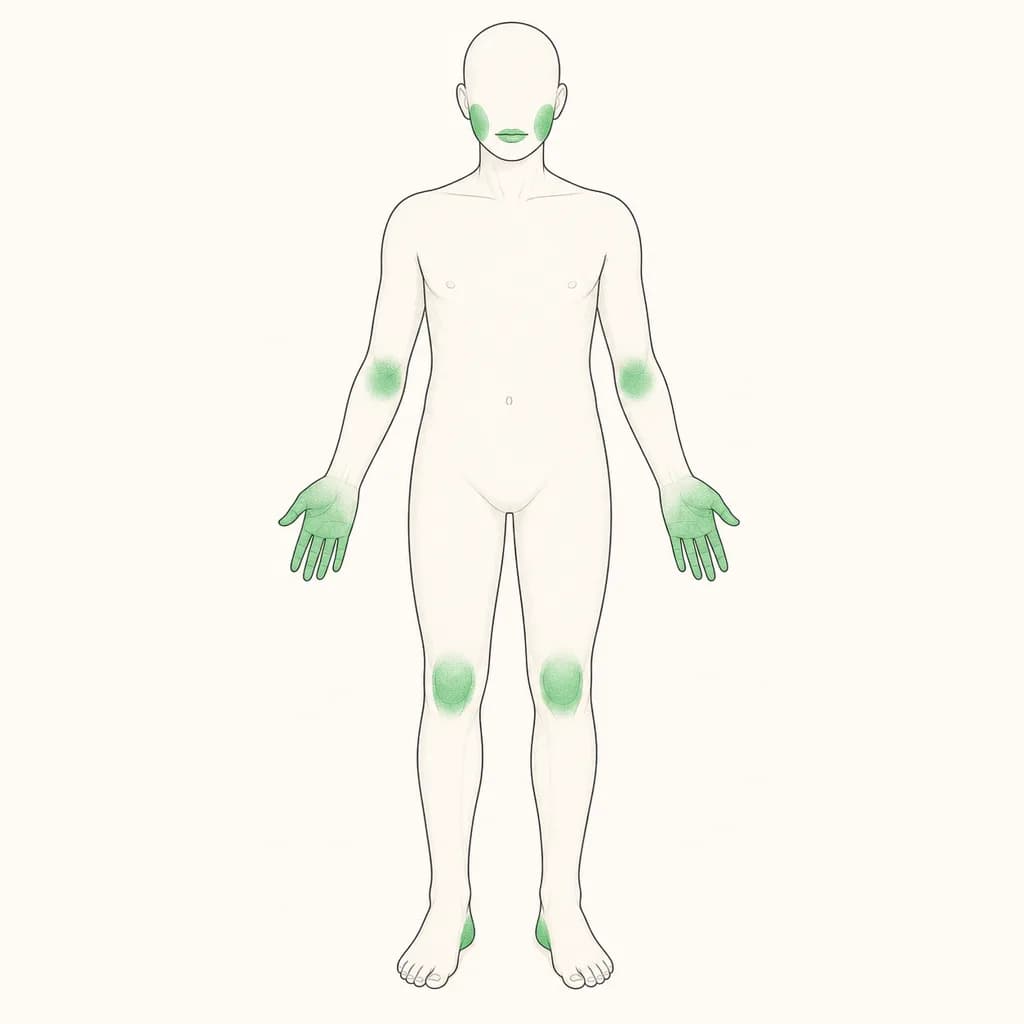
Cold air, low humidity, hot water, fragranced products and repeated rubbing can remove protective oils. Redness, scaling or itch may occur with atopic dermatitis, while sharply defined scaly areas can occur with psoriasis. Small splits around the nose, lips or cheeks may sting when washed and can open again with facial movement. A new product, cleanser or topical medicine can also irritate the area. The pattern, itch, scale and timing help a clinician separate simple barrier damage from a condition needing treatment.
Practical care
Wash with lukewarm water and a gentle, fragrance-free cleanser, then pat rather than rub. Apply a bland moisturiser while the skin is still slightly damp, repeating after washing. Avoid scrubs, peeling acids, alcohol-heavy products and picking at flakes until the surface settles. Protect exposed skin from wind and use a suitable daytime sunscreen if it does not sting. Emollient therapy can support barrier repair; choose a product that feels comfortable and stop any product that causes burning or a spreading rash.
When to seek care
Arrange medical advice if cracks keep returning, bleed, ooze, form yellow crusts, become increasingly painful or do not improve with gentle moisturising. Seek prompt care for swelling around the eyes, rapidly spreading redness, fever, or trouble opening an eye. A clinician can examine the pattern and review products or medicines before recommending a targeted treatment.
Questions for your doctor
Could this pattern fit atopic dermatitis or psoriasis? Which cleanser and moisturiser suit my skin? Should I pause any current facial products, and what signs would mean I need a review?
Find care
General Clinics & Polyclinics in Abu Dhabi
That answer is general. If you want it applied to your own case, these are licensed general clinics & polyclinics listed in Abu Dhabi.
27 Ar Ruwwad St - Shakhbout City - MSH4 - Abu Dhabi - United Arab Emirates
Accepts: Daman, Thiqa, Cigna, MetLife +20 more
Al Ruwais, Al Dhafrah
Accepts: Daman, Thiqa, AXA, Cigna +16 more
Al Bahyah - Al Bahyah Old - Abu Dhabi - United Arab Emirates
Accepts: Daman, Thiqa, Cigna, Allianz Care +18 more
Abu Dhabi
Accepts: Daman, Thiqa, AXA, Cigna +27 more
Ordered by verification status and how complete each clinic's public record is, then alphabetically. This is a directory listing, not a ranking — Zavis does not rate or recommend providers.
A factual listing drawn from the DHA, DOH and MOHAP licence registers. It is not a referral, an endorsement, or advice that any of these providers is right for you.
Questions people ask
Can facial cracks heal at home?
Mild dryness-related cracks may settle with gentle cleansing and frequent bland moisturising, but recurring or inflamed cracks should be assessed.
Should I exfoliate cracked facial skin?
Avoid exfoliation while the skin is split or stinging because friction and active ingredients can deepen irritation.
Related
Related reading
Keep reading
Medical disclaimer. This page is general health information, not medical advice, and it cannot diagnose you. Always consult a licensed healthcare provider about your own symptoms and treatment. In an emergency in the UAE, call 998 for an ambulance.