
What should you know about cracked skin around lips?
Short answer
Cracked skin around the lips often comes from dryness or repeated irritation from saliva, products, weather, or inflammation and needs gentle barrier care.
This answers one question. It is not a diagnosis and does not replace an assessment by a licensed doctor.
At a glance
- Common irritants
- Saliva, lip licking, fragranced products, toothpaste, wind, and frequent wiping
- Gentle measure
- Use plain barrier ointment and stop products that sting
- Get prompt help for
- Pus, spreading redness, fever, blisters, or major swelling
Possible reasons for lip-area cracks
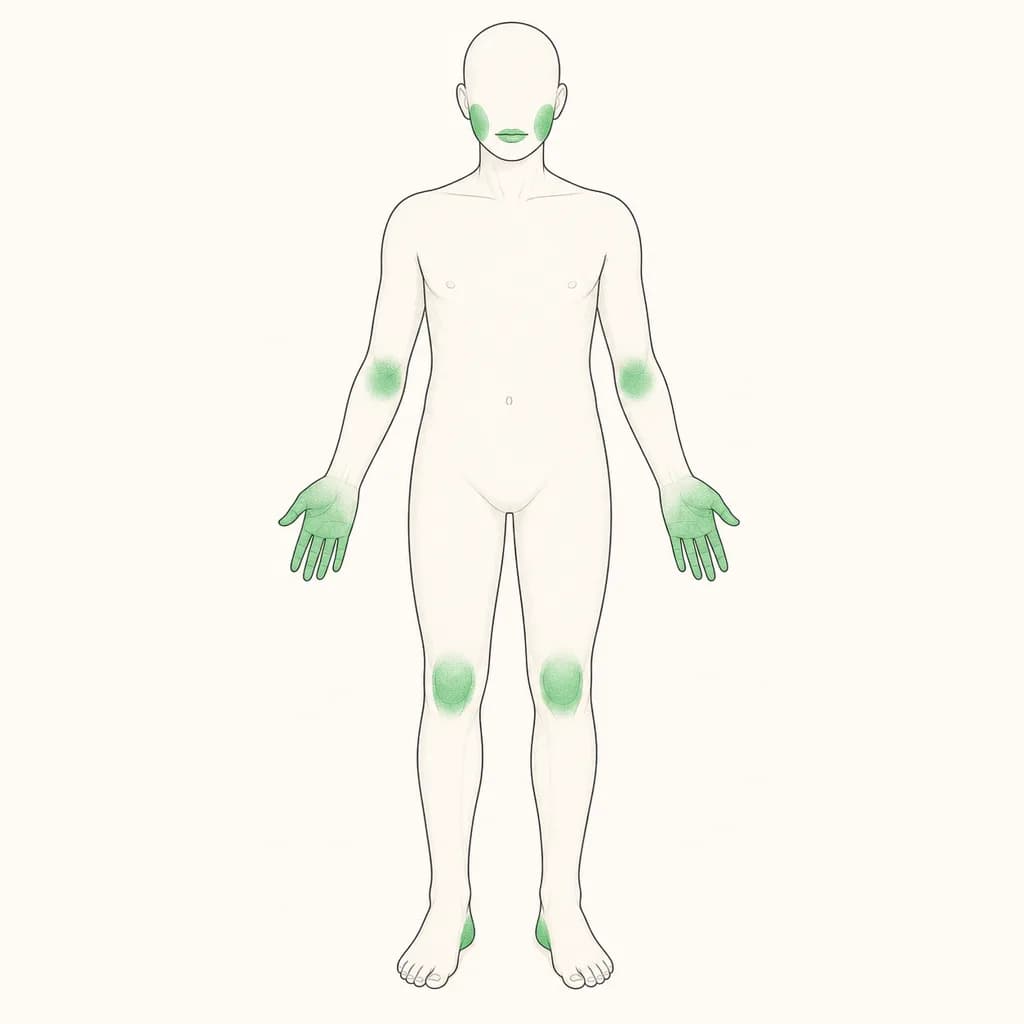
The skin around the mouth is exposed to saliva, food, toothpaste, cosmetics, wind, and frequent wiping. Licking the lips can briefly feel soothing but leaves moisture that evaporates and may worsen dryness. Fragrance, flavouring, preservatives, or a new lip product can trigger contact irritation. Atopic Dermatitis or Psoriasis can also affect the area, sometimes with redness, itch, or scaling beyond the immediate lip edge.
The location and appearance matter. A dry rim around both lips suggests barrier irritation, while blisters, crusting, marked swelling, or a one-sided sore may need a different assessment. A crack is a symptom, not a diagnosis, so recurring episodes deserve examination.
How to protect the area
Clean gently with lukewarm water and avoid rubbing. Use a plain, fragrance-free protective ointment on the surrounding skin, especially after eating and before sleep. Pause new lip products, fragranced balms, exfoliants, and products that sting. Try not to lick, bite, or peel the skin. If toothpaste seems to trigger flares, discuss alternatives with a clinician rather than changing several products at once. Emollient Therapy can support the barrier, but medicated creams near the mouth should be used only with suitable professional guidance.
When to seek care
Arrange an appointment if cracks recur, extend beyond the lip area, or persist despite avoiding irritants and using bland protection. Seek prompt care for spreading redness, increasing warmth, pus, rapidly increasing swelling, fever, painful blisters, or difficulty eating or drinking. A clinician can check for infection, allergy, eczema, psoriasis, or another mouth-area condition and choose treatment that is safe for delicate facial skin.
Questions for your doctor
Ask whether the pattern suggests contact irritation, Atopic Dermatitis, Psoriasis, or infection; which ingredients to avoid; whether your toothpaste or lip products could contribute; and which protective or medicated product is appropriate near the mouth.
Find care
General Clinics & Polyclinics in Abu Dhabi
That answer is general. If you want it applied to your own case, these are licensed general clinics & polyclinics listed in Abu Dhabi.
27 Ar Ruwwad St - Shakhbout City - MSH4 - Abu Dhabi - United Arab Emirates
Accepts: Daman, Thiqa, Cigna, MetLife +20 more
Al Ruwais, Al Dhafrah
Accepts: Daman, Thiqa, AXA, Cigna +16 more
Al Bahyah - Al Bahyah Old - Abu Dhabi - United Arab Emirates
Accepts: Daman, Thiqa, Cigna, Allianz Care +18 more
Abu Dhabi
Accepts: Daman, Thiqa, AXA, Cigna +27 more
Ordered by verification status and how complete each clinic's public record is, then alphabetically. This is a directory listing, not a ranking — Zavis does not rate or recommend providers.
A factual listing drawn from the DHA, DOH and MOHAP licence registers. It is not a referral, an endorsement, or advice that any of these providers is right for you.
Questions people ask
Can licking the lips cause cracking around them?
Repeated licking can contribute by wetting and then drying the skin, while saliva and wiping add irritation.
Is cracked skin around the lips always an allergy?
No. Dryness, saliva irritation, eczema, psoriasis, infection, and contact reactions can look similar and may need different care.
Related
Related reading
Keep reading
Medical disclaimer. This page is general health information, not medical advice, and it cannot diagnose you. Always consult a licensed healthcare provider about your own symptoms and treatment. In an emergency in the UAE, call 998 for an ambulance.