
What should you know about cracked knuckles skin?
Short answer
Cracked skin over the knuckles often reflects a weakened skin barrier from dryness, irritation, or inflammation and usually needs gentle protection and moisturising.
This answers one question. It is not a diagnosis and does not replace an assessment by a licensed doctor.
At a glance
- Common triggers
- Frequent washing, irritants, cold air, and repeated finger movement
- First step
- Use a bland thick moisturiser after washing and protect the hands
- Watch for
- Pus, spreading redness, warmth, swelling, or worsening pain
What cracked knuckles can mean
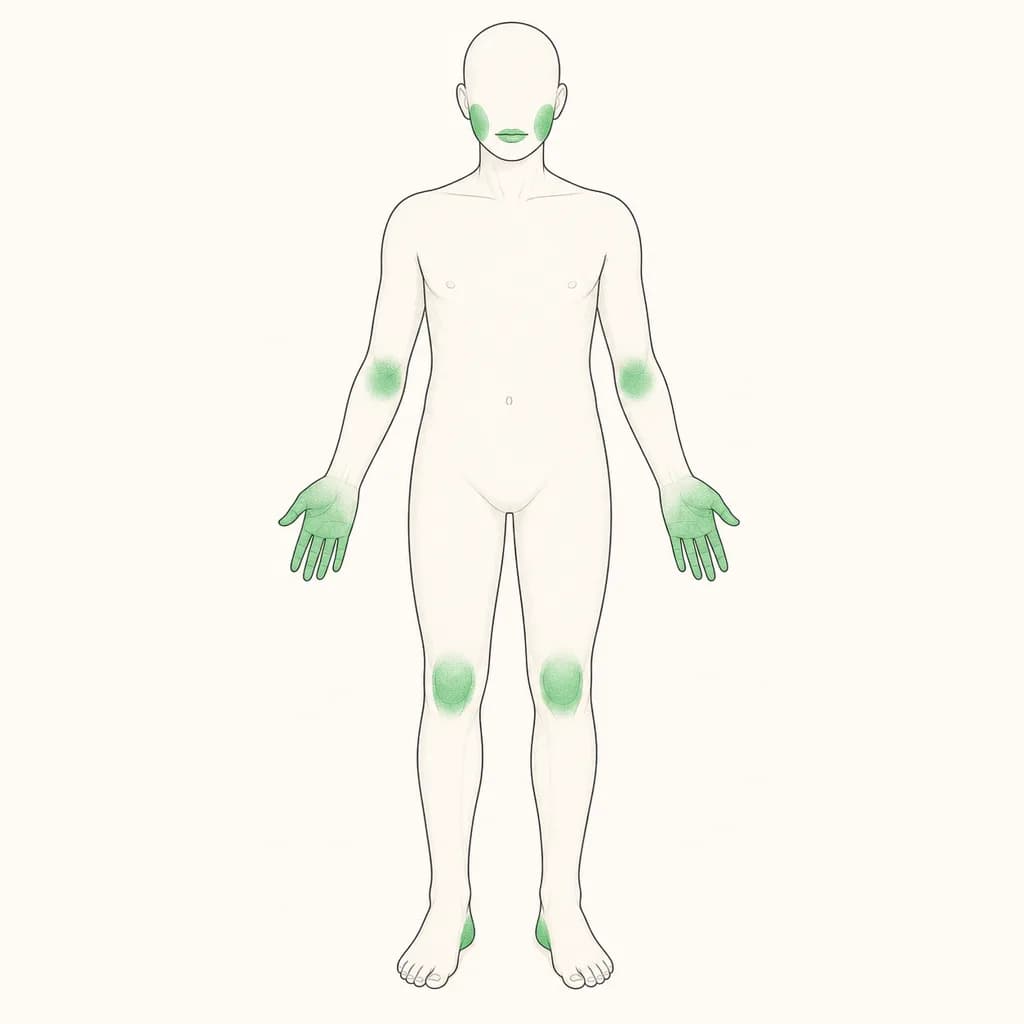
The knuckles are exposed to frequent bending, handwashing, sanitiser, cold air, and contact with cleaning products. These stresses can remove protective oils, leaving tight, rough skin that splits when the fingers move. Redness, itch, scaling, or cracks in several areas may also occur with Atopic Dermatitis or Psoriasis. A crack does not identify one diagnosis by itself; its pattern, duration, and accompanying symptoms help a clinician assess it.
Pain can come from the fissure opening during movement rather than from the skin condition alone. Fluid, increasing warmth, swelling, or spreading redness suggests that the broken skin may need prompt assessment.
What you can do
Wash with lukewarm water and a fragrance-free gentle cleanser, then pat dry rather than rubbing. Apply a thick, bland moisturiser immediately and reapply after washing. Emollient Therapy can help seal the barrier; a clinician or pharmacist can help choose a product if ordinary moisturiser stings. Wear protective gloves for wet or chemical tasks, with a soft cotton layer if sweating or friction is a problem. Do not pull at loose skin or use harsh scrubs on open fissures.
When to seek care
Arrange medical advice if the cracks keep returning, interfere with hand movement, bleed repeatedly, or do not start settling with careful protection. Seek prompt care for pus, worsening pain, warmth, swelling, fever, or redness that is spreading. A clinician can examine whether eczema, psoriasis, contact irritation, or another cause is present and recommend targeted treatment.
Questions for your doctor
Ask whether the pattern fits eczema, psoriasis, contact irritation, or simple barrier damage; which moisturiser texture is suitable for your work; how to protect open fissures; and whether any hand product, glove, soap, or medicine could be contributing.
Find care
General Clinics & Polyclinics in Abu Dhabi
That answer is general. If you want it applied to your own case, these are licensed general clinics & polyclinics listed in Abu Dhabi.
27 Ar Ruwwad St - Shakhbout City - MSH4 - Abu Dhabi - United Arab Emirates
Accepts: Daman, Thiqa, Cigna, MetLife +20 more
Al Ruwais, Al Dhafrah
Accepts: Daman, Thiqa, AXA, Cigna +16 more
Al Bahyah - Al Bahyah Old - Abu Dhabi - United Arab Emirates
Accepts: Daman, Thiqa, Cigna, Allianz Care +18 more
Abu Dhabi
Accepts: Daman, Thiqa, AXA, Cigna +27 more
Ordered by verification status and how complete each clinic's public record is, then alphabetically. This is a directory listing, not a ranking — Zavis does not rate or recommend providers.
A factual listing drawn from the DHA, DOH and MOHAP licence registers. It is not a referral, an endorsement, or advice that any of these providers is right for you.
Questions people ask
Can cracked knuckles be caused by dry skin?
Yes. Loss of moisture and repeated exposure to water or irritants can weaken the barrier and allow fissures to form.
Should I cover a painful knuckle crack?
A clean protective dressing may reduce friction while the fissure heals; replace it when wet or dirty and seek advice if infection signs appear.
Related
Related reading
Keep reading
Medical disclaimer. This page is general health information, not medical advice, and it cannot diagnose you. Always consult a licensed healthcare provider about your own symptoms and treatment. In an emergency in the UAE, call 998 for an ambulance.