
What should you know about COPD without smoking?
Short answer
COPD can occur without smoking because long-term irritants, childhood lung problems, infections, or inherited factors can affect the airways and lungs.
This answers one question. It is not a diagnosis and does not replace an assessment by a licensed doctor.
At a glance
- Smoking history
- Not required for COPD to occur
- Useful history
- Dust, fumes, smoke, asthma, infections, and family history
- Key test
- Spirometry, interpreted with the wider assessment
Possible explanations
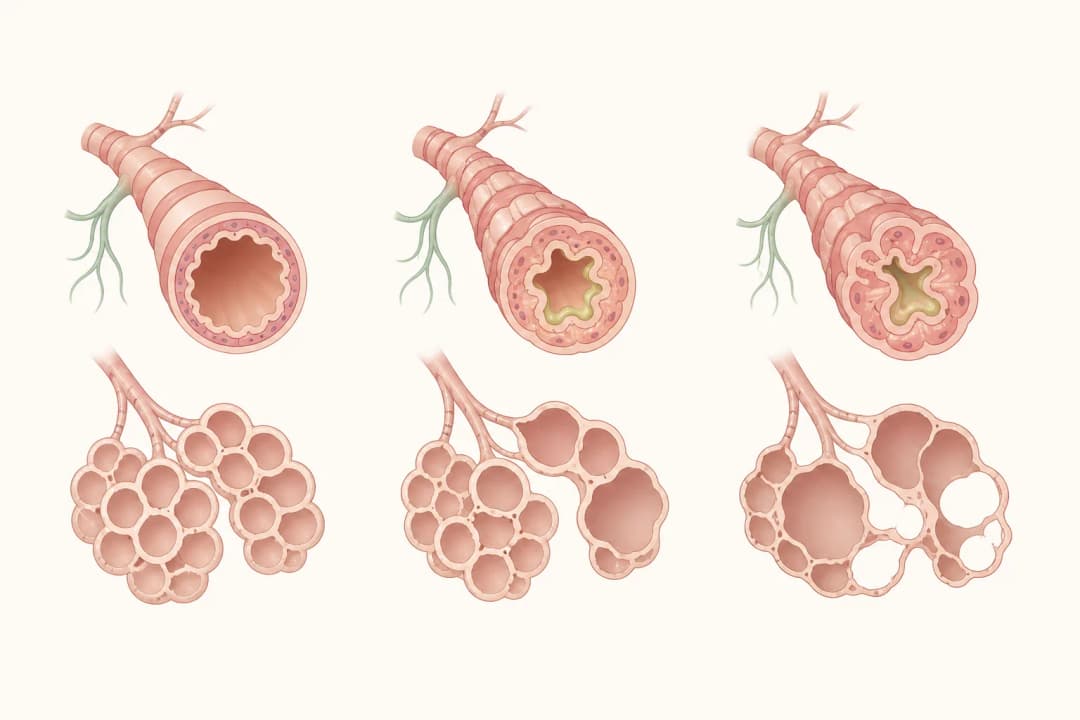
Smoking is one cause of COPD, but it is not the only one. Repeated exposure to dust, fumes, indoor cooking smoke, workplace chemicals, or outdoor air pollution may contribute. Some people have a history of asthma, severe childhood respiratory illness, or a less common inherited vulnerability that affects lung protection.
Breathlessness, a long-lasting cough, phlegm, chest tightness, or wheezing can occur with COPD, but these symptoms also have other causes. A clinician uses your exposure history, examination, and lung function testing to work out what is happening. Spirometry measures how air moves out of the lungs and can help identify airflow obstruction.
Practical next steps
Book an assessment if breathing symptoms persist, limit activity, or keep returning. Tell the clinician about work exposures, cooking fuels, second-hand smoke, previous chest infections, asthma, and relatives with lung disease. These details can change which tests are useful.
Reduce avoidable exposure by improving ventilation, using suitable workplace protection, and staying away from tobacco smoke. Take prescribed inhalers as instructed and have your technique checked. A chronic disease review can help track symptoms and create a plan for flare-ups. Smoking cessation support is still useful for anyone who currently smokes, but a non-smoker with COPD also deserves a full explanation of other possible causes.
When to seek care
Get emergency help for severe or rapidly worsening breathlessness, blue or grey lips, confusion, fainting, coughing blood, or sudden chest pain. These warning signs can point to a serious breathing or circulation problem and should not be watched at home.
Arrange prompt medical review when your usual cough or phlegm changes, you develop fever with breathing difficulty, or ordinary activities become noticeably harder. Early assessment can distinguish a COPD flare-up from infection, asthma, heart problems, or another condition.
Questions for your doctor
Ask which exposures or past illnesses may be relevant, whether spirometry is needed, how to protect your lungs at work or home, and what symptoms should trigger an urgent review.
Find care
General Clinics & Polyclinics in Abu Dhabi
That answer is general. If you want it applied to your own case, these are licensed general clinics & polyclinics listed in Abu Dhabi.
27 Ar Ruwwad St - Shakhbout City - MSH4 - Abu Dhabi - United Arab Emirates
Accepts: Daman, Thiqa, Cigna, MetLife +20 more
Al Ruwais, Al Dhafrah
Accepts: Daman, Thiqa, AXA, Cigna +16 more
Al Bahyah - Al Bahyah Old - Abu Dhabi - United Arab Emirates
Accepts: Daman, Thiqa, Cigna, Allianz Care +18 more
Abu Dhabi
Accepts: Daman, Thiqa, AXA, Cigna +27 more
Ordered by verification status and how complete each clinic's public record is, then alphabetically. This is a directory listing, not a ranking — Zavis does not rate or recommend providers.
A factual listing drawn from the DHA, DOH and MOHAP licence registers. It is not a referral, an endorsement, or advice that any of these providers is right for you.
Questions people ask
Can a non-smoker really have COPD?
Yes. COPD has several possible causes, and a clinician should investigate the pattern rather than assume smoking is involved.
Could asthma be mistaken for COPD?
Sometimes symptoms overlap. Lung function testing, symptom timing, and treatment response help clinicians tell them apart.
Related
Related reading
Keep reading
Medical disclaimer. This page is general health information, not medical advice, and it cannot diagnose you. Always consult a licensed healthcare provider about your own symptoms and treatment. In an emergency in the UAE, call 998 for an ambulance.