
What should you know about COPD therapies?
Short answer
COPD therapies aim to ease breathlessness, improve daily activity, reduce flare-ups and support lung health through personalised treatment and follow-up.
This answers one question. It is not a diagnosis and does not replace an assessment by a licensed doctor.
At a glance
- Treatment goal
- More comfortable breathing and daily activity
- Technique check
- Ask for an inhaler demonstration
- Follow-up
- Regular review keeps treatment personalised
How COPD treatment works
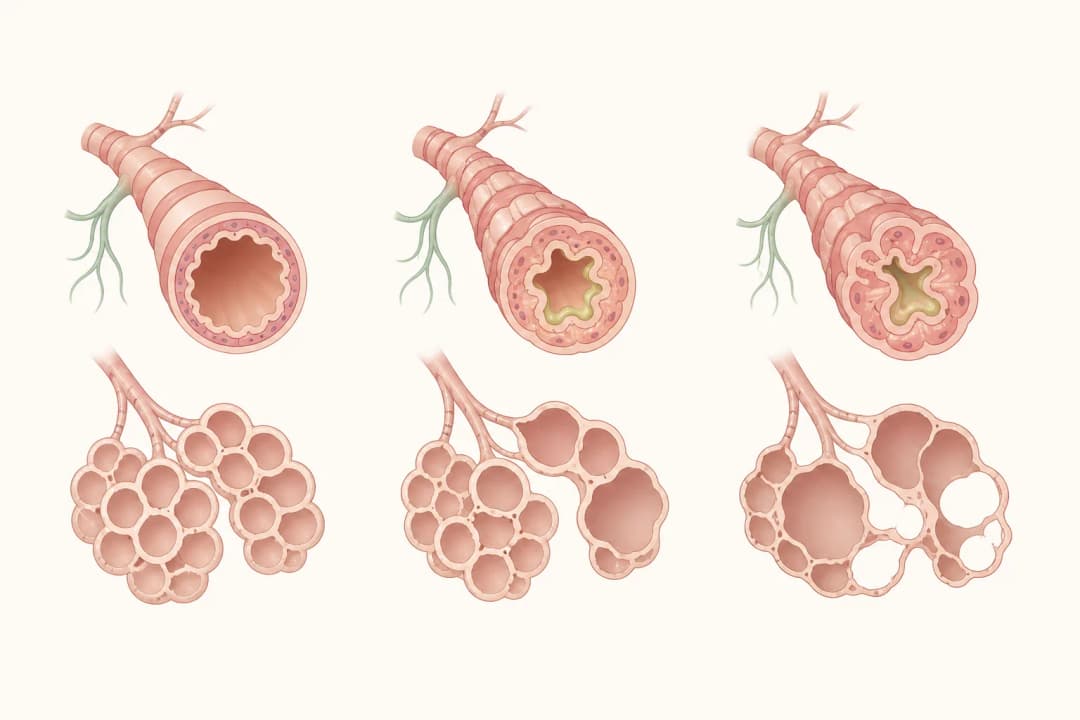
Treatment is matched to symptoms, airflow, flare-up history, other health conditions and inhaler technique. Inhaled medicines may relax tightened airway muscles or reduce airway inflammation. Some people also need support for mucus, infections or low oxygen, depending on clinical findings. Pulmonary rehabilitation can combine supervised exercise with breathing and self-management skills. Treatment does not reverse established airway damage, but it can make breathing and activity more manageable. Regular reviews help identify whether the plan is working and whether medicines are being used correctly.
Making treatment work for you
Use inhalers exactly as prescribed and ask a clinician to watch your technique; small technique errors can prevent medicine reaching the lungs. Keep an agreed flare-up plan and know when to contact your care team. Avoid smoke and other known irritants. If you smoke, a Smoking Cessation Programme can provide practical support. Attend a Chronic Disease Review so symptoms, activity, vaccinations, inhaler needs and home routines can be discussed. Spirometry may be used when the diagnosis or airflow needs checking.
When treatment needs urgent review
Get urgent help if breathlessness becomes severe, you cannot speak comfortably, your lips look blue or grey, you become confused or faint, or chest pain is severe or persistent. Seek prompt advice when rescue treatment is needed more often than usual, usual medicines are not helping, or fever and increased mucus accompany worsening breathing. Do not change prescribed doses or stop regular inhalers without medical advice.
Questions for your doctor
What is each inhaler for, and when should I use it? Can you review my technique? What should my flare-up plan say? Would rehabilitation or smoking-cessation support suit me?
Find care
General Clinics & Polyclinics in Abu Dhabi
That answer is general. If you want it applied to your own case, these are licensed general clinics & polyclinics listed in Abu Dhabi.
27 Ar Ruwwad St - Shakhbout City - MSH4 - Abu Dhabi - United Arab Emirates
Accepts: Daman, Thiqa, Cigna, MetLife +20 more
Al Ruwais, Al Dhafrah
Accepts: Daman, Thiqa, AXA, Cigna +16 more
Al Bahyah - Al Bahyah Old - Abu Dhabi - United Arab Emirates
Accepts: Daman, Thiqa, Cigna, Allianz Care +18 more
Abu Dhabi
Accepts: Daman, Thiqa, AXA, Cigna +27 more
Ordered by verification status and how complete each clinic's public record is, then alphabetically. This is a directory listing, not a ranking — Zavis does not rate or recommend providers.
A factual listing drawn from the DHA, DOH and MOHAP licence registers. It is not a referral, an endorsement, or advice that any of these providers is right for you.
Questions people ask
Are COPD therapies only inhalers?
No. Care may also include exercise rehabilitation, self-management support, smoking cessation and treatment of related problems.
Should I stop treatment when I feel better?
Do not stop regular treatment without advice; symptoms can return or flare-ups may be harder to manage.
Related
Related reading
Keep reading
Medical disclaimer. This page is general health information, not medical advice, and it cannot diagnose you. Always consult a licensed healthcare provider about your own symptoms and treatment. In an emergency in the UAE, call 998 for an ambulance.