
What should you know about COPD and NCBI information?
Short answer
COPD is a long-term condition involving restricted airflow, and reliable medical information should be interpreted alongside an individual clinical assessment.
This answers one question. It is not a diagnosis and does not replace an assessment by a licensed doctor.
At a glance
- Diagnosis
- Clinical history and examination with spirometry when appropriate
- Report
- Changes from your usual breathing pattern
COPD in plain language
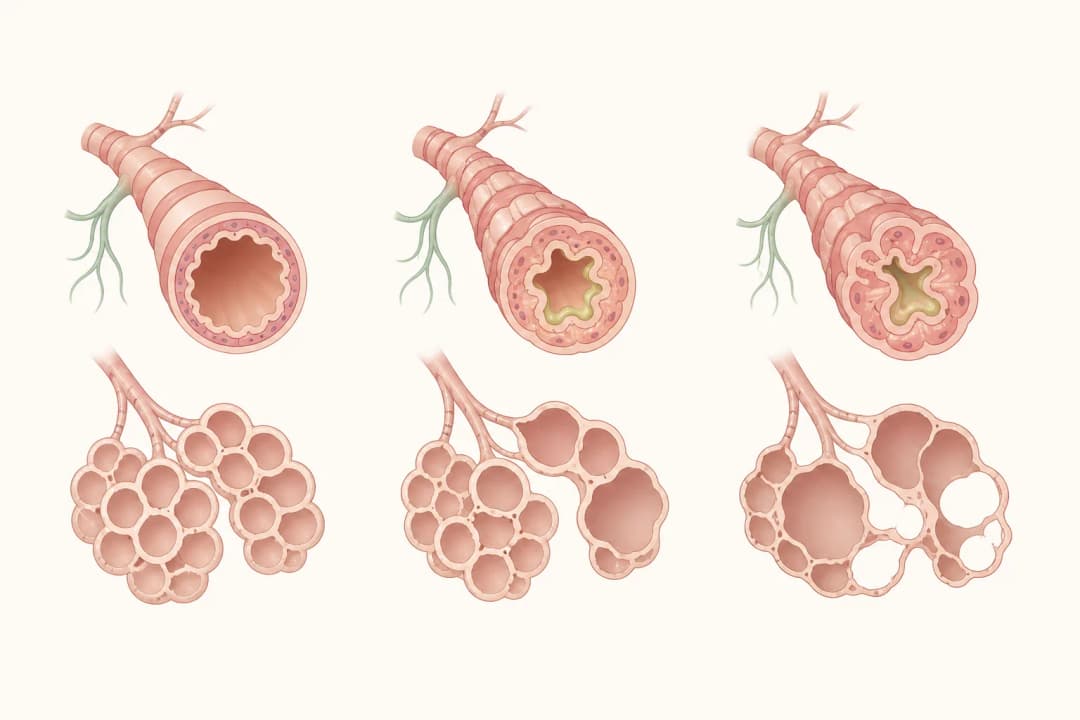
COPD affects the airways and lung tissue, making it harder to move air out. It can lead to breathlessness, a persistent [Cough](/symptoms/cough/), mucus, [Wheezing](/symptoms/wheezing/) and reduced tolerance for activity. These features can also occur in other conditions, so reading about COPD cannot replace an examination.
A flare-up is a noticeable worsening from your usual breathing pattern. Changes in phlegm, wheeze or [Chest Tightness](/symptoms/chest-tightness/) are useful details to report. A clinician looks at the whole pattern rather than one isolated symptom.
Using information safely
Write down your symptoms, triggers, smoking or workplace exposures, and any previous breathing tests. Ask a clinician to explain whether [Spirometry](/treatments/diagnostics-and-screening/spirometry/) is suitable and what your result means for you.
Follow the agreed inhaler plan and ask for a device demonstration. During a [Chronic Disease Review](/treatments/consultations-and-assessment/chronic-disease-review/), discuss activity, vaccinations, flare-up planning and other medicines. If you smoke, a [Smoking Cessation Programme](/treatments/lifestyle-and-wellness/smoking-cessation-programme/) may provide practical support.
When to seek care
Call emergency services for severe breathlessness, blue or grey lips, collapse, confusion or inability to speak because of breathing. Seek prompt clinical advice if your symptoms worsen quickly, your phlegm changes substantially, or your usual reliever plan is not helping.
Questions for your doctor
How does my history and spirometry support or challenge a COPD diagnosis? What symptoms should I record? Which parts of online medical information apply to my situation, and what should I do during a flare-up?
Find care
General Clinics & Polyclinics in Abu Dhabi
That answer is general. If you want it applied to your own case, these are licensed general clinics & polyclinics listed in Abu Dhabi.
27 Ar Ruwwad St - Shakhbout City - MSH4 - Abu Dhabi - United Arab Emirates
Accepts: Daman, Thiqa, Cigna, MetLife +20 more
Al Ruwais, Al Dhafrah
Accepts: Daman, Thiqa, AXA, Cigna +16 more
Al Bahyah - Al Bahyah Old - Abu Dhabi - United Arab Emirates
Accepts: Daman, Thiqa, Cigna, Allianz Care +18 more
Abu Dhabi
Accepts: Daman, Thiqa, AXA, Cigna +27 more
Ordered by verification status and how complete each clinic's public record is, then alphabetically. This is a directory listing, not a ranking — Zavis does not rate or recommend providers.
A factual listing drawn from the DHA, DOH and MOHAP licence registers. It is not a referral, an endorsement, or advice that any of these providers is right for you.
Questions people ask
Can online information diagnose COPD?
No. Diagnosis requires an assessment by a qualified healthcare professional and may include spirometry.
What is the most useful information to bring to an appointment?
Bring your medicines, inhalers, symptom pattern, triggers, previous tests and details of any worsening episodes.
Related
Related reading
Keep reading
Medical disclaimer. This page is general health information, not medical advice, and it cannot diagnose you. Always consult a licensed healthcare provider about your own symptoms and treatment. In an emergency in the UAE, call 998 for an ambulance.