
COPD Exacerbation: Assessment and Care
Short answer
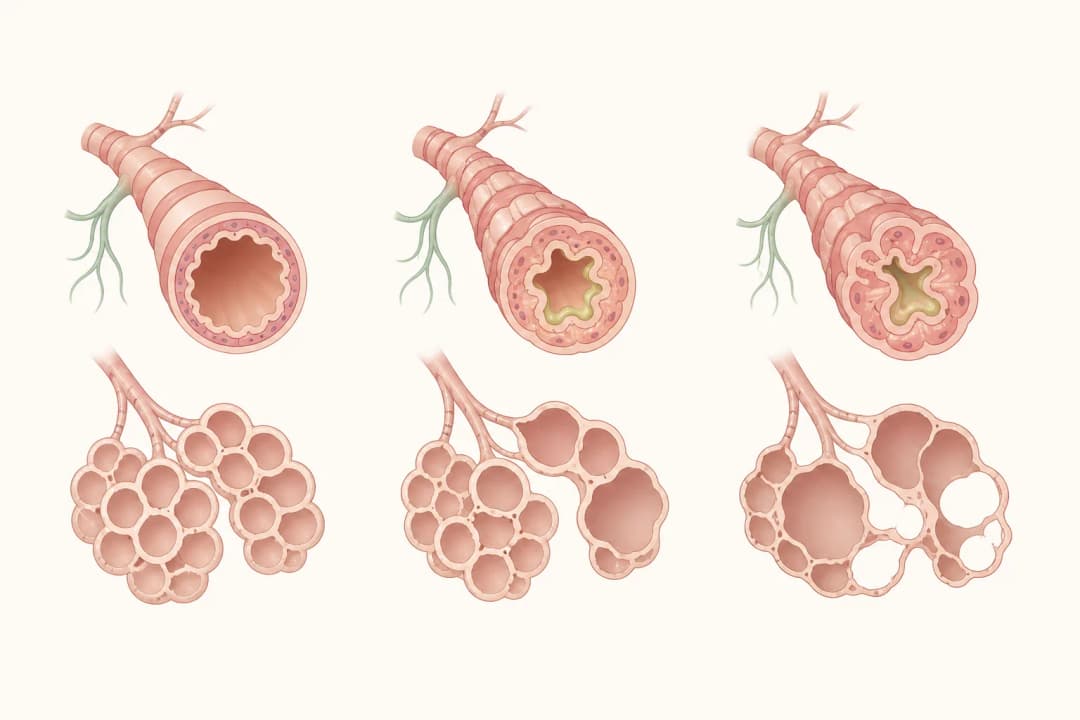
A COPD exacerbation means COPD symptoms have worsened beyond your usual day-to-day variation, so prompt clinical assessment may be needed.
This answers one question. It is not a diagnosis and does not replace an assessment by a licensed doctor.
At a glance
- Meaning
- Symptoms have worsened beyond ordinary day-to-day variation
- Assessment
- Comparison with baseline plus examination and vital signs
- Testing
- Spirometry is considered when clinically stable
How clinicians understand it
Clinicians compare your current breathing with your personal baseline. An exacerbation may involve increased breathlessness, a more frequent cough, extra phlegm or a change in phlegm, with wheeze or chest tightness in some people. A clinician may check your breathing rate, pulse, temperature, oxygen level and chest sounds, while considering infection, heart disease or another explanation. The term describes a change in symptoms; it does not by itself identify the trigger.
Steps that support recovery
Use your prescribed inhalers and any written rescue plan exactly as discussed. Contact your usual healthcare service when symptoms are clearly outside your baseline, particularly if you are producing more or differently coloured phlegm. Keep taking regular medicines unless a clinician tells you otherwise, and avoid smoke and respiratory irritants. A follow-up review can check inhaler technique, activity recovery and whether your long-term plan needs updating. Spirometry is generally considered when you are clinically stable rather than during a severe flare.
Urgent and emergency symptoms
Use emergency services for severe breathlessness, blue or grey lips, confusion, collapse, inability to speak comfortably or severe chest pain. Seek urgent assessment for a rapid deterioration, fever with worsening breathing, blood in phlegm or poor response to your prescribed reliever. Do not wait for a routine review when symptoms are escalating.
Questions for a review
Ask how your current symptoms compare with your baseline, whether infection or another problem is suspected, and how to follow your action plan next time. Confirm when to arrange a Chronic Disease Review, when spirometry should be repeated or performed, and whether smoking cessation support could help.
Find care
General Clinics & Polyclinics in Abu Dhabi
That answer is general. If you want it applied to your own case, these are licensed general clinics & polyclinics listed in Abu Dhabi.
27 Ar Ruwwad St - Shakhbout City - MSH4 - Abu Dhabi - United Arab Emirates
Accepts: Daman, Thiqa, Cigna, MetLife +20 more
Al Ruwais, Al Dhafrah
Accepts: Daman, Thiqa, AXA, Cigna +16 more
Al Bahyah - Al Bahyah Old - Abu Dhabi - United Arab Emirates
Accepts: Daman, Thiqa, Cigna, Allianz Care +18 more
Abu Dhabi
Accepts: Daman, Thiqa, AXA, Cigna +27 more
Ordered by verification status and how complete each clinic's public record is, then alphabetically. This is a directory listing, not a ranking — Zavis does not rate or recommend providers.
A factual listing drawn from the DHA, DOH and MOHAP licence registers. It is not a referral, an endorsement, or advice that any of these providers is right for you.
Questions people ask
What makes an exacerbation different from a bad day?
The symptoms are more sustained or marked than your usual variation, such as a clear rise in breathlessness, cough or phlegm.
Should spirometry be done during a severe flare?
It is usually considered once you are clinically stable, while the immediate assessment focuses on severity and urgent causes.
Related
Related reading
Keep reading
Medical disclaimer. This page is general health information, not medical advice, and it cannot diagnose you. Always consult a licensed healthcare provider about your own symptoms and treatment. In an emergency in the UAE, call 998 for an ambulance.