
COPD Exacerbation: Recognising a Flare-Up
Short answer
A COPD exacerbation is a noticeable worsening of usual breathlessness, cough or phlegm that may need prompt assessment and treatment.
This answers one question. It is not a diagnosis and does not replace an assessment by a licensed doctor.
At a glance
- Typical change
- Breathing symptoms become worse than your usual pattern
- Possible features
- More breathlessness, cough, phlegm, wheeze or chest tightness
- Immediate priority
- Follow your action plan and seek help if it is not enough
Recognising a flare-up
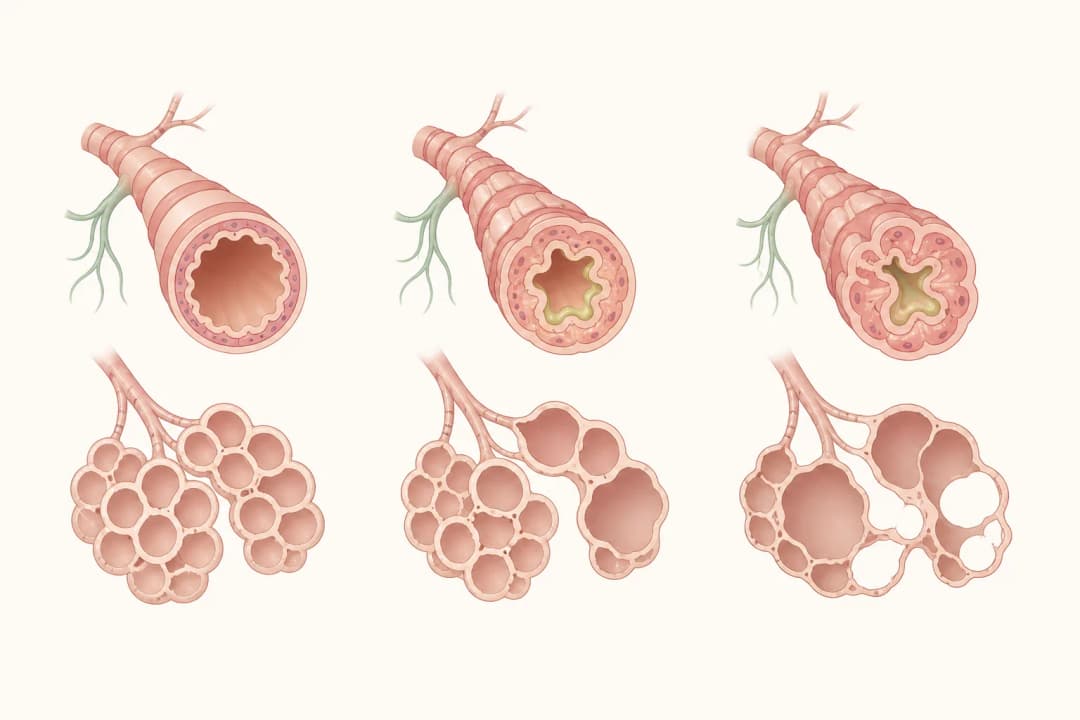
During an exacerbation, the airways become more irritated and narrowed than usual. You may feel more short of breath, cough more often, produce extra phlegm or notice a change in its colour. Wheezing and chest tightness can accompany the change. A respiratory infection, smoke or other irritants may trigger a flare, but sometimes no clear trigger is found. The key clue is a sustained departure from your usual pattern, not the presence of one symptom alone.
What to do during a flare
Follow the written action plan supplied by your clinician and use prescribed reliever treatment as directed. Rest between activities, sit upright and avoid smoke or strong fumes. Contact a healthcare professional promptly if symptoms are more intense than your plan covers, if treatment is not helping, or if you are unsure whether this is an exacerbation. Do not borrow antibiotics or change steroid doses without clinical advice. After recovery, review inhaler technique and triggers.
Emergency warning signs
Call emergency services for extreme difficulty breathing, inability to speak normally, blue or grey lips, new confusion, collapse or severe chest pain. Seek same-day medical advice for rapidly worsening breathlessness, a marked rise in phlegm, blood in mucus or fever. Early assessment can distinguish a flare from pneumonia, a heart problem or another urgent cause.
Questions after an exacerbation
Ask what may have triggered this episode, which symptoms mean you should start your action plan, and whether your regular treatment needs adjustment. Ask when to book your next Chronic Disease Review and whether spirometry remains appropriate once you are stable.
Find care
General Clinics & Polyclinics in Abu Dhabi
That answer is general. If you want it applied to your own case, these are licensed general clinics & polyclinics listed in Abu Dhabi.
27 Ar Ruwwad St - Shakhbout City - MSH4 - Abu Dhabi - United Arab Emirates
Accepts: Daman, Thiqa, Cigna, MetLife +20 more
Al Ruwais, Al Dhafrah
Accepts: Daman, Thiqa, AXA, Cigna +16 more
Al Bahyah - Al Bahyah Old - Abu Dhabi - United Arab Emirates
Accepts: Daman, Thiqa, Cigna, Allianz Care +18 more
Abu Dhabi
Accepts: Daman, Thiqa, AXA, Cigna +27 more
Ordered by verification status and how complete each clinic's public record is, then alphabetically. This is a directory listing, not a ranking — Zavis does not rate or recommend providers.
A factual listing drawn from the DHA, DOH and MOHAP licence registers. It is not a referral, an endorsement, or advice that any of these providers is right for you.
Questions people ask
Is every bad cough a COPD exacerbation?
No. An exacerbation involves a noticeable worsening of your usual symptoms, and infection or another condition may need to be considered.
Can an exacerbation be treated at home?
Some mild episodes may be covered by an agreed action plan, but worsening or unexplained symptoms need prompt professional advice.
Related
Related reading
Keep reading
Medical disclaimer. This page is general health information, not medical advice, and it cannot diagnose you. Always consult a licensed healthcare provider about your own symptoms and treatment. In an emergency in the UAE, call 998 for an ambulance.