
What should you know about COPD caused by smoking?
Short answer
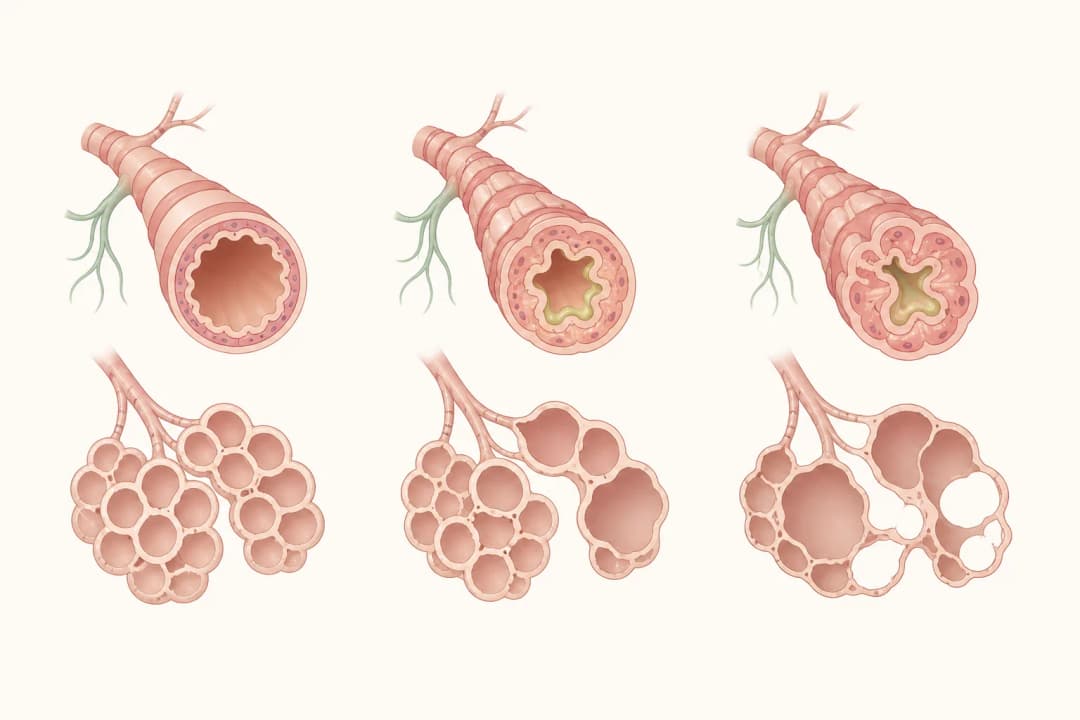
Smoking is a major cause of COPD because repeated exposure to smoke can inflame airways and damage lung tissue over time.
This answers one question. It is not a diagnosis and does not replace an assessment by a licensed doctor.
At a glance
- Main mechanism
- Smoke can inflame airways and damage lung tissue.
- Support
- A cessation programme can help with triggers and cravings.
- Assessment
- Spirometry checks airflow.
How smoking contributes
Tobacco smoke irritates the airway lining and can increase mucus, inflammation, and narrowing. It can also damage the small air sacs involved in moving oxygen. COPD may develop after many years of exposure, but a smoking history does not prove that every cough or breathing problem is COPD. Cough, phlegm, wheeze, and chest tightness can have several causes and deserve an appropriate assessment.
[Spirometry](/treatments/diagnostics-and-screening/spirometry/) measures airflow and can support evaluation. Tell the clinician about current and past smoking, workplace dust, fumes, and second-hand smoke.
Steps that help
Stopping smoking removes an ongoing source of airway irritation, even if COPD is already present. A [Smoking Cessation Programme](/treatments/lifestyle-and-wellness/smoking-cessation-programme/) can help you choose a quit approach, manage cravings, and plan for triggers. Keep using prescribed inhalers and attend a [Chronic Disease Review](/treatments/consultations-and-assessment/chronic-disease-review/) so symptoms and treatment can be reassessed.
When to seek care
Get emergency help for severe breathing difficulty, blue or grey lips, confusion, collapse, or trouble speaking. Seek prompt advice for a new persistent cough, blood in phlegm, chest pain, fever, or a sudden change in breathing. These warning signs should be assessed rather than attributed automatically to smoking or COPD.
Questions for your doctor
Ask whether spirometry is appropriate, how smoking has affected your risk, which quitting supports fit you, and how to recognise a COPD flare-up. Mention vaping, shisha, occupational fumes, and second-hand smoke as well as cigarettes.
Find care
General Clinics & Polyclinics in Abu Dhabi
That answer is general. If you want it applied to your own case, these are licensed general clinics & polyclinics listed in Abu Dhabi.
27 Ar Ruwwad St - Shakhbout City - MSH4 - Abu Dhabi - United Arab Emirates
Accepts: Daman, Thiqa, Cigna, MetLife +20 more
Al Ruwais, Al Dhafrah
Accepts: Daman, Thiqa, AXA, Cigna +16 more
Al Bahyah - Al Bahyah Old - Abu Dhabi - United Arab Emirates
Accepts: Daman, Thiqa, Cigna, Allianz Care +18 more
Abu Dhabi
Accepts: Daman, Thiqa, AXA, Cigna +27 more
Ordered by verification status and how complete each clinic's public record is, then alphabetically. This is a directory listing, not a ranking — Zavis does not rate or recommend providers.
A factual listing drawn from the DHA, DOH and MOHAP licence registers. It is not a referral, an endorsement, or advice that any of these providers is right for you.
Questions people ask
Can stopping smoking help after COPD develops?
Stopping removes ongoing smoke exposure and supports symptom management and future lung care.
Does smoking-related cough confirm COPD?
No. A cough can have many causes, so clinical assessment and sometimes spirometry are needed.
Related
Related reading
Keep reading
Medical disclaimer. This page is general health information, not medical advice, and it cannot diagnose you. Always consult a licensed healthcare provider about your own symptoms and treatment. In an emergency in the UAE, call 998 for an ambulance.