
Controlling type 2 diabetes
Short answer
Control type 2 diabetes by following an individual care plan for food, activity, medicines, glucose checks and regular health reviews.
This answers one question. It is not a diagnosis and does not replace an assessment by a licensed doctor.
At a glance
- Core plan
- Food, activity, medicines and monitoring
- Check regularly
- Feet, eyes, kidneys and cardiovascular health
What control involves
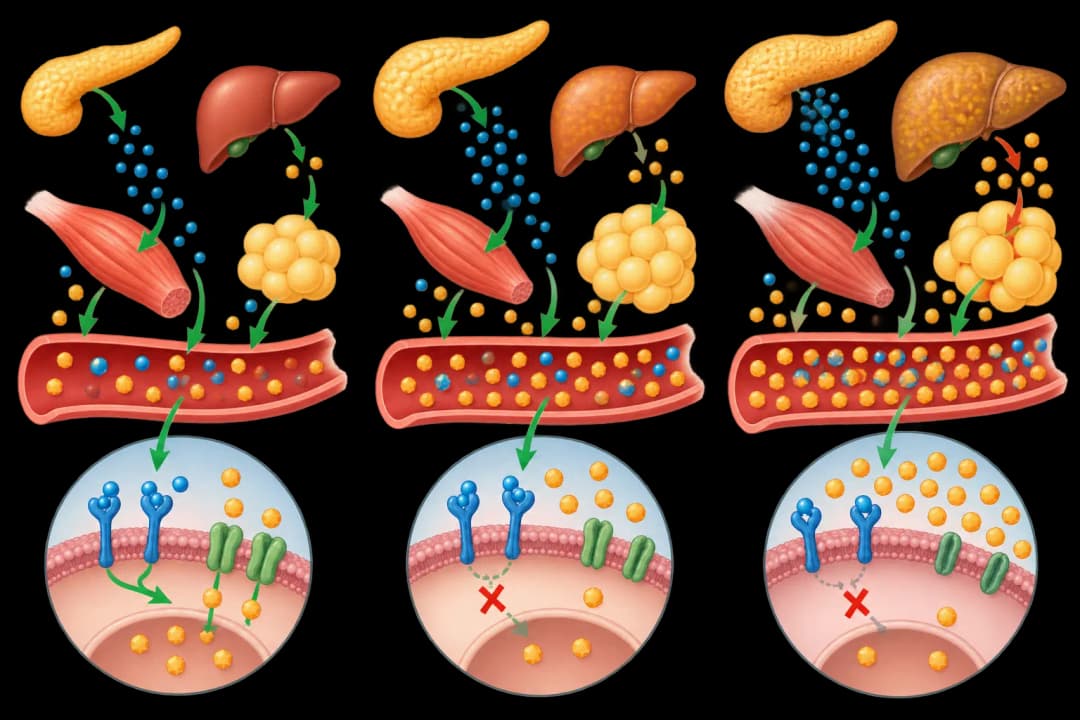
Type 2 diabetes affects how the body uses insulin, so glucose can remain in the bloodstream instead of moving efficiently into cells. Control means keeping glucose in the range agreed with your care team while also managing blood pressure, cholesterol, weight and other risks. Ongoing high glucose can damage nerves, blood vessels, kidneys and eyes. Peripheral Neuropathy may reduce sensation in the feet; Chronic Kidney Disease and Peripheral Arterial Disease can also develop as complications. These outcomes are not inevitable, and regular care helps identify changes early.
Daily management
Take medicines exactly as prescribed and check glucose when your clinician recommends it. Build meals around fibre-rich foods, vegetables and suitable portions, and choose activity that fits your health and mobility. Check your feet for blisters, cuts, colour change or areas of pressure, especially if sensation is reduced. Keep appointments for blood tests, blood pressure review, eye checks and kidney monitoring. Ask for support with weight if needed; Obesity can make glucose control harder. Never change medicine doses without advice.
When to seek care
Seek prompt advice for repeated readings outside your agreed range, worsening thirst or urination, vomiting, unusual drowsiness or difficulty staying awake. Treat suspected Hypoglycaemia according to your personal plan and seek urgent help if the person is confused, having a seizure or cannot safely swallow. Get urgent care for a foot wound with spreading redness, swelling, warmth or fever because Cellulitis can progress quickly. Sudden facial weakness, arm weakness or speech trouble may indicate Stroke and needs emergency help.
Questions for your doctor
What glucose targets and checking schedule suit me? How should I adjust food, activity or medicines when I am ill? Which foot, kidney, eye and cardiovascular checks are due, and what symptoms should prompt same-day advice?
Find care
General Clinics & Polyclinics in Abu Dhabi
That answer is general. If you want it applied to your own case, these are licensed general clinics & polyclinics listed in Abu Dhabi.
27 Ar Ruwwad St - Shakhbout City - MSH4 - Abu Dhabi - United Arab Emirates
Accepts: Daman, Thiqa, Cigna, MetLife +20 more
Al Ruwais, Al Dhafrah
Accepts: Daman, Thiqa, AXA, Cigna +16 more
Al Bahyah - Al Bahyah Old - Abu Dhabi - United Arab Emirates
Accepts: Daman, Thiqa, Cigna, Allianz Care +18 more
Abu Dhabi
Accepts: Daman, Thiqa, AXA, Cigna +27 more
Ordered by verification status and how complete each clinic's public record is, then alphabetically. This is a directory listing, not a ranking — Zavis does not rate or recommend providers.
A factual listing drawn from the DHA, DOH and MOHAP licence registers. It is not a referral, an endorsement, or advice that any of these providers is right for you.
Questions people ask
Can lifestyle changes replace diabetes medicine?
Some people need medicine even with healthy habits. Treatment should be reviewed with your clinician rather than stopped independently.
Why are foot checks part of diabetes care?
Reduced sensation or circulation can allow a small injury to worsen before it is noticed, so checking the feet helps prompt early care.
Related
Related reading
Keep reading
Medical disclaimer. This page is general health information, not medical advice, and it cannot diagnose you. Always consult a licensed healthcare provider about your own symptoms and treatment. In an emergency in the UAE, call 998 for an ambulance.