
What should you know about congenital melanoma?
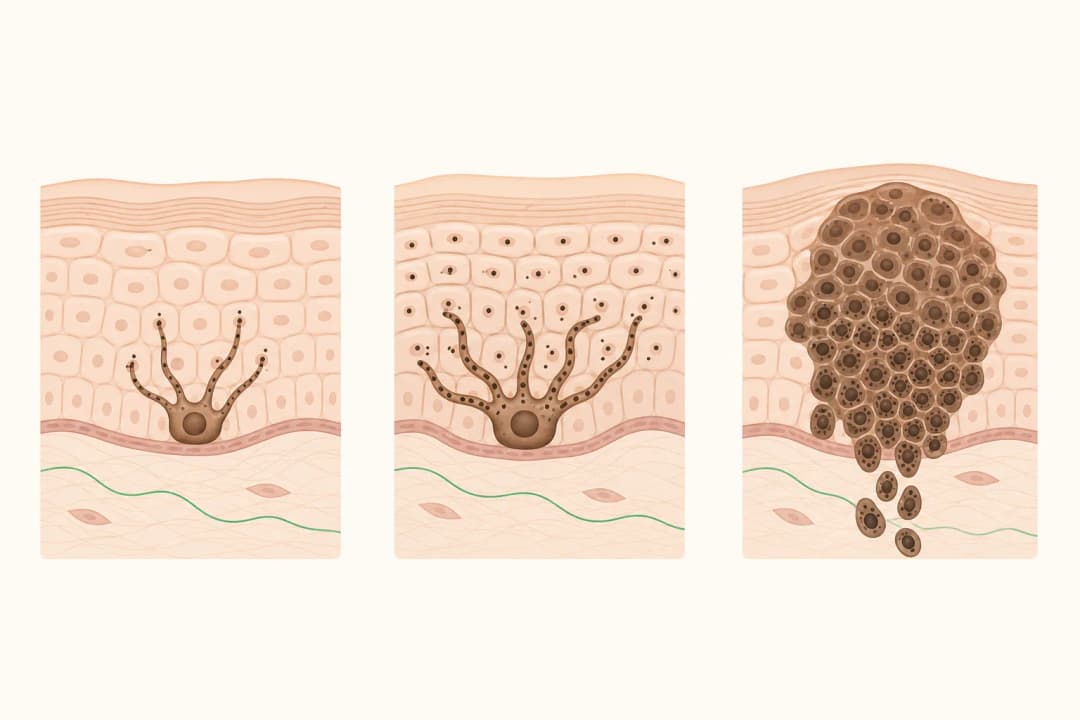
Short answer
Congenital melanoma is melanoma arising in or associated with a birthmark or mole present from birth, and it requires prompt specialist assessment rather than visual monitoring alone.
This answers one question. It is not a diagnosis and does not replace an assessment by a licensed doctor.
At a glance
- Key distinction
- A congenital mole is not automatically melanoma
- Assessment
- Examination and tissue pathology guide diagnosis
- Follow-up
- Plans may include skin, lymph-node, and wider health checks
Understanding the diagnosis
A congenital mole is not the same thing as melanoma. Most changes in a birthmark are not enough to establish a diagnosis, and melanoma can be difficult to judge from appearance alone. Warning changes include a new or enlarging area, uneven colour, altered border, bleeding, crusting, ulceration, or a firm nodule within the lesion.
A dermatologist may examine the skin with magnification, photograph the lesion, and recommend a biopsy or excisional surgery. A pathologist examines the tissue. If melanoma is confirmed, staging may include assessment of nearby lymph nodes and scans selected for the individual situation.
What to do next
Arrange specialist care promptly if a congenital mole is changing or has developed a new lump, sore, or bleeding area. Bring earlier photographs and information about when the change began. Do not pick at a crust or repeatedly injure the lesion, and protect it from avoidable friction and sun exposure.
Treatment depends on the pathology and stage. It may involve skin cancer surgery or tumour removal surgery, with further treatment such as immunotherapy considered for some diagnoses. Follow-up after cancer treatment helps clinicians check the treated area, nearby nodes, and any new skin changes.
When to seek care
Seek prompt medical review for rapid growth, a new firm section, persistent bleeding, ulceration, marked colour change, or a sore that does not heal. Urgent assessment is needed for severe headache, weakness, confusion, seizures, or new vision problems in someone with a known melanoma, because these symptoms can have serious causes and should not be watched at home.
Questions for your doctor
Ask whether the lesion needs biopsy or complete removal, what the pathology shows, whether nearby lymph nodes need assessment, which specialist will coordinate care, what treatment options fit the stage, and how follow-up will be organised.
Find care
General Clinics & Polyclinics in Abu Dhabi
That answer is general. If you want it applied to your own case, these are licensed general clinics & polyclinics listed in Abu Dhabi.
27 Ar Ruwwad St - Shakhbout City - MSH4 - Abu Dhabi - United Arab Emirates
Accepts: Daman, Thiqa, Cigna, MetLife +20 more
Al Ruwais, Al Dhafrah
Accepts: Daman, Thiqa, AXA, Cigna +16 more
Al Bahyah - Al Bahyah Old - Abu Dhabi - United Arab Emirates
Accepts: Daman, Thiqa, Cigna, Allianz Care +18 more
Abu Dhabi
Accepts: Daman, Thiqa, AXA, Cigna +27 more
Ordered by verification status and how complete each clinic's public record is, then alphabetically. This is a directory listing, not a ranking — Zavis does not rate or recommend providers.
A factual listing drawn from the DHA, DOH and MOHAP licence registers. It is not a referral, an endorsement, or advice that any of these providers is right for you.
Questions people ask
Is every congenital mole a melanoma?
No. Congenital moles and melanoma are different. A changing or unusual lesion needs professional assessment because appearance alone cannot confirm the diagnosis.
Can congenital melanoma be treated?
Treatment is possible, but the plan depends on pathology and stage. Surgery and other specialist treatments may be considered for the individual diagnosis.
Related
Related reading
Keep reading
Medical disclaimer. This page is general health information, not medical advice, and it cannot diagnose you. Always consult a licensed healthcare provider about your own symptoms and treatment. In an emergency in the UAE, call 998 for an ambulance.