
Chemo for Melanoma: What to Know
Short answer
Chemotherapy is not the only systemic option for melanoma; treatment depends on the stage, tumour features, previous care, and the oncology team’s assessment.
This answers one question. It is not a diagnosis and does not replace an assessment by a licensed doctor.
At a glance
- Treatment choice
- Guided by stage, tumour features, health, and prior care
- Local treatment
- Surgery may be used for removable melanoma
- Urgent symptoms
- Breathing trouble, seizure, confusion, or severe new weakness
Where drug treatment fits
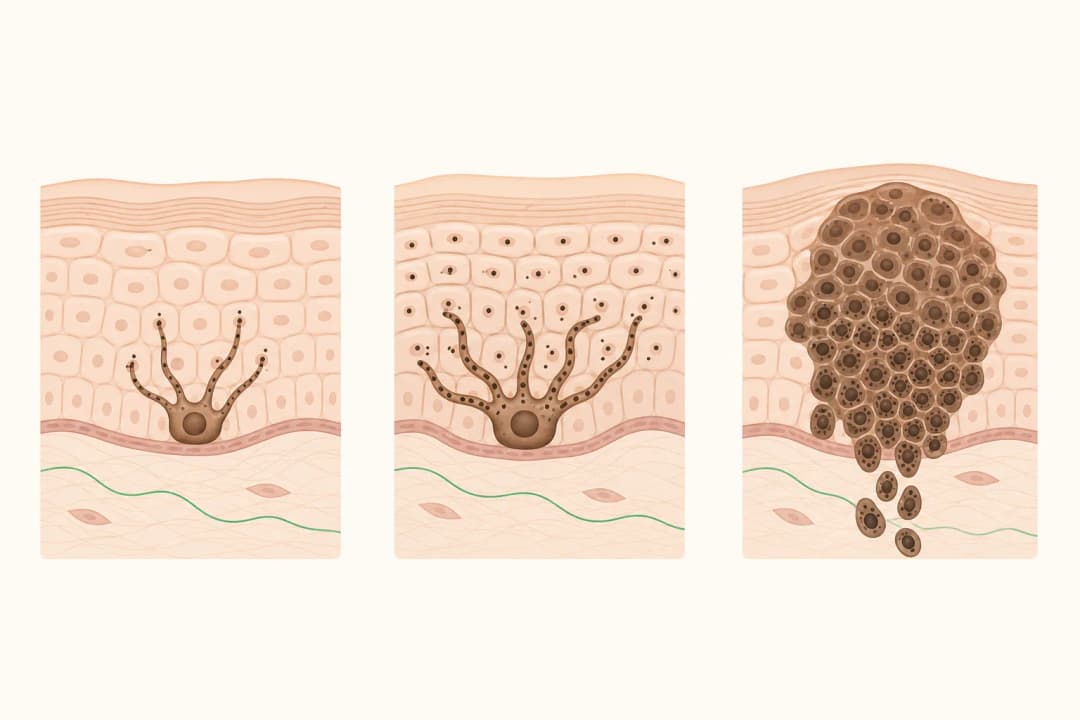
Melanoma care begins with confirming the diagnosis and assessing how far it has spread. A local melanoma may be treated with surgical excision, while selected patients have lymph-node assessment such as sentinel lymph-node biopsy. If melanoma has spread or cannot be managed with surgery alone, the team may discuss medicines that travel through the bloodstream. Immunotherapy is a major category of systemic treatment; conventional chemotherapy is a different approach and may be considered in particular circumstances. The choice depends on pathology, scans, overall health, earlier treatments, and treatment goals. Brain metastases require specific discussion because symptoms and treatment planning can differ.
Preparing for treatment decisions
Ask for a clear explanation of the melanoma stage, whether surgery can remove the known disease, and what the proposed medicine is intended to do. Bring a list of medicines, supplements, allergies, and existing conditions. Ask how treatment will be given, how symptoms will be monitored, and whom to contact between appointments. Report new symptoms early rather than waiting for the next visit. Keep scheduled scans, blood tests, and follow-up appointments so the team can judge response and adjust care.
Symptoms that need urgent advice
Contact the oncology team promptly for fever, chills, unusual bleeding, persistent vomiting, severe diarrhoea, worsening breathlessness, or a sudden decline in wellbeing. Seek emergency care for confusion, a seizure, new weakness, severe headache, trouble breathing, chest pain, or swelling of the face or throat. Treatment-related symptoms can have several causes, so do not stop or restart medicine without the treating team’s instructions.
Questions for oncology appointments
Ask why chemotherapy or immunotherapy is being recommended, what alternatives exist, how benefit will be assessed, and which side effects need same-day advice. Ask whether surgery, a clinical assessment of lymph nodes, or specialist care for brain metastases changes the plan. Ask what follow-up will continue after treatment ends.
Find care
General Clinics & Polyclinics in Abu Dhabi
That answer is general. If you want it applied to your own case, these are licensed general clinics & polyclinics listed in Abu Dhabi.
27 Ar Ruwwad St - Shakhbout City - MSH4 - Abu Dhabi - United Arab Emirates
Accepts: Daman, Thiqa, Cigna, MetLife +20 more
Al Ruwais, Al Dhafrah
Accepts: Daman, Thiqa, AXA, Cigna +16 more
Al Bahyah - Al Bahyah Old - Abu Dhabi - United Arab Emirates
Accepts: Daman, Thiqa, Cigna, Allianz Care +18 more
Abu Dhabi
Accepts: Daman, Thiqa, AXA, Cigna +27 more
Ordered by verification status and how complete each clinic's public record is, then alphabetically. This is a directory listing, not a ranking — Zavis does not rate or recommend providers.
A factual listing drawn from the DHA, DOH and MOHAP licence registers. It is not a referral, an endorsement, or advice that any of these providers is right for you.
Questions people ask
Is chemotherapy used for every melanoma?
No. Melanoma treatment is individualised, and surgery, immunotherapy, or other approaches may be more appropriate depending on the situation.
Why is staging needed before treatment?
Staging shows whether disease is confined to the skin or has reached lymph nodes or distant organs, which changes the treatment discussion.
Related
Related reading
Keep reading
Medical disclaimer. This page is general health information, not medical advice, and it cannot diagnose you. Always consult a licensed healthcare provider about your own symptoms and treatment. In an emergency in the UAE, call 998 for an ambulance.