
What should you know about chemical urinalysis?
Short answer
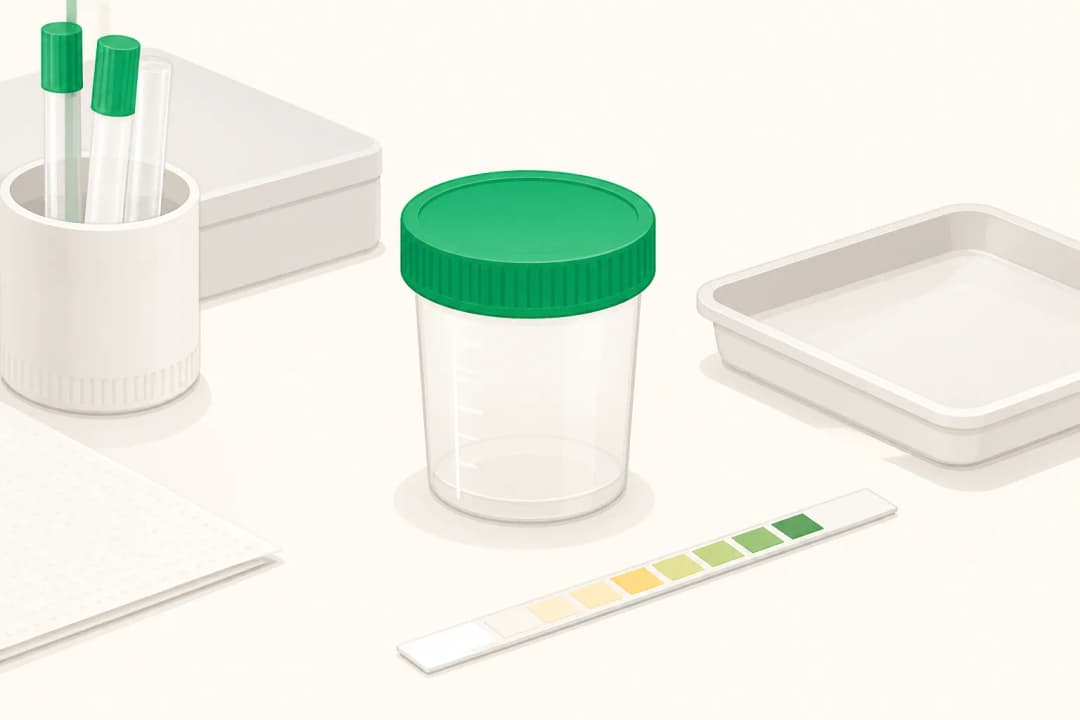
Chemical urinalysis uses a urine test strip to screen for substances that may signal infection, bleeding, kidney problems, or metabolic changes.
This answers one question. It is not a diagnosis and does not replace an assessment by a licensed doctor.
At a glance
- Sample
- A clean urine specimen
- Method
- Colour-changing chemical strip
- Meaning
- A screening clue that may need confirmation
The short answer
Chemical urinalysis uses a urine test strip to screen for substances that may signal infection, bleeding, kidney problems, or metabolic changes. The strip changes colour when it contacts the sample, and the pattern is interpreted with other symptoms and, when needed, microscopy or laboratory testing.
What the strip can show
A chemical strip may assess acidity, concentration, blood, protein, glucose, ketones, bilirubin, and markers associated with inflammation or bacteria. An unusual result is a clue, not a diagnosis. Menstrual blood, dehydration, recent exercise, medicines, or a poorly collected sample can affect interpretation.
A urine test can support assessment of a urinary tract infection, kidney infection, or other urinary problem. Changes in flow or incomplete emptying may also prompt consideration of benign prostatic hyperplasia. The result must be matched with symptoms, examination findings, and sometimes a culture.
Preparing and following up
Use the container provided, wash your hands, and collect a clean midstream sample when instructed. Tell the clinician about medicines, supplements, menstruation, and recent symptoms. Do not change treatment because of a strip result alone. If infection is suspected, a clinician may send the sample for culture before choosing antibiotic treatment.
Ask how and when the result will be explained. Persistent blood, protein, pain, fever, or changes in urination need follow-up even when a single strip appears normal.
When to seek prompt care
Seek prompt medical care for fever with back or side pain, vomiting, confusion, visible blood in urine, or difficulty passing urine. These symptoms can indicate a problem needing timely examination. Severe illness, worsening pain, or inability to keep fluids down warrants urgent assessment rather than waiting for a routine result.
Questions for your doctor
Ask which markers were abnormal, whether the sample needs repeating, whether microscopy or culture is required, and what symptoms should prompt review. If an infection is suspected, ask how the chosen treatment will be monitored and when improvement should be expected.
Find care
General Clinics & Polyclinics in Abu Dhabi
That answer is general. If you want it applied to your own case, these are licensed general clinics & polyclinics listed in Abu Dhabi.
27 Ar Ruwwad St - Shakhbout City - MSH4 - Abu Dhabi - United Arab Emirates
Accepts: Daman, Thiqa, Cigna, MetLife +20 more
Al Ruwais, Al Dhafrah
Accepts: Daman, Thiqa, AXA, Cigna +16 more
Al Bahyah - Al Bahyah Old - Abu Dhabi - United Arab Emirates
Accepts: Daman, Thiqa, Cigna, Allianz Care +18 more
Abu Dhabi
Accepts: Daman, Thiqa, AXA, Cigna +27 more
Ordered by verification status and how complete each clinic's public record is, then alphabetically. This is a directory listing, not a ranking — Zavis does not rate or recommend providers.
A factual listing drawn from the DHA, DOH and MOHAP licence registers. It is not a referral, an endorsement, or advice that any of these providers is right for you.
Questions people ask
Does an abnormal strip prove infection?
No. Several conditions and collection factors can alter the strip, so symptoms and confirmatory testing may be needed.
Can I drink water before urinalysis?
Follow the collection instructions; ordinary hydration is usually preferable to deliberately over-drinking, which can dilute urine.
Related
Related reading
Keep reading
Medical disclaimer. This page is general health information, not medical advice, and it cannot diagnose you. Always consult a licensed healthcare provider about your own symptoms and treatment. In an emergency in the UAE, call 998 for an ambulance.