
What should you know about CDKN2A melanoma?
Short answer
A CDKN2A change can increase inherited susceptibility to melanoma, so specialist assessment and regular skin surveillance matter.
This answers one question. It is not a diagnosis and does not replace an assessment by a licensed doctor.
At a glance
- Gene role
- Helps regulate cell division
- Care focus
- Genetic counselling and skin surveillance
What this genetic link means
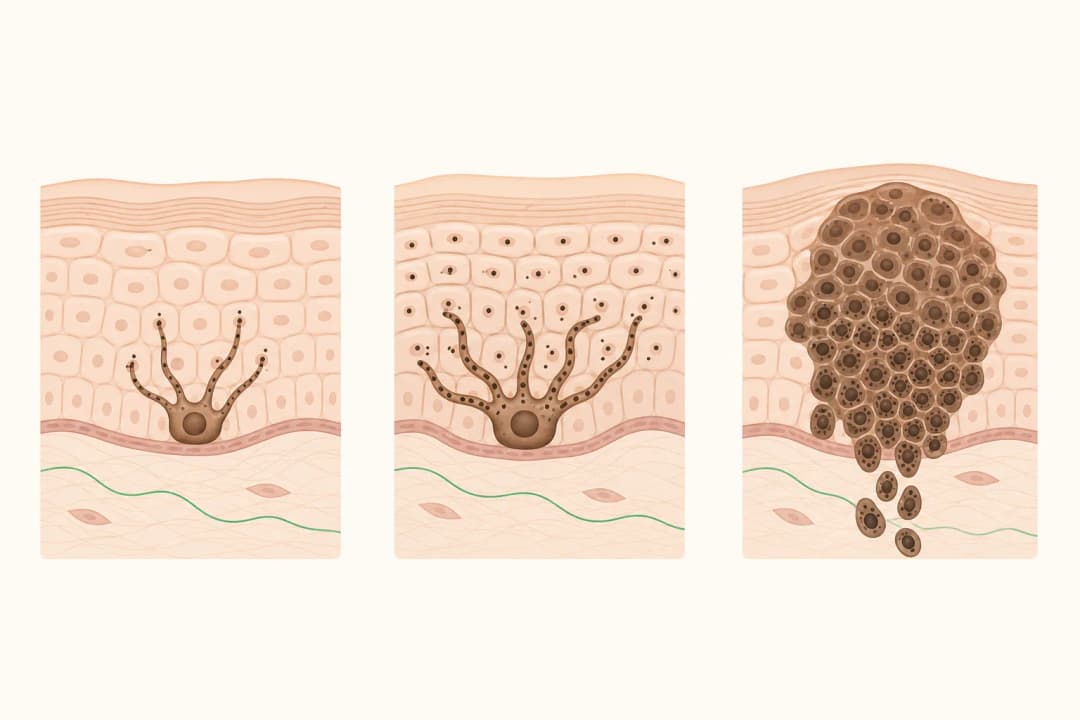
CDKN2A helps regulate how cells divide. A harmful inherited change may be passed through a family and can make melanoma more likely than in people without that susceptibility. It does not mean that every person with the change will develop cancer, and it does not identify whether a particular mole is melanoma. A genetics professional can explain testing, family implications and the difference between an inherited finding and a change found only in tumour cells.
What to do next
Arrange a dermatology assessment for a baseline examination and a personalised monitoring plan. Check your skin regularly for a new or changing mole, uneven colour, an irregular border, growth, bleeding or a sore that does not heal; photograph changes only as an aid, not as a substitute for examination. Protect skin from ultraviolet exposure with shade, clothing and sunscreen. If a suspicious lesion is identified, the clinician may recommend Surgical Excision and, depending on the melanoma details, a Sentinel Lymph Node Biopsy. Family members may be offered genetic counselling.
When to seek care
Request prompt assessment for a changing, bleeding, itching or rapidly growing mole, or a new dark mark that looks different from your other spots. Urgent medical attention is appropriate for severe symptoms such as new weakness, confusion, seizures or a sudden severe headache, which can have many causes but should not be ignored.
Questions for your doctor
Ask whether genetic counselling is appropriate, how often your skin should be examined, which relatives may benefit from advice, and what biopsy or treatment would fit any changing lesion.
Find care
General Clinics & Polyclinics in Abu Dhabi
That answer is general. If you want it applied to your own case, these are licensed general clinics & polyclinics listed in Abu Dhabi.
27 Ar Ruwwad St - Shakhbout City - MSH4 - Abu Dhabi - United Arab Emirates
Accepts: Daman, Thiqa, Cigna, MetLife +20 more
Al Ruwais, Al Dhafrah
Accepts: Daman, Thiqa, AXA, Cigna +16 more
Al Bahyah - Al Bahyah Old - Abu Dhabi - United Arab Emirates
Accepts: Daman, Thiqa, Cigna, Allianz Care +18 more
Abu Dhabi
Accepts: Daman, Thiqa, AXA, Cigna +27 more
Ordered by verification status and how complete each clinic's public record is, then alphabetically. This is a directory listing, not a ranking — Zavis does not rate or recommend providers.
A factual listing drawn from the DHA, DOH and MOHAP licence registers. It is not a referral, an endorsement, or advice that any of these providers is right for you.
Questions people ask
Does a CDKN2A change guarantee melanoma?
No. It can increase susceptibility, but it cannot predict with certainty whether an individual will develop melanoma.
Can a skin check diagnose the gene change?
No. A skin examination looks for suspicious lesions; genetic testing and counselling address an inherited CDKN2A finding.
Related
Related reading
Keep reading
Medical disclaimer. This page is general health information, not medical advice, and it cannot diagnose you. Always consult a licensed healthcare provider about your own symptoms and treatment. In an emergency in the UAE, call 998 for an ambulance.