
What causes a groin pull?
Short answer
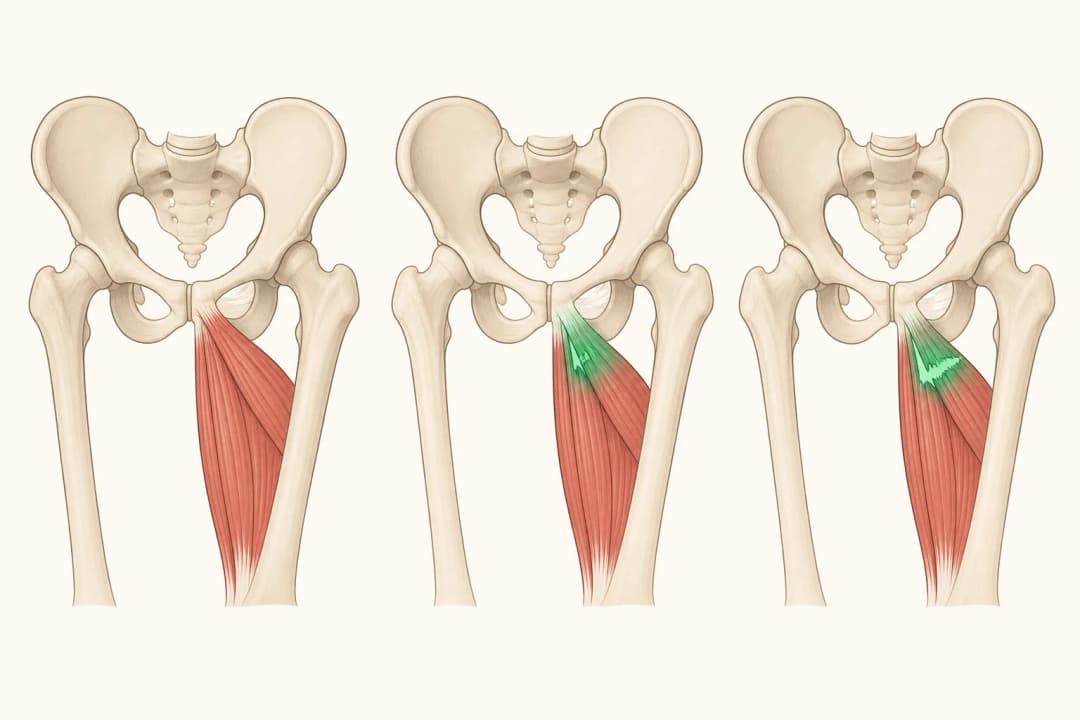
A groin pull occurs when inner-thigh muscle fibres are overloaded or stretched beyond their current capacity, often during a forceful change of direction, kick, or stride.
This answers one question. It is not a diagnosis and does not replace an assessment by a licensed doctor.
At a glance
- Main tissues
- The adductor muscles of the inner thigh
- Common mechanism
- Sudden force during sprinting, kicking, slipping, or changing direction
- Return focus
- Comfortable movement, restored strength, and controlled sport-specific loading
How a groin pull happens
The adductor muscles help draw the leg inward and stabilise the pelvis. Sprinting, side-stepping, slipping, reaching for a ball, or rapidly increasing training demand can expose them to more force than they are ready to control.
Recognising a strain pattern
A groin strain commonly presents with pain where the inner thigh meets the pelvis, tenderness along the muscle, and discomfort when squeezing the knees together. A more substantial strain may produce swelling, bruising, weakness, or a sudden tearing sensation.
Not every groin pain is a pulled muscle. Hip joint problems, a hernia, tendon irritation, and conditions involving the abdomen, urinary tract, or reproductive organs can affect the same region, so unclear or persistent symptoms deserve assessment.
Protect the injury and rebuild capacity
Stop sprinting, kicking, deep side lunges, and other movements that cause sharp pain. Comfortable walking and gentle hip movement may continue if they do not increase symptoms. Early recovery focuses on settling irritation without repeatedly stretching the injured area.
As pain eases, progressive strengthening can prepare the adductors for running, cutting, and sport-specific loads. Returning based only on the passage of time can leave strength or directional control untested; a physiotherapist can guide graded exercise and functional checks.
When groin pain needs prompt care
Seek urgent assessment for severe groin or testicular pain, a painful groin bulge, vomiting, fever, inability to bear weight, a visibly deformed hip, or pain after a major fall or collision. Arrange a clinical review if bruising is extensive, walking remains difficult, symptoms keep returning, or the pain occurs without a clear muscular trigger.
Planning a safe return to activity
Ask which structure appears injured, whether the examination suggests a non-muscular cause, and what level of walking or training is suitable now. For sport, clarify which strength, running, kicking, and change-of-direction tasks should be comfortable before full participation and how workload should increase afterward.
Find care
General Clinics & Polyclinics in Abu Dhabi
That answer is general. If you want it applied to your own case, these are licensed general clinics & polyclinics listed in Abu Dhabi.
27 Ar Ruwwad St - Shakhbout City - MSH4 - Abu Dhabi - United Arab Emirates
Accepts: Daman, Thiqa, Cigna, MetLife +20 more
Al Ruwais, Al Dhafrah
Accepts: Daman, Thiqa, AXA, Cigna +16 more
Al Bahyah - Al Bahyah Old - Abu Dhabi - United Arab Emirates
Accepts: Daman, Thiqa, Cigna, Allianz Care +18 more
Abu Dhabi
Accepts: Daman, Thiqa, AXA, Cigna +27 more
Ordered by verification status and how complete each clinic's public record is, then alphabetically. This is a directory listing, not a ranking — Zavis does not rate or recommend providers.
A factual listing drawn from the DHA, DOH and MOHAP licence registers. It is not a referral, an endorsement, or advice that any of these providers is right for you.
Questions people ask
Should I stretch a pulled groin immediately?
Forceful stretching can pull on recently injured fibres and increase pain. Begin with comfortable movement, then add mobility and strengthening progressively as symptoms settle.
How can I tell a groin strain from a hernia?
A strain is often linked to a forceful movement and hurts when the adductors work. A hernia may create a groin bulge or discomfort with coughing or straining, but clinical assessment is needed when the cause is uncertain.
Why can a groin pull return during sport?
Symptoms may settle before the muscle has regained enough strength and control for sprinting or rapid direction changes. A graded return tests these demands before full play.
Related
Related reading
Keep reading
Medical disclaimer. This page is general health information, not medical advice, and it cannot diagnose you. Always consult a licensed healthcare provider about your own symptoms and treatment. In an emergency in the UAE, call 998 for an ambulance.