
What should you know about catching melanoma early?
Short answer
Catching melanoma early means noticing a new or changing pigmented mark and arranging a skin examination without delay.
This answers one question. It is not a diagnosis and does not replace an assessment by a licensed doctor.
At a glance
- Watch for
- A new, changing, different-looking, bleeding, or crusted mark
- Places to check
- Skin, scalp, nails, soles, and between toes
- Next step
- Arrange examination and biopsy when clinically indicated
Changes worth noticing
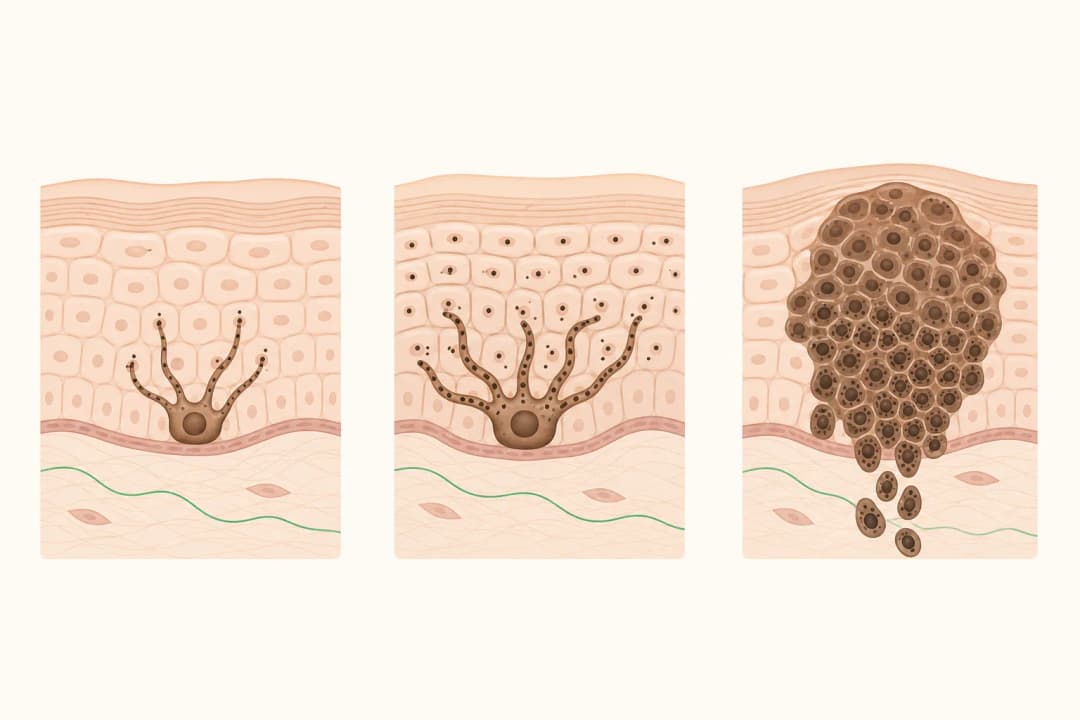
Check for asymmetry, an uneven edge, varied colours, growth, or a mark that looks different from your other moles. Itching, bleeding, crusting, or a sore that does not settle can also warrant review. Melanoma can occur on skin that is not obviously exposed to the sun, so include the scalp, between the toes, soles, nails, and areas covered by hair. A warning sign is not a diagnosis; a clinician may use dermoscopy and arrange a biopsy. Learn more about Melanoma.
How to act on a concern
Make a note of when you first saw the change and compare it with earlier photographs if available. Arrange a dermatology examination and avoid removing or irritating the lesion yourself. If melanoma is suspected or confirmed, management may include Surgical Excision, a sentinel lymph node assessment, or other Skin Cancer Surgery. Further treatment depends on the examination and pathology findings.
When to seek care
Request prompt assessment for a rapidly changing, bleeding, crusted, or newly appearing pigmented lesion. Seek urgent help for uncontrolled bleeding, severe pain, sudden swelling, or new neurological symptoms such as weakness, confusion, or a seizure. Follow-up after treatment helps clinicians check the treated site and watch for new concerns.
Questions for your doctor
Ask whether the mark needs dermoscopy or biopsy, what the pathology describes, whether margins are clear, whether lymph-node assessment is relevant, and how often your skin should be checked afterward.
Find care
General Clinics & Polyclinics in Abu Dhabi
That answer is general. If you want it applied to your own case, these are licensed general clinics & polyclinics listed in Abu Dhabi.
27 Ar Ruwwad St - Shakhbout City - MSH4 - Abu Dhabi - United Arab Emirates
Accepts: Daman, Thiqa, Cigna, MetLife +20 more
Al Ruwais, Al Dhafrah
Accepts: Daman, Thiqa, AXA, Cigna +16 more
Al Bahyah - Al Bahyah Old - Abu Dhabi - United Arab Emirates
Accepts: Daman, Thiqa, Cigna, Allianz Care +18 more
Abu Dhabi
Accepts: Daman, Thiqa, AXA, Cigna +27 more
Ordered by verification status and how complete each clinic's public record is, then alphabetically. This is a directory listing, not a ranking — Zavis does not rate or recommend providers.
A factual listing drawn from the DHA, DOH and MOHAP licence registers. It is not a referral, an endorsement, or advice that any of these providers is right for you.
Questions people ask
Do all changing moles represent melanoma?
No. Many changes have other explanations, but a changing or unusual mark should be assessed rather than diagnosed at home.
What happens if melanoma is found?
A clinician reviews the pathology and extent, then discusses treatment and follow-up suited to the individual findings.
Related
Related reading
Keep reading
Medical disclaimer. This page is general health information, not medical advice, and it cannot diagnose you. Always consult a licensed healthcare provider about your own symptoms and treatment. In an emergency in the UAE, call 998 for an ambulance.