
Broken hip operations in older adults
Short answer
A broken hip operation in an older adult aims to stabilise or replace the injured bone so movement can restart safely.
This answers one question. It is not a diagnosis and does not replace an assessment by a licensed doctor.
At a glance
- Main approaches
- Fixation or partial or total joint replacement
- Recovery focus
- Safe movement, comfort, strength, and independence
- Bring to hospital
- Medicine list and details of usual mobility
The short answer
The surgeon chooses fixation or joint replacement after reviewing the fracture pattern, bone quality, mobility before the injury, and the person's overall health. The care plan also addresses pain, medicines, hydration, nutrition, confusion risk, and safe mobilisation.
What the operation involves
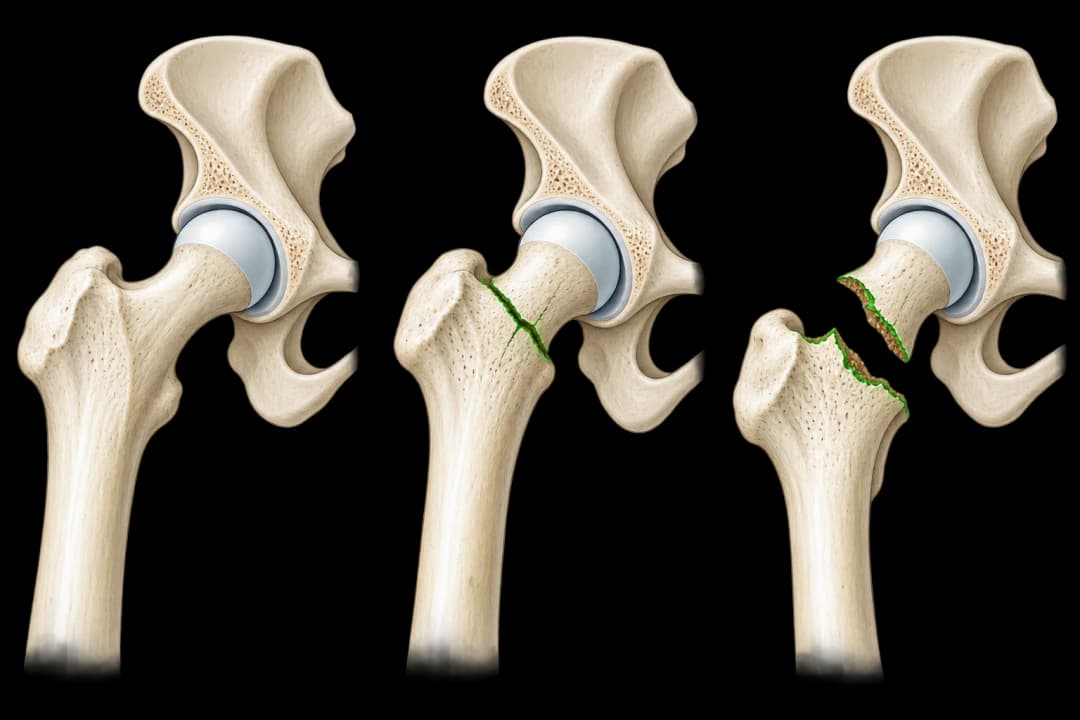
Fixation uses screws, a plate, or a rod to hold the broken parts while they heal. Replacement removes the damaged part of the upper thigh bone and inserts an artificial component; in some cases, the hip socket is replaced too. Anaesthesia and medical teams assess heart, lung, kidney, bleeding, and medicine-related concerns before treatment.
Older adults can lose strength quickly while confined to bed. Staff therefore plan pressure-area care, breathing exercises, clot prevention, and supported standing or walking alongside treatment of the fracture.
Preparing and recovering
Bring an accurate medicine list, including blood thinners, and explain the person's usual walking ability, memory, hearing, and daily support. Glasses, hearing aids, familiar contacts, and a calm routine can help orientation in hospital.
After surgery, follow the team's instructions on how much weight may go through the operated leg. Physiotherapy practises transfers, walking aids, balance, and stairs where relevant. Arrange a clear walking route, suitable seating, help with meals and medicines, and follow-up for bone health and fall prevention.
When urgent care is needed
Call emergency services for sudden chest pain, severe breathlessness, collapse, or new weakness on one side. Seek prompt clinical advice for increasing wound redness, drainage, fever, rapidly worsening pain, a swollen painful calf, new confusion, or a sudden inability to stand after initially progressing.
A new fall, shortening or turning of the operated leg, or intense hip pain after a twist needs urgent assessment. Do not encourage walking until the person has been checked.
Questions for the care team
Ask which operation is proposed, why it suits this fracture, when weight-bearing can begin, and what walking aid is expected. Clarify how pain and delirium risk will be managed, whether medicines need changing, what help will be needed at home, and who to contact if recovery changes.
Find care
General Clinics & Polyclinics in Abu Dhabi
That answer is general. If you want it applied to your own case, these are licensed general clinics & polyclinics listed in Abu Dhabi.
27 Ar Ruwwad St - Shakhbout City - MSH4 - Abu Dhabi - United Arab Emirates
Accepts: Daman, Thiqa, Cigna, MetLife +20 more
Al Ruwais, Al Dhafrah
Accepts: Daman, Thiqa, AXA, Cigna +16 more
Al Bahyah - Al Bahyah Old - Abu Dhabi - United Arab Emirates
Accepts: Daman, Thiqa, Cigna, Allianz Care +18 more
Abu Dhabi
Accepts: Daman, Thiqa, AXA, Cigna +27 more
Ordered by verification status and how complete each clinic's public record is, then alphabetically. This is a directory listing, not a ranking — Zavis does not rate or recommend providers.
A factual listing drawn from the DHA, DOH and MOHAP licence registers. It is not a referral, an endorsement, or advice that any of these providers is right for you.
Questions people ask
Can an older adult walk after a broken hip operation?
Many patients begin supported movement under clinical guidance. The permitted weight on the leg depends on the fracture, operation, and surgeon's instructions.
Why can confusion occur around hip surgery?
Pain, unfamiliar surroundings, infection, dehydration, medicines, poor sleep, and the body's response to injury can contribute. New or worsening confusion should be reported promptly.
Related
Related reading
Keep reading
Medical disclaimer. This page is general health information, not medical advice, and it cannot diagnose you. Always consult a licensed healthcare provider about your own symptoms and treatment. In an emergency in the UAE, call 998 for an ambulance.