
What happens during a broken hip operation?
Updated
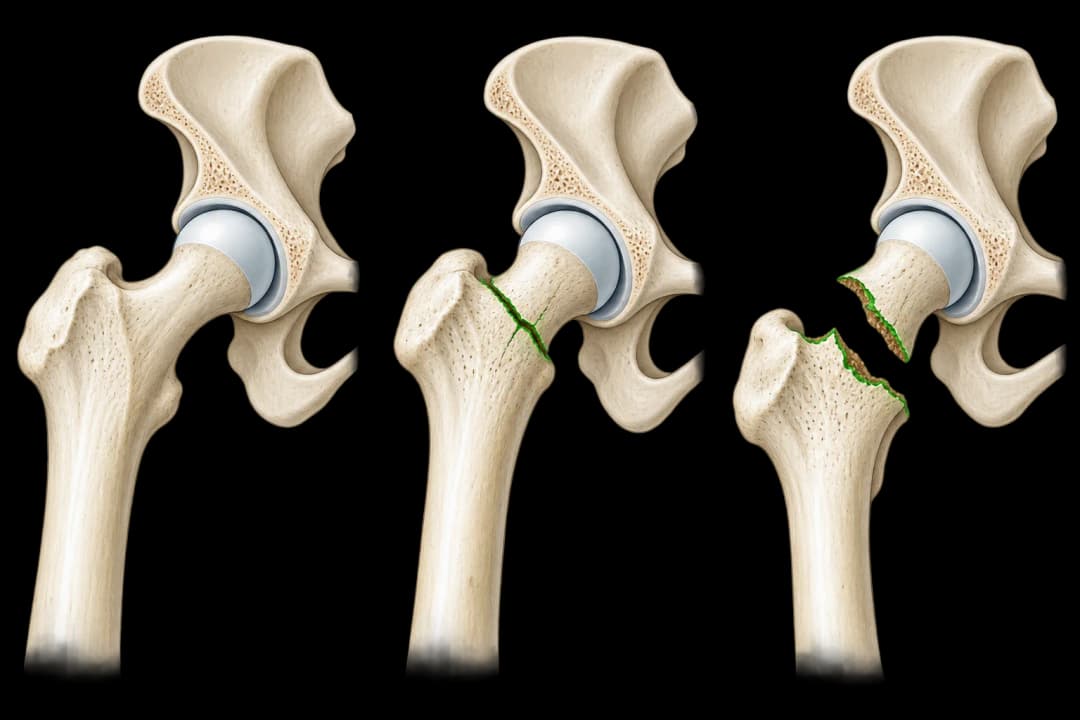
Short answer
A broken hip operation repairs the fracture with metalwork or replaces part of the joint so the patient can begin supported recovery.
This answers one question. It is not a diagnosis and does not replace an assessment by a licensed doctor.
At a glance
- Main approaches
- Fracture fixation or joint replacement
- Early care
- Pain control, clot prevention, nutrition, and supported movement
- Discharge essentials
- Walking plan, wound instructions, medicines, equipment, and follow-up contact
The short answer
The exact procedure depends mainly on where the thigh bone has broken and whether the pieces have moved. The anaesthesia, medical, surgical, nursing, and rehabilitation teams coordinate care around the person's wider health needs.
How the fracture may be operated on
Fractures below or through the trochanteric region are commonly stabilised with a rod, screw, or plate system. Breaks through the femoral neck may be fixed with screws or treated by replacing the femoral head; the socket may also be replaced in selected patients.
Metalwork holds the bone in a useful position while healing occurs. Joint replacement removes fractured bone that may not heal reliably and creates a new bearing surface. Each method has different movement instructions, wound considerations, and follow-up needs.
What to expect before and after the operation
Before surgery, staff review medicines, allergies, heart and breathing health, blood results, and imaging. Tell them about blood-thinning medicines, dental appliances, implanted devices, and any previous reaction to anaesthesia. Follow the hospital's instructions on food, drink, and regular medication.
Afterwards, the team manages pain, the wound, hydration, and blood-clot prevention. Begin breathing exercises, transfers, and walking practice when instructed. Use the specified walking aid and place only the permitted load through the leg. Continue prescribed rehabilitation after discharge.
When recovery needs urgent attention
Get emergency help for sudden breathing difficulty, chest pain, fainting, coughing blood, or a severe new change in alertness. Seek rapid assessment after another fall, sudden loss of leg function, a newly shortened or rotated leg, or intense pain that does not respond to the agreed medicine plan.
Call the treating service about fever, pus or fluid from the incision, spreading redness, opening wound edges, a swollen painful calf, or new numbness. Persistent vomiting, inability to pass urine, or rapidly worsening confusion also deserves prompt review.
Questions to answer before discharge
Confirm the name of the operation, the weight-bearing instruction, any hip movement precautions, and the wound-care method. Ask who arranges physiotherapy, when follow-up occurs, which medicines continue at home, and what equipment is needed for sleeping, bathing, and toileting.
Find care
General Clinics & Polyclinics in Dubai
That answer is general. If you want it applied to your own case, these are licensed general clinics & polyclinics listed in Dubai.
The Court Residence, 39B Street, Jumeirah 1, Dubai
Accepts: Tabby, Tamara
Elite Business Bay Residence - Shop 03 & 04, 34 Marasi Dr - Business Bay - Dubai - United Arab Emirates
Accepts: Tabby
Airport View Building, Al Garhoud, Dubai
Accepts: Daman, Thiqa, AXA, Cigna +25 more
IBIS Building, 5th Floor, Unit 5003, Deira, Dubai
Accepts: AXA, Cigna, MetLife, Allianz Care +18 more
Ordered by verification status and how complete each clinic's public record is, then alphabetically. This is a directory listing, not a ranking — Zavis does not rate or recommend providers.
A factual listing drawn from the UAE health regulators' public licence registers. It is not a referral, an endorsement, or advice that any of these providers is right for you.
Questions people ask
What type of anaesthetic is used for a hip fracture operation?
A spinal anaesthetic, general anaesthetic, or a planned combination may be used. The anaesthesia team recommends an approach after assessing health, medicines, and the procedure.
Why is physiotherapy needed after the operation?
Physiotherapy supports safe transfers, walking technique, strength, balance, and confidence while following the restrictions set by the surgeon.
Related
Related reading
Keep reading
Medical disclaimer. This page is general health information, not medical advice, and it cannot diagnose you. Always consult a licensed healthcare provider about your own symptoms and treatment. In an emergency in the UAE, call 998 for an ambulance.