
“Benign melanoma”: understanding the terminology
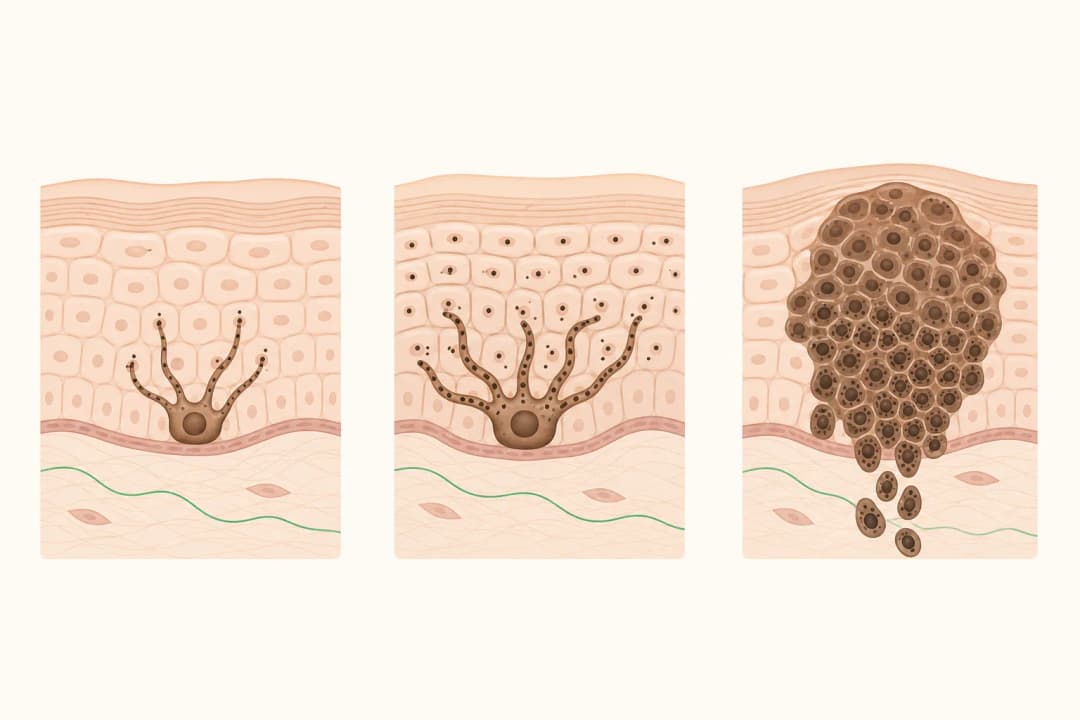
Short answer
There is no benign melanoma: melanoma is a malignant cancer, while a benign mole or other harmless pigmented lesion is a separate diagnosis.
This answers one question. It is not a diagnosis and does not replace an assessment by a licensed doctor.
At a glance
- Terminology
- Melanoma is malignant; a benign mole is called a naevus.
- Confirmation
- An uncertain pigmented lesion may require biopsy.
- Useful record
- Keep the precise pathology wording and follow-up plan.
What the phrase means
Someone may use the phrase informally when a spot was suspected to be melanoma but testing found a benign naevus, lentigo or another non-cancerous lesion. The final clinical or pathology term is the one that should guide care.
How the diagnosis is made
A dermatologist considers whether a lesion is new or changing, examines its symmetry, borders, colours and structure, and may use a dermoscope for a magnified view. Not every melanoma follows a classic visual pattern, and benign lesions can look irregular.
When melanoma cannot be excluded, a biopsy allows a pathologist to examine the cells and their arrangement. The report may describe a benign naevus, an atypical lesion, melanoma in situ or invasive melanoma; these terms have different implications and should not be used interchangeably.
What to do with an uncertain result
Ask for the exact diagnosis in writing if you were told only that a lesion was “benign melanoma.” If a pathology report exists, review it with the clinician who removed or sampled the lesion and clarify whether further excision or routine skin monitoring is advised.
Check your skin regularly in good light, including the scalp, nails, soles and areas that are difficult to see. Photographs can help show genuine change. Protect skin from ultraviolet exposure with shade, clothing and suitable sunscreen, and avoid tanning devices.
When to arrange review
Arrange a timely skin examination for a new or changing spot, especially one that becomes asymmetric, develops an irregular edge or varied colours, grows, bleeds, crusts, itches persistently or does not heal. A mark that looks distinctly different from your other moles also merits attention.
These changes can occur for several reasons and do not diagnose melanoma on their own. If melanoma has already been confirmed, follow the skin-cancer team's plan and report new symptoms or changing lesions without waiting for a routine appointment.
Questions about the report
Ask whether the diagnosis is fully benign, atypical, in situ or invasive; whether the specimen edges are clear; and whether more surgery is recommended. If invasive melanoma is present, ask which pathology features determine staging, whether lymph-node assessment is relevant and how follow-up will be organised.
Find care
General Clinics & Polyclinics in Abu Dhabi
That answer is general. If you want it applied to your own case, these are licensed general clinics & polyclinics listed in Abu Dhabi.
27 Ar Ruwwad St - Shakhbout City - MSH4 - Abu Dhabi - United Arab Emirates
Accepts: Daman, Thiqa, Cigna, MetLife +20 more
Al Ruwais, Al Dhafrah
Accepts: Daman, Thiqa, AXA, Cigna +16 more
Al Bahyah - Al Bahyah Old - Abu Dhabi - United Arab Emirates
Accepts: Daman, Thiqa, Cigna, Allianz Care +18 more
Abu Dhabi
Accepts: Daman, Thiqa, AXA, Cigna +27 more
Ordered by verification status and how complete each clinic's public record is, then alphabetically. This is a directory listing, not a ranking — Zavis does not rate or recommend providers.
A factual listing drawn from the DHA, DOH and MOHAP licence registers. It is not a referral, an endorsement, or advice that any of these providers is right for you.
Questions people ask
Can a suspicious-looking mole turn out to be benign?
Yes. Examination or biopsy may show a benign naevus or another harmless lesion. Suspicion describes the need to check it, not the final diagnosis.
Is an atypical mole the same as melanoma?
No. An atypical mole has unusual features but is not automatically melanoma. Its pathology wording and clinical context determine whether removal or monitoring is advised.
What should I do if my report is unclear?
Ask the treating clinician to explain the exact diagnosis, specimen edges and next step. A specialist pathology review may be considered when interpretation remains uncertain.
Related
Related reading
Keep reading
Medical disclaimer. This page is general health information, not medical advice, and it cannot diagnose you. Always consult a licensed healthcare provider about your own symptoms and treatment. In an emergency in the UAE, call 998 for an ambulance.