
Is alopecia areata common?
Short answer
Alopecia areata is a recognised and relatively common type of hair loss that can affect people of any age, skin tone or gender.
This answers one question. It is not a diagnosis and does not replace an assessment by a licensed doctor.
At a glance
- Who can develop it
- People of any age, skin tone or gender
- Typical pattern
- One or more smooth, clearly outlined patches
- Spread between people
- It is not contagious
The short answer
That does not mean every bald patch is alopecia areata. Hair loss has many possible causes, and the shape of the loss, condition of the exposed skin, accompanying symptoms and pace of change help distinguish them.
Putting “common” in context
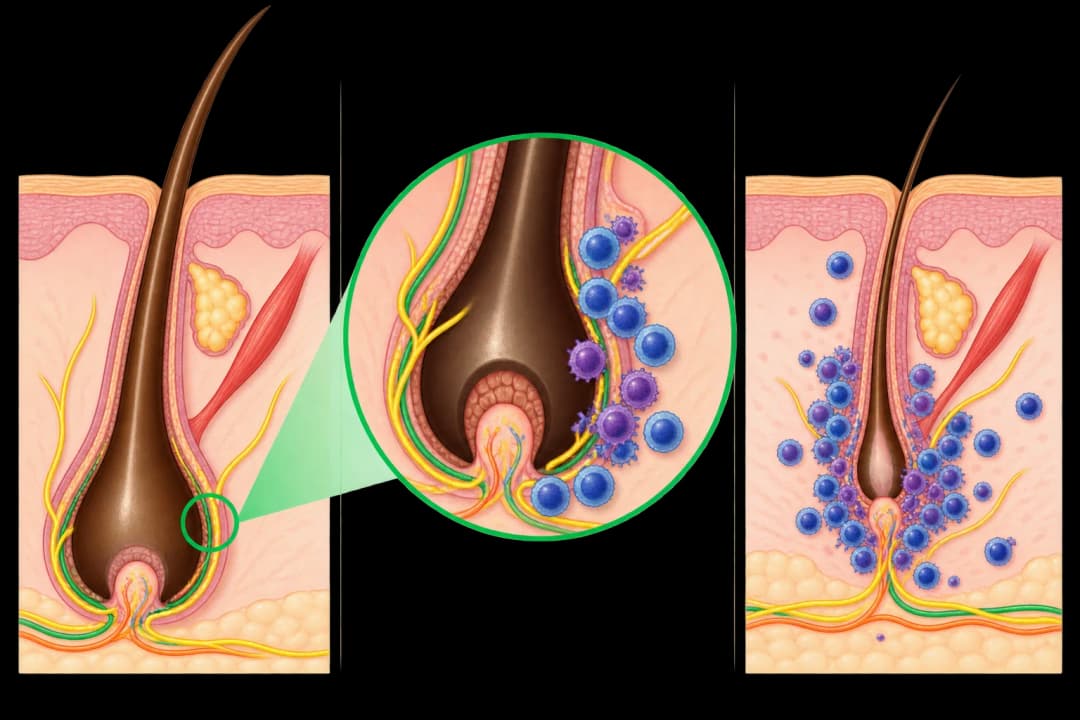
Dermatologists see alopecia areata regularly, but an individual’s course remains unpredictable. It often begins with one or more smooth round or oval patches on the scalp or beard. Some people have limited loss followed by regrowth, while others develop repeated episodes or broader loss involving the scalp, eyebrows, eyelashes or body.
The condition is autoimmune and non-contagious. A person can otherwise feel well, so the absence of pain or illness does not rule it out. Conversely, patterned thinning, fungal infection, hair pulling, tight styling and inflammatory scalp disorders can all cause hair loss without being alopecia areata.
Responding to a new patch
Photograph the area, note when it appeared, and look without scratching or repeatedly tugging the hairs. Check whether there is scale, redness, tenderness, breakage or a shiny scar-like surface. Keep hair care gentle and avoid tight styles across the area until a clinician has assessed the pattern.
A dermatologist may use magnification to examine follicles and short hairs, inspect the nails, and ask about other health conditions or family history. Treatment is not determined by how familiar the condition is. It is tailored to extent, site, activity, age and impact, and may range from observation to local corticosteroids or medicines that act throughout the body.
When to get it checked
Schedule an assessment for any unexplained patch that persists or expands. Seek earlier care if hair is disappearing quickly, several body areas are involved, or eyebrow and eyelash loss affects eye protection. Scalp pain, pus, crusting, pronounced scale, fever or visible scarring require prompt attention because they suggest inflammation or infection rather than a simple wait-and-see situation.
Questions for an appointment
Ask which features separate alopecia areata from other hair-loss patterns and whether photographs are useful for tracking change. Clarify whether monitoring is reasonable, what each offered treatment is intended to achieve, how side effects will be checked, and which changes should bring you back sooner.
Find care
General Clinics & Polyclinics in Abu Dhabi
That answer is general. If you want it applied to your own case, these are licensed general clinics & polyclinics listed in Abu Dhabi.
27 Ar Ruwwad St - Shakhbout City - MSH4 - Abu Dhabi - United Arab Emirates
Accepts: Daman, Thiqa, Cigna, MetLife +20 more
Al Ruwais, Al Dhafrah
Accepts: Daman, Thiqa, AXA, Cigna +16 more
Al Bahyah - Al Bahyah Old - Abu Dhabi - United Arab Emirates
Accepts: Daman, Thiqa, Cigna, Allianz Care +18 more
Abu Dhabi
Accepts: Daman, Thiqa, AXA, Cigna +27 more
Ordered by verification status and how complete each clinic's public record is, then alphabetically. This is a directory listing, not a ranking — Zavis does not rate or recommend providers.
A factual listing drawn from the DHA, DOH and MOHAP licence registers. It is not a referral, an endorsement, or advice that any of these providers is right for you.
Questions people ask
Is alopecia areata the most common reason for hair loss?
No. It is one recognised common type, but patterned thinning and other causes are also frequently seen. An examination identifies the relevant pattern.
Does a common condition always have a predictable outcome?
No. Alopecia areata may improve, recur, remain limited or extend. Its familiarity to clinicians does not predict one person’s course.
Can children get alopecia areata?
Yes. It can begin in childhood or later in life, and treatment choices are adjusted for age and extent.
Related
Related reading
Keep reading
Medical disclaimer. This page is general health information, not medical advice, and it cannot diagnose you. Always consult a licensed healthcare provider about your own symptoms and treatment. In an emergency in the UAE, call 998 for an ambulance.