
Alopecia Areata: Patchy Hair Loss Explained
Updated
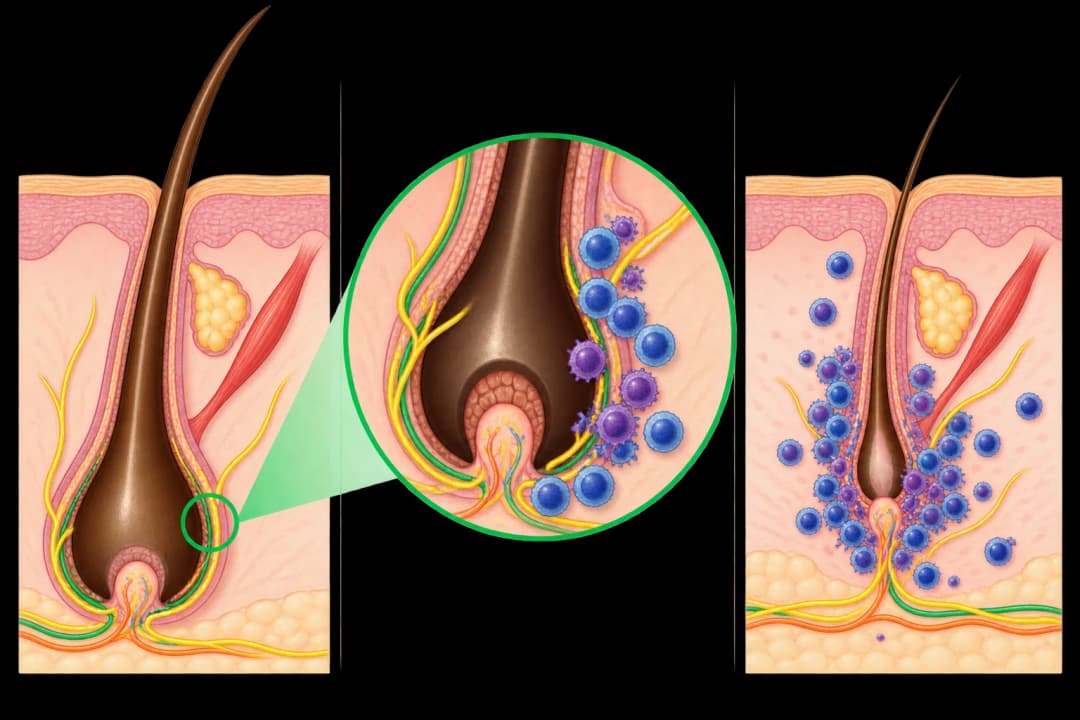
At a glance
- Condition type
- Immune-mediated, non-scarring hair loss
- Common pattern
- Smooth round or oval bald patches
- Possible sites
- Scalp, brows, lashes, beard and body hair
What alopecia areata is
Alopecia areata is an immune-mediated condition that causes smooth, clearly defined patches of non-scarring hair loss.
The immune response disrupts active hair follicles without usually destroying them, so regrowth remains possible. It can involve scalp hair, eyebrows, eyelashes, beard hair or other body sites, and its course differs considerably between people.
Recognising the pattern
A very common presentation is one or more round or oval bald patches with skin that looks smooth. Some people notice short hairs that narrow near the scalp edge. Thinning eyebrows and more extensive hair loss can also occur. Nail pitting, ridging or roughness may accompany the hair changes.
The immune process behind hair loss
Immune activity mistakenly targets growing hair follicles and shifts them out of active growth. The exact trigger is often unclear. Alopecia areata is not contagious, is not caused by unclean hair, and does not result from hair styling alone. Emotional strain may coincide with an episode but should not be treated as the person's fault.
Regrowth and recurrence
Hair may regrow spontaneously, initially appearing fine or lighter in colour, while another patch can develop elsewhere. Some episodes stay limited; others progress to extensive scalp or body-hair loss. Neither the size of a single new patch nor early regrowth can predict the entire future course.
Who may be more susceptible
A family history of alopecia areata or autoimmune illness can increase susceptibility. Personal autoimmune conditions and atopic conditions may also occur alongside it. These associations do not establish what triggered an individual episode, and many affected people have no obvious family pattern.
Clinical assessment and tests
A dermatologist examines the shape of loss, follicle openings, hairs at the patch margin, nails and other body sites. A magnifying scalp examination can reveal characteristic broken or tapered hairs. Blood tests may be considered when symptoms suggest an associated thyroid, nutritional or autoimmune issue; a scalp sample is reserved for an unclear diagnosis.
Treatment choices
The plan depends on age, site, extent, rate of change and the person's priorities. Topical corticosteroids may be used on limited areas. Steroid injections into the skin can target selected patches. Oral corticosteroids may be considered for particular rapidly changing cases, but potential systemic effects limit how they are used.
JAK inhibitor treatment alters immune signalling and may be discussed for extensive disease after screening for relevant health risks. Treatment can encourage regrowth, yet recurrence remains possible. Cosmetic camouflage, wigs, eyebrow products and sun protection for exposed scalp are valid parts of care.
Protecting skin and emotional wellbeing
Use sunscreen or a hat on exposed scalp, and protect eyes if eyelashes are sparse. Gentle grooming will not switch off the immune process, but it can reduce breakage in remaining hair. Unpredictable loss can affect identity, mood and confidence; counselling or peer support can sit alongside medical care.
Associated concerns
The condition does not usually scar the follicle, but extensive loss removes protection from sunlight, dust and sweat. Seek earlier assessment if the scalp is painful, inflamed, crusted or scar-like, because those findings are not the classic smooth presentation and may indicate another condition.
Can another patch be prevented?
There is no dependable way to prevent the immune response or every recurrence. Avoid unproven restrictive diets unless a deficiency is diagnosed. Photographs taken under similar lighting can document change without daily checking, while scheduled follow-up allows treatment to be adjusted if loss spreads.
When specialist review helps
See a dermatologist for a new smooth bald patch, eyebrow or eyelash involvement, rapid spread, nail changes, or uncertainty about the cause. Urgent review is appropriate when hair loss comes with painful inflammation, pus, fever or a scarred-looking scalp. Bring photographs and a medicine list to show the timeline.
Questions people ask
Is alopecia areata contagious?
No. It is related to immune activity around hair follicles and cannot pass between people through touch, shared brushes or close contact.
Will hair grow back?
Regrowth is possible because follicles are generally preserved, but timing and completeness vary. New loss can occur even after one patch fills in.
Should I cut or shave the remaining hair?
Cutting or shaving does not alter the immune process. The choice can be based on comfort, appearance and easier use of scalp treatments or camouflage.
Related
Related reading
Keep reading
Find care
General Clinics & Polyclinics in Dubai
Where alopecia areata: patchy hair loss explained is assessed depends on what is causing it. These are licensed general clinics & polyclinics listed in Dubai.
The Court Residence, 39B Street, Jumeirah 1, Dubai
Accepts: Tabby, Tamara
Elite Business Bay Residence - Shop 03 & 04, 34 Marasi Dr - Business Bay - Dubai - United Arab Emirates
Accepts: Tabby
Airport View Building, Al Garhoud, Dubai
Accepts: Daman, Thiqa, AXA, Cigna +25 more
IBIS Building, 5th Floor, Unit 5003, Deira, Dubai
Accepts: AXA, Cigna, MetLife, Allianz Care +18 more
Ordered by verification status and how complete each clinic's public record is, then alphabetically. This is a directory listing, not a ranking — Zavis does not rate or recommend providers.
A factual listing drawn from the UAE health regulators' public licence registers. It is not a referral, an endorsement, or advice that any of these providers is right for you.
Medical disclaimer. This page is general health information, not medical advice, and it cannot diagnose you. Always consult a licensed healthcare provider about your own symptoms and treatment. In an emergency in the UAE, call 998 for an ambulance.