
Hammer Toe Surgery
At a glance
- Main goal
- Improve toe alignment and reduce pressure
- Plan depends on
- Flexibility, joint involvement, footwear, and walking needs
- Recovery focus
- Protected walking, swelling control, and staged activity
Find care
Hospitals & Medical Centers in Abu Dhabi
Licensed hospitals & medical centers listed in Abu Dhabi. Appearing here means a provider holds a UAE licence in this category — not that it offers hammer toe surgery, which is worth confirming with the clinic before you book.
Ahalia Hospital Musaffah Building - Musaffah - Musaffah Industrial - Abu Dhabi - United Arab Emirates
Accepts: Daman, Thiqa, AXA, Cigna +26 more
Al Ruwais Industrial City - Abu Dhabi - United Arab Emirates
Accepts: Daman, Thiqa, AXA, Cigna +30 more
Abu Dhabi, Abu Dhabi
Accepts: Daman, Thiqa, AXA, Cigna +30 more
Plot No. 11-12, SE 44 Khalifa City A - مدينة خليفة - جنوب شرق 44 - أبو ظبي - United Arab Emirates
Accepts: Daman, Thiqa, AXA, Cigna +26 more
7 Al Kawadir 2 St - Khalifa City - SE44 - Abu Dhabi - United Arab Emirates
Accepts: Daman, Thiqa, AXA, Cigna +25 more
Mohammed Bin Khalif Street 669, Al Mussala, Abu Dhabi, Abu Dhai - 35453 - 669 Mohammed Bin Khalifa St - Al Manhal - W15 02 - Abu Dhabi - United Arab Emirates
Accepts: Daman, Thiqa, AXA, Cigna +22 more
Ordered by verification status and how complete each clinic's public record is, then alphabetically. This is a directory listing, not a ranking — Zavis does not rate or recommend providers.
A factual listing drawn from the DHA, DOH and MOHAP licence registers. It is not a referral, an endorsement, or advice that any of these providers is right for you.
What is hammer toe surgery?
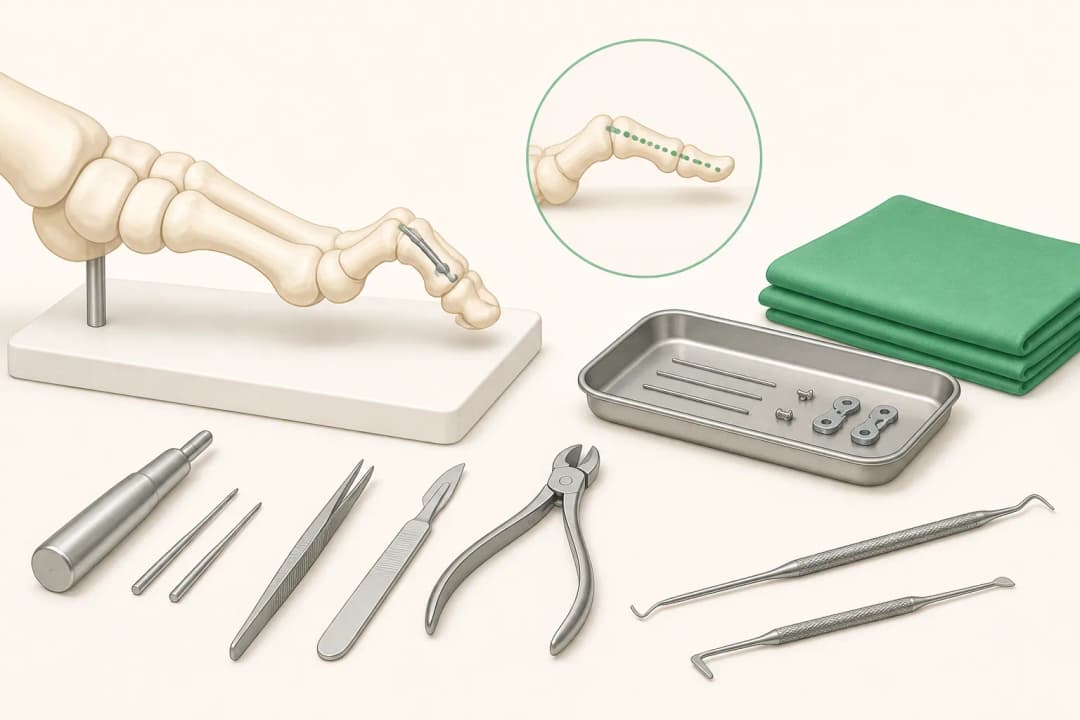
Hammer toe surgery is a group of procedures used to correct a toe that bends downward at one or more joints. The operation may release tight soft tissues, remove a painful prominence, straighten a joint, or stabilise the toe with temporary support or another method. The choice depends on whether the deformity is flexible or fixed, which joint is involved, footwear pressure, and the health of the skin and circulation. Read more about the condition on the Hammer Toe page.
What does recovery actually involve?
The foot is usually protected in a dressing or postoperative shoe. Elevating it, limiting pressure as instructed, and keeping the wound dry at first help control swelling. You may need to use a wider shoe or mobility aid temporarily. Toe stiffness and swelling can last beyond the time needed for the incision to close, so activity returns in stages.
What can go wrong, and how often?
Possible problems include wound infection, bleeding, swelling, scar sensitivity, numbness, delayed healing, stiffness, or discomfort from pins or other supports. The toe may drift, remain partly bent, or become too straight, and the deformity can recur. Risks are influenced by the procedure, footwear demands, smoking, circulation, diabetes, and bone or skin health.
Will it fix the problem, and for how long?
Surgery aims to improve alignment, reduce pressure, and make footwear easier, but it cannot guarantee a pain-free foot or prevent every future deformity. A toe may remain stiff after it has been straightened. Persistent pressure from tight shoes or changes in neighbouring toes can affect the long-term result.
Key facts at a glance
The surgeon assesses toe flexibility, skin condition, walking pattern, footwear, and any associated bunion or forefoot problem. Some procedures preserve movement, while others intentionally stabilise a joint to hold correction.
Who may need it?
Surgery may be discussed when a painful or rubbing toe limits walking, work, exercise, or footwear despite roomier shoes, padding, activity changes, or other suitable care. It is not chosen solely because a toe looks different. A foot assessment is especially useful when the toe is becoming rigid, developing a sore, or affecting neighbouring toes.
How the procedure works
After marking the foot and giving anaesthesia, the surgeon makes an incision suited to the deformity. Tight tissues may be released, bone may be reshaped, and a joint may be aligned and stabilised. The skin is closed and the foot is dressed. Before discharge, you receive instructions for weight-bearing, shoe use, wound care, and follow-up.
Recovery timeline
Early recovery centres on swelling control, protected walking, and keeping the dressing in place. As the wound heals, the clinician may increase weight-bearing and footwear options. Swelling can remain noticeable for a substantial part of recovery, especially after walking. Resume sport, long walks, and narrow shoes only when alignment, wound healing, and comfort allow.
Risks and warning signs
Call the treating team for spreading redness, drainage, fever, worsening pain, a dressing that becomes soaked, or a toe that changes colour or loses sensation. Sudden severe swelling or inability to move the foot needs prompt assessment. These symptoms are warning signs, not a diagnosis by themselves.
Alternatives to surgery
Non-surgical care may include shoes with a roomy toe box, padding, orthoses, activity changes, exercises for a flexible toe, and treatment of skin pressure. These measures may reduce irritation but cannot always straighten a fixed deformity. Your clinician can match the option to pain, flexibility, walking needs, and skin condition.
Finding the right provider
Choose an orthopaedic foot and ankle specialist or podiatric surgeon who can assess the whole forefoot and explain the planned correction. Ask about weight-bearing, dressings, footwear, wound checks, and what happens if the toe remains stiff or changes position. Take photos of troublesome footwear and describe the activities you want to regain.
Questions people ask
Is hammer toe surgery only for appearance?
No. It is generally considered when pain, pressure, skin problems, or reduced function persists despite suitable non-surgical care.
Will the toe bend normally after surgery?
Some procedures preserve movement and others stabilise a joint, so the final flexibility depends on the correction required.
When can I wear ordinary shoes?
This varies with swelling, wound healing, alignment, and the operation; a postoperative shoe may be needed first.
Related
Related reading
Keep reading
Medical disclaimer. This page is general health information, not medical advice, and it cannot diagnose you. Always consult a licensed healthcare provider about your own symptoms and treatment. In an emergency in the UAE, call 998 for an ambulance.