
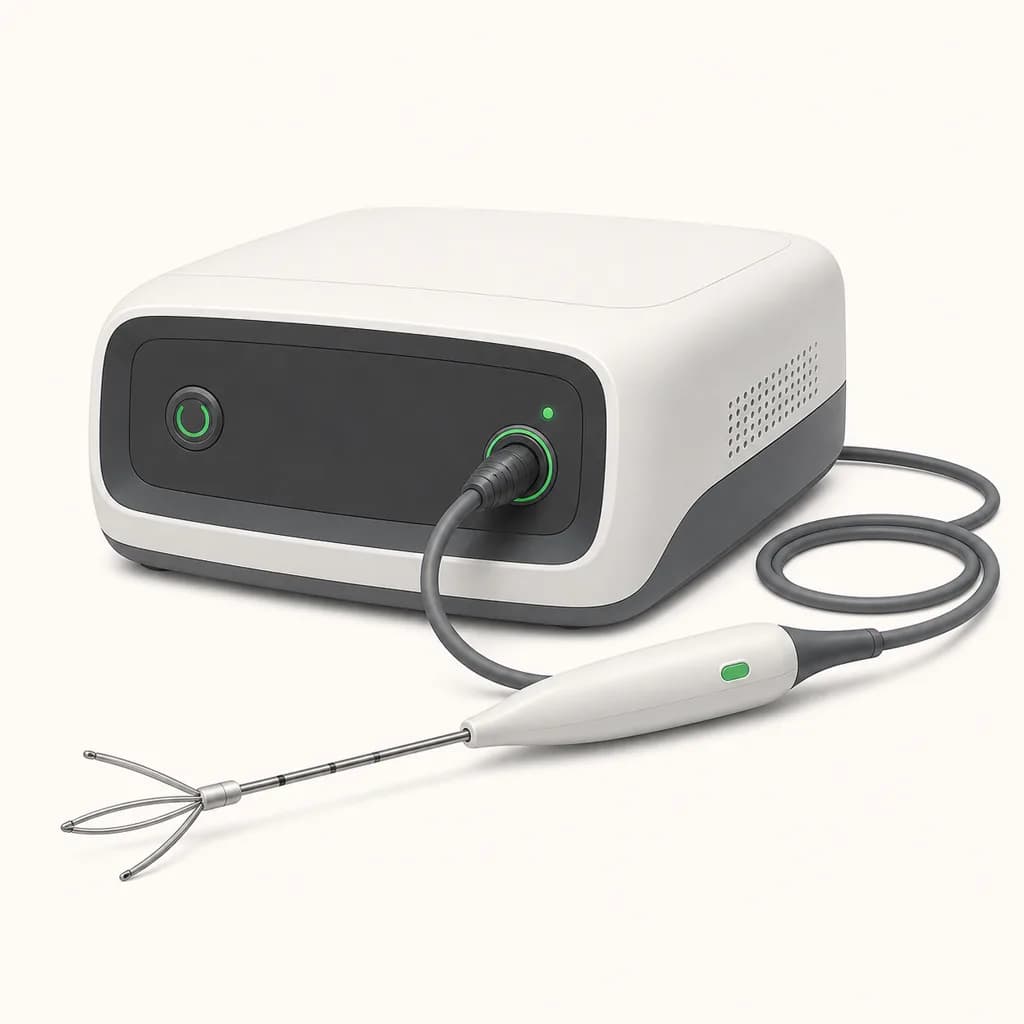
Radiofrequency Fibroid Ablation Device
At a glance
- Target
- Selected uterine fibroid tissue
- Method
- Controlled radiofrequency heat
- Response
- Shrinkage and symptom change may occur gradually
What it is
A radiofrequency fibroid ablation device uses controlled heat to shrink selected uterine fibroids.
The device delivers radiofrequency energy through a probe placed into or near a fibroid. Heat changes the fibroid tissue, and the body gradually clears the treated tissue over time. Fibroids are non-cancerous growths in the muscle of the uterus; treatment planning depends on their number, size, position and symptoms.
How it is used
Before treatment, imaging helps map the uterus and fibroids. During the procedure, the clinician guides the probe to the intended treatment area and monitors the position and energy delivery. The route and anaesthesia or sedation depend on the device, fibroid location and clinical plan.
After treatment, symptoms may improve gradually rather than immediately because the body needs time to process the treated tissue. Follow-up may include a review of symptoms and further imaging when clinically useful.
Limits of the technology
This approach is not suitable for every fibroid pattern. A fibroid that is difficult to reach, very close to sensitive structures, or associated with a treatment goal the procedure cannot address may call for another option. It may also leave treated fibroid tissue in place while it shrinks, so the timing and degree of symptom relief can vary.
A consultation should cover fertility plans, bleeding, pressure symptoms, previous pelvic procedures and other medical conditions. The device does not provide a general answer for every cause of heavy bleeding or pelvic pain.
Alternatives
Options can include observation when symptoms are mild, medicines that manage bleeding or pain, and procedures chosen for the fibroid's position and the patient's goals. A myomectomy removes fibroids while aiming to preserve the uterus; the approach may be open, laparoscopic or hysteroscopic depending on the case.
What this may mean for a patient
The main question is whether shrinking rather than removing a fibroid fits your symptoms and future plans. Ask how the probe will reach your fibroid, when improvement is expected, what follow-up is planned, and which findings would lead to another treatment.
Bring a list of medicines, prior scans and questions about pregnancy or fertility. A clinician can explain whether this device is appropriate after reviewing your individual anatomy.
Safety and recovery
Possible short-term effects include cramping, pelvic discomfort, fatigue, spotting or discharge. Seek urgent medical advice for severe or worsening pain, heavy bleeding, fever, fainting, breathing trouble or a new concerning symptom. Follow the discharge instructions, including guidance about activity, medicines and follow-up.
Find care
General Clinics & Polyclinics in Abu Dhabi
Licensed general clinics & polyclinics listed in Abu Dhabi, for the reader who wants this looked at in person.
27 Ar Ruwwad St - Shakhbout City - MSH4 - Abu Dhabi - United Arab Emirates
Accepts: Daman, Thiqa, Cigna, MetLife +20 more
Al Ruwais, Al Dhafrah
Accepts: Daman, Thiqa, AXA, Cigna +16 more
Al Bahyah - Al Bahyah Old - Abu Dhabi - United Arab Emirates
Accepts: Daman, Thiqa, Cigna, Allianz Care +18 more
Abu Dhabi
Accepts: Daman, Thiqa, AXA, Cigna +27 more
Ordered by verification status and how complete each clinic's public record is, then alphabetically. This is a directory listing, not a ranking — Zavis does not rate or recommend providers.
A factual listing drawn from the DHA, DOH and MOHAP licence registers. It is not a referral, an endorsement, or advice that any of these providers is right for you.
Questions people ask
Does the device remove a fibroid?
It treats selected fibroid tissue with heat so the fibroid can shrink; it does not work by cutting the fibroid out.
How is suitability decided?
Imaging, fibroid position, symptoms, medical history and fertility plans help the clinician decide whether this option fits.
Related
Related reading
Keep reading
Medical disclaimer. This page is general health information, not medical advice, and it cannot diagnose you. Always consult a licensed healthcare provider about your own symptoms and treatment. In an emergency in the UAE, call 998 for an ambulance.