
Fractional RF Microneedling Device
At a glance
- Technology
- Microneedles combined with radiofrequency heat
- Treatment pattern
- Fractional columns with untreated skin between them
- Common areas
- Face, neck, and selected body areas
- Recovery
- Redness and sensitivity may occur while the skin settles
What a fractional RF device is
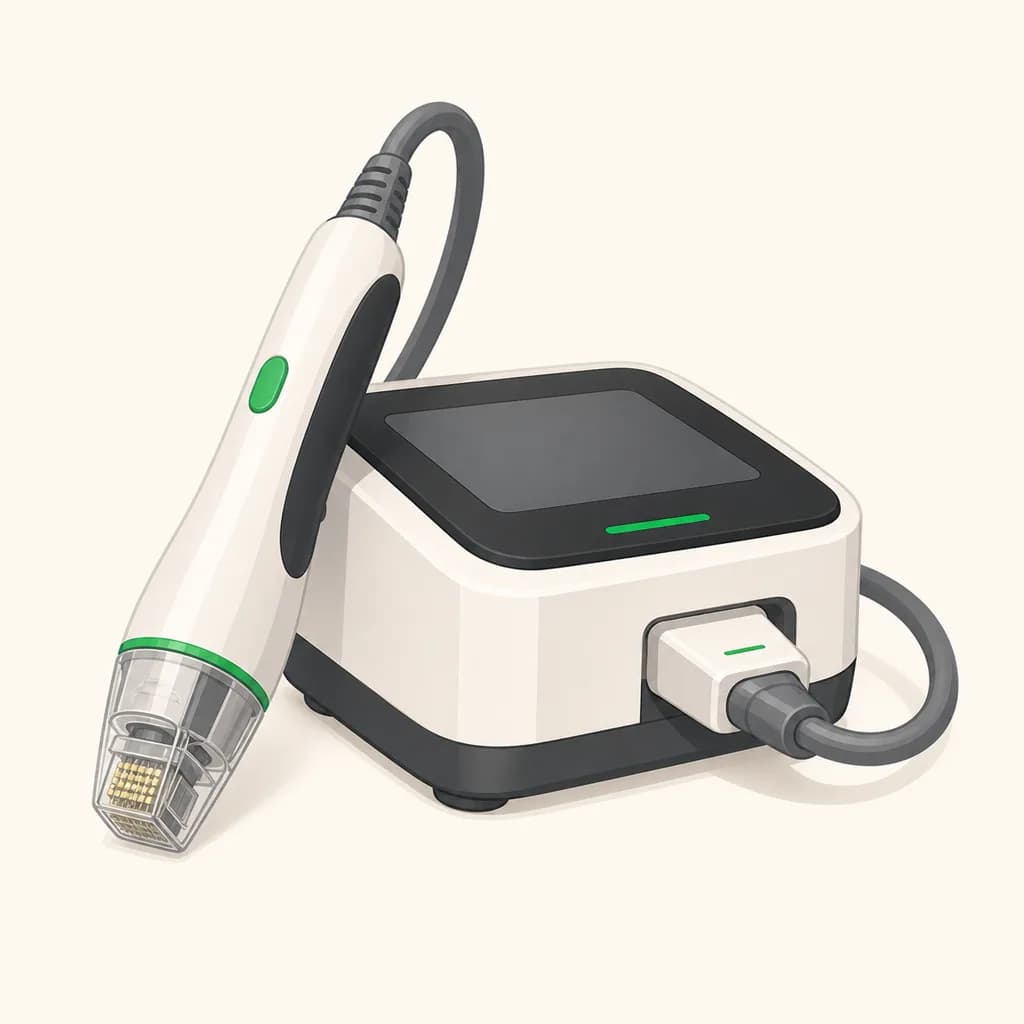
A fractional RF microneedling device uses fine needles to deliver radiofrequency heat at selected depths beneath the skin. The needles create narrow treatment columns, while the energy warms the surrounding tissue. Fractional means that treated areas are separated by untreated skin, which can support recovery while leaving much of the surface undisturbed.
The handpiece may be adjusted for needle depth, energy level, and the pattern of delivery. These settings depend on the treatment area, skin characteristics, and the concern being addressed. Morpheus8 and Secret RF are device names sometimes used in this category; the exact handpiece and settings still matter more than the name alone.
How treatment is used
A clinician first examines the area and discusses goals, medical history, medicines, and any tendency toward unusual scarring or changes in pigmentation. The skin is cleansed, and a topical numbing medicine may be used before the handpiece passes over the planned area. Needle insertion and energy delivery occur in a series of small contacts.
This technology may be selected for concerns such as uneven skin texture, acne-scar texture, selected scars, enlarged-looking pores, or mild skin laxity. It is also used on areas such as the face, neck, and body when the clinician considers the skin suitable. Treatment plans vary because depth and energy need to match the location and the patient’s response.
Limits and realistic expectations
The device cannot correct every type of scar, wrinkle, pigment change, or laxity. Results depend on the concern, scar depth, skin response, treatment settings, and aftercare. Improvement may develop gradually as treated tissue heals and remodels, and more than one appointment may be discussed.
It is not a substitute for assessment of a changing mole, unexplained rash, infection, or other undiagnosed skin problem. A device-based procedure also does not remove the need for sun protection or a treatment plan for active acne, eczema, or another condition that may affect healing.
Other options
Depending on the goal, alternatives can include topical medicines, chemical peels, fractional laser treatment, non-needle radiofrequency, surgery, or observation. Each option reaches different tissue layers and has its own recovery and pigment considerations. A clinician can compare these choices after identifying whether the main issue is texture, colour, scar tethering, or laxity.
What this means for a patient
Expect a planned skin procedure rather than a simple surface facial. Redness, warmth, swelling, sensitivity, and pinpoint marks can occur after treatment; the clinician will explain which reactions fit the expected recovery for your settings. Keep the area clean, follow the supplied skin-care instructions, and avoid adding irritating products until you are told they are suitable.
Tell the clinician about recent tanning, active skin inflammation, cold sores, implanted electronic devices, medicines that affect bleeding, and any history of raised scars or prolonged pigment change. These details can alter whether treatment is appropriate or how it is planned.
Safety and when to seek help
Possible reactions include temporary redness, swelling, tenderness, bruising, crusting, infection, burns, scarring, and lightening or darkening of the skin. Risk can be influenced by energy settings, needle depth, skin type, current skin disease, and aftercare. The procedure should be performed by a qualified clinician using a device appropriate for the treatment area.
Contact the treating clinic promptly if pain is worsening, redness is spreading, swelling is severe, blisters appear, drainage develops, or you feel unwell. Seek urgent medical care for breathing difficulty, facial swelling, or another severe allergic reaction.
Find care
Dermatology & Skin Care in Dubai
Licensed dermatology & skin care listed in Dubai, for the reader who wants this looked at in person.
Wafi Mall - 1st Floor - Code “B”/ Entrance - Gate 3 Oud Metha Rd - inside the mall - Umm Hurair Second - Dubai Healthcare City - Dubai - United Arab Emirates
Accepts: Insurance Accepted
Al Ferdous 4, Al Wasl Road 603, AL SAFFA FIRST, Dubai
Accepts: Daman, Thiqa, AXA, Cigna +24 more
The mall, Jumeira Street 856a, UM SUQAIM SECOND, Dubai
Accepts: Thiqa, AXA, Bupa Global, Dubai Insurance Company +10 more
The Arcade, 4 Street 8, Al Garhoud, Dubai
Accepts: Daman, Thiqa, AXA, Cigna +26 more
Ordered by verification status and how complete each clinic's public record is, then alphabetically. This is a directory listing, not a ranking — Zavis does not rate or recommend providers.
A factual listing drawn from the DHA, DOH and MOHAP licence registers. It is not a referral, an endorsement, or advice that any of these providers is right for you.
Questions people ask
Is fractional RF the same as RF microneedling?
Fractional RF microneedling is a form of RF microneedling in which energy is delivered through needle contacts in a fractional pattern. The device model and settings can differ.
Does the procedure work on acne scars?
It may be considered for selected acne-scar texture, but suitability depends on scar type, depth, active acne, skin tone, and healing history.
What should I tell the clinician before treatment?
Mention active skin problems, recent tanning, cold sores, implanted electronic devices, medicines affecting bleeding, and any history of raised scars or pigment changes.
Related
Related reading
Keep reading
Medical disclaimer. This page is general health information, not medical advice, and it cannot diagnose you. Always consult a licensed healthcare provider about your own symptoms and treatment. In an emergency in the UAE, call 998 for an ambulance.