
Thermoplastic Splint Material
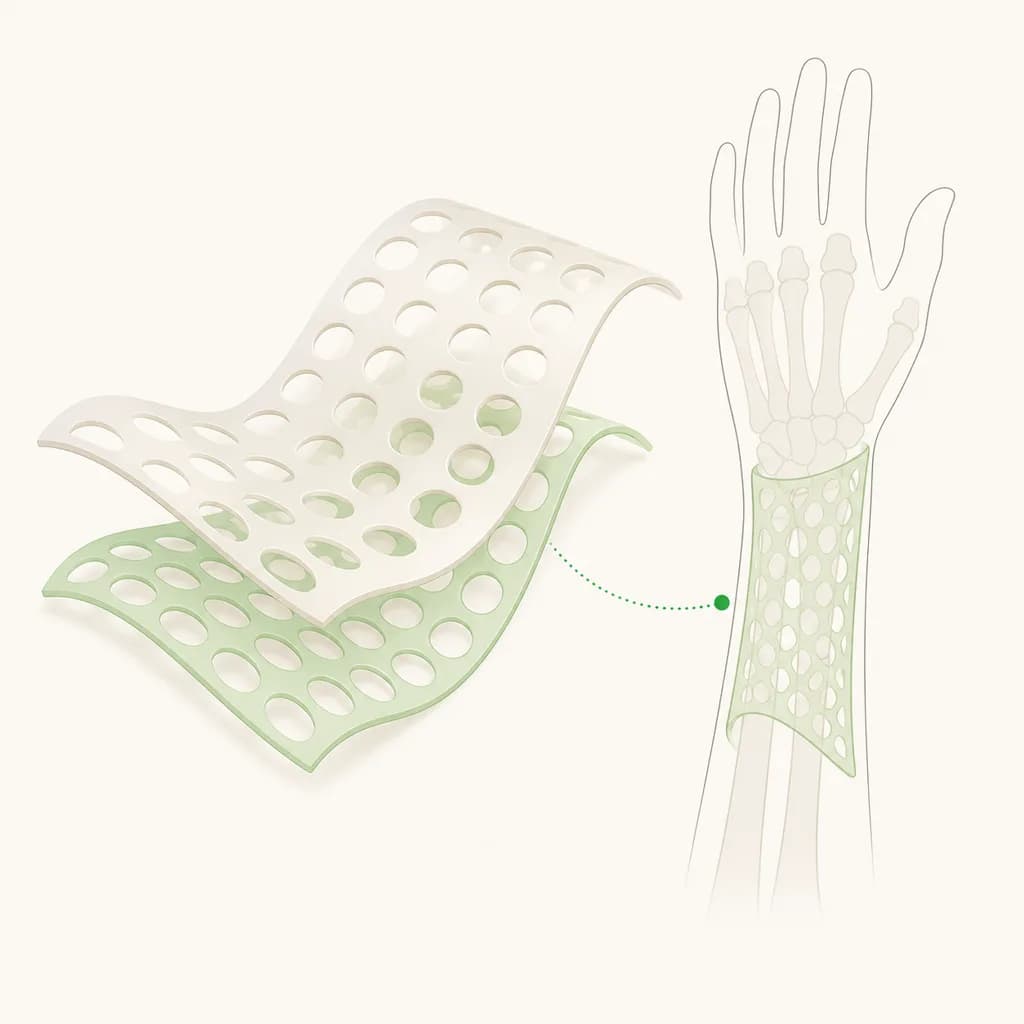
At a glance
- How it changes shape
- Softens with controlled heat and firms as it cools
- Main benefit
- Custom contouring around the treated body region
- Safety check
- Watch for pressure, numbness, colour change, or swelling
What it is
Thermoplastic splint material softens when heated and can be moulded into a supportive custom shape as it cools.
Thermoplastic splint material is a sheet or strip that becomes workable when warmed under controlled conditions and firms as it cools. A clinician can mould it around a hand, wrist, limb, or trunk to support a joint, limit a movement, protect healing tissue, or guide alignment.
Key properties
The material can be cut, shaped, and adjusted to match the person’s anatomy. Its thickness, perforation, padding, and degree of flexibility affect support, ventilation, comfort, and ease of movement. A well-fitted splint leaves room for circulation and should not create concentrated pressure over skin or nerves.
Where it is used
Thermoplastic supports may be made for fracture protection, tendon or nerve conditions, joint instability, and selected spinal or limb alignment needs. A clinician may use the material in [Splinting](/treatments/trauma-and-fracture-care/splinting/), a [Walking Boot Immobilisation](/treatments/non-surgical-orthopedics/walking-boot-immobilisation/) plan, or [Scoliosis Bracing](/treatments/spine-care/scoliosis-bracing/), depending on the body region and treatment goal.
Alternatives
Other options include prefabricated braces, plaster or fibreglass casts, elastic supports, and soft fabric orthoses. A ready-made brace may be quicker to provide, while a custom thermoplastic splint can offer more precise contouring. The suitable option depends on the diagnosis, swelling, skin condition, required movement restriction, and expected duration of use.
What it means for a patient
Wear the splint for the schedule provided and keep straps secure without overtightening. Check the skin after removing it, keep the material clean and dry as directed, and report rubbing, increasing pressure, colour change, numbness, or swelling that does not settle. Do not reshape it at home with a heat source.
Longevity and safety
A thermoplastic splint can need adjustment when swelling changes, a child grows, or the treatment goal progresses. Heat, bending, and everyday wear can alter its fit. Attend planned reviews so the clinician can check skin, circulation, alignment, and whether the support still allows the exercises or movement that are now appropriate.
Find care
General Clinics & Polyclinics in Abu Dhabi
Licensed general clinics & polyclinics listed in Abu Dhabi, for the reader who wants this looked at in person.
27 Ar Ruwwad St - Shakhbout City - MSH4 - Abu Dhabi - United Arab Emirates
Accepts: Daman, Thiqa, Cigna, MetLife +20 more
Al Ruwais, Al Dhafrah
Accepts: Daman, Thiqa, AXA, Cigna +16 more
Al Bahyah - Al Bahyah Old - Abu Dhabi - United Arab Emirates
Accepts: Daman, Thiqa, Cigna, Allianz Care +18 more
Abu Dhabi
Accepts: Daman, Thiqa, AXA, Cigna +27 more
Ordered by verification status and how complete each clinic's public record is, then alphabetically. This is a directory listing, not a ranking — Zavis does not rate or recommend providers.
A factual listing drawn from the DHA, DOH and MOHAP licence registers. It is not a referral, an endorsement, or advice that any of these providers is right for you.
Questions people ask
Can I heat and reshape the splint myself?
No. Home heating can distort the support or injure skin; ask the treating clinician to make adjustments.
How do I know if the splint is too tight?
Increasing pressure, tingling, numbness, colour change, or swelling beyond the splint can indicate a fit problem and needs clinical advice.
Related
Related reading
Keep reading
Medical disclaimer. This page is general health information, not medical advice, and it cannot diagnose you. Always consult a licensed healthcare provider about your own symptoms and treatment. In an emergency in the UAE, call 998 for an ambulance.