
Low-Dose Aspirin
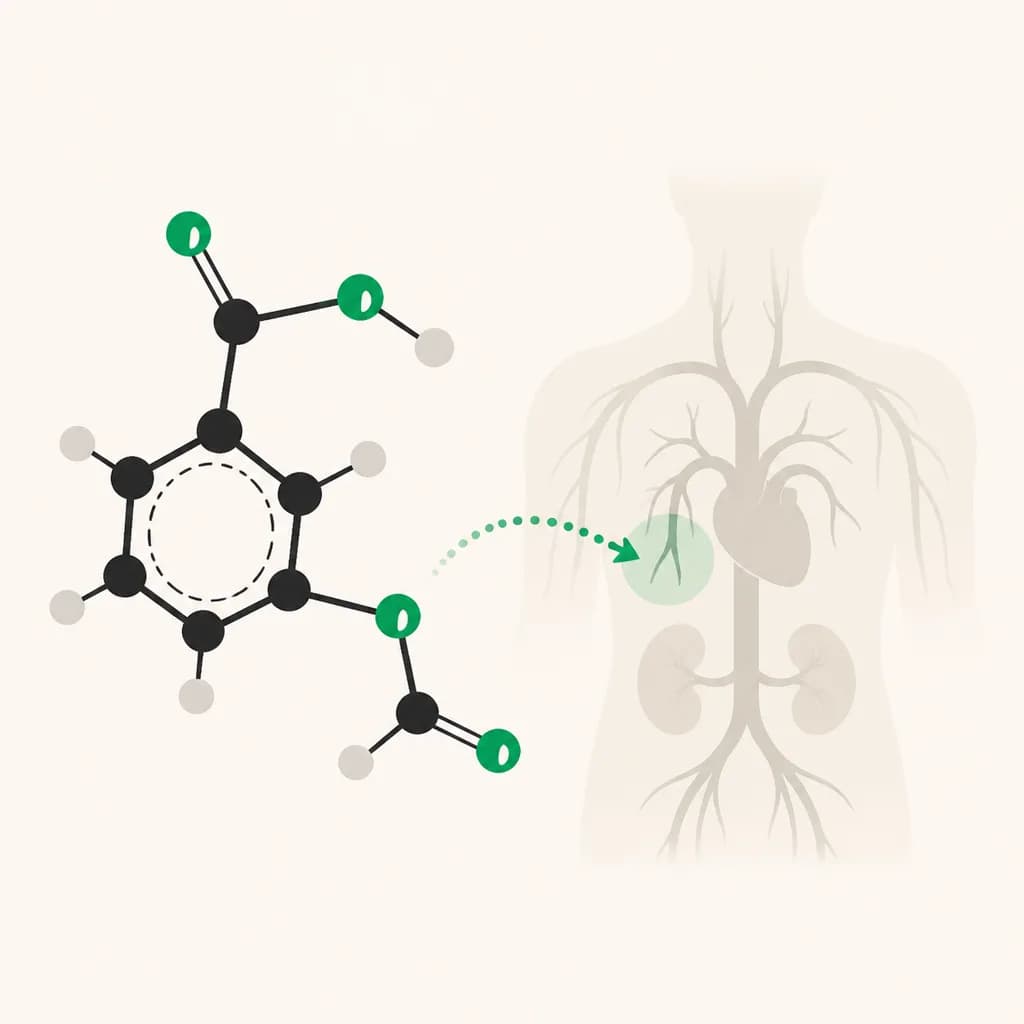
At a glance
- Main action
- Reduces platelet clumping
- How it is taken
- By mouth, on the schedule prescribed
- Pregnancy use
- Only when included in an individual care plan
What low-dose aspirin is
Low-dose aspirin is a small daily dose of aspirin used in selected care plans to reduce platelet clumping and support safer blood flow.
Aspirin belongs to a group of medicines that can ease pain and fever at other doses. At a low dose, its main relevant effect is on platelets, the blood cells that gather when a vessel is injured. The dose and schedule are chosen for the person and the reason for treatment; taking extra tablets does not improve the intended effect.
How it behaves in the body
Low-dose aspirin makes platelets less likely to stick together. This changes clotting behaviour rather than dissolving an existing clot. Because the effect concerns bleeding, a clinician needs to know about bleeding disorders, stomach ulcers, aspirin allergy, asthma triggered by aspirin, and other medicines that affect clotting.
Where it may be used
In pregnancy care, a clinician may include low-dose aspirin when the pregnancy history or health assessment indicates a need to reduce the chance of certain placenta-related blood-flow problems. It is not suitable for every pregnant person, and starting or stopping it should follow the maternity team’s instructions.
You can read about how this medicine may fit into a wider antenatal plan in the Antenatal Care Package guide.
Possible alternatives
There is no single substitute that matches low-dose aspirin for every purpose. Depending on the clinical concern, the care plan may involve monitoring, treatment of an underlying condition, or a different medicine. The right choice depends on pregnancy stage, medical history, allergies, and bleeding risk.
What this means for you
Take it exactly as directed and do not use ordinary pain-relief doses as a replacement. Contact your maternity team promptly if you notice heavy or unusual bleeding, black stools, vomiting blood, facial swelling, wheezing, or a severe allergic reaction. Ask what to do if you miss a dose and whether it should be paused before a procedure.
Duration and safety
The start and stop dates are part of the prescription. Do not extend the course because it feels protective, and do not stop it without checking with the clinician who recommended it. Keep the medicine in its labelled container and away from children.
Find care
General Clinics & Polyclinics in Abu Dhabi
Licensed general clinics & polyclinics listed in Abu Dhabi, for the reader who wants this looked at in person.
27 Ar Ruwwad St - Shakhbout City - MSH4 - Abu Dhabi - United Arab Emirates
Accepts: Daman, Thiqa, Cigna, MetLife +20 more
Al Ruwais, Al Dhafrah
Accepts: Daman, Thiqa, AXA, Cigna +16 more
Al Bahyah - Al Bahyah Old - Abu Dhabi - United Arab Emirates
Accepts: Daman, Thiqa, Cigna, Allianz Care +18 more
Abu Dhabi
Accepts: Daman, Thiqa, AXA, Cigna +27 more
Ordered by verification status and how complete each clinic's public record is, then alphabetically. This is a directory listing, not a ranking — Zavis does not rate or recommend providers.
A factual listing drawn from the DHA, DOH and MOHAP licence registers. It is not a referral, an endorsement, or advice that any of these providers is right for you.
Questions people ask
Can I start low-dose aspirin on my own during pregnancy?
No. A maternity clinician should decide whether it is appropriate after considering your health history, medicines, and bleeding risk.
What if I miss a dose?
Follow the missed-dose instructions from your maternity team rather than doubling the next dose.
Does low-dose aspirin dissolve a clot?
No. Its relevant action is to make platelets less likely to clump; it is not a treatment for an existing clot.
Related
Related reading
Keep reading
Medical disclaimer. This page is general health information, not medical advice, and it cannot diagnose you. Always consult a licensed healthcare provider about your own symptoms and treatment. In an emergency in the UAE, call 998 for an ambulance.