
Trigger Finger
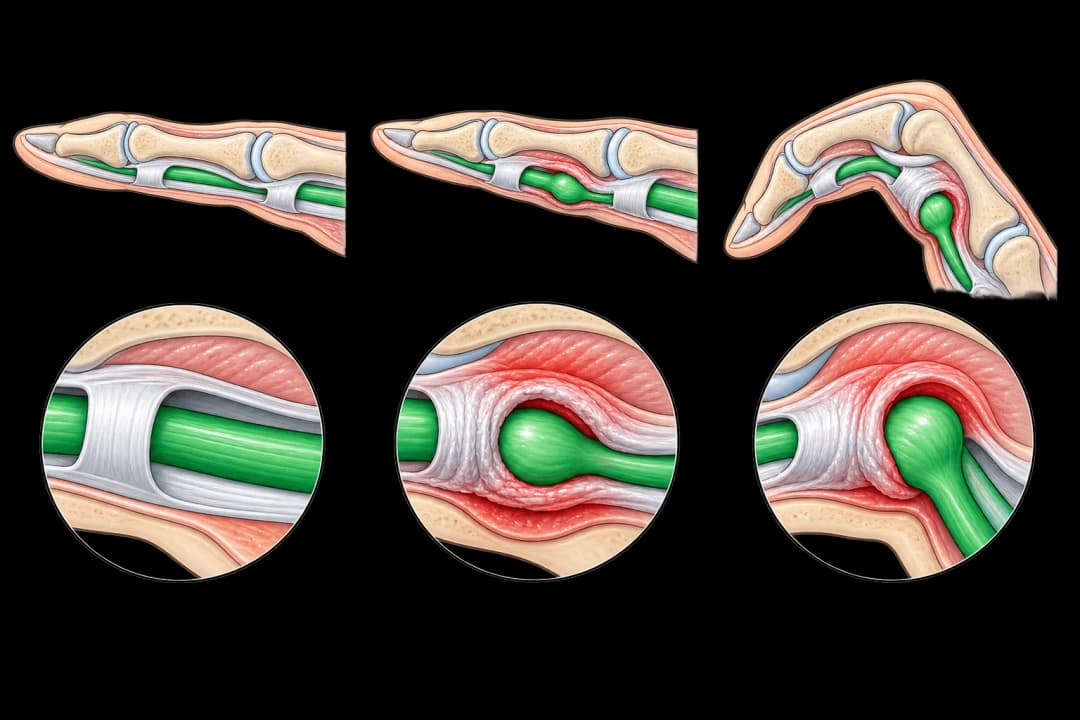
At a glance
- Other names
- Stenosing tenosynovitis and snapping finger
- Typical location
- The tendon and pulley at the base of a finger or thumb
- Key feature
- Catching, clicking or locking during movement
What is trigger finger?
Trigger finger is a narrowing problem around a finger tendon that can make bending or straightening catch, click or lock.
Also called stenosing tenosynovitis, trigger finger occurs when the tendon does not glide freely through a pulley at the base of the finger. Thickening or irritation can make that glide uneven. It can affect one or more fingers and may involve the thumb. The condition is usually assessed by examining the hand and observing movement. A visible or tender lump at the palm-side base of the finger can occur where the tendon is rubbing.
Symptoms
Finger stiffness is a common presentation of trigger finger, especially after rest. Locking or catching finger is a very common presentation. A person may feel a click as the finger straightens, need the other hand to release it, or notice soreness at the base of the finger or in the palm. Symptoms can be worse in the morning and may make gripping, typing or opening containers difficult.
Pain, catching and stiffness can occur together, but their combination and intensity vary. Sudden injury, marked swelling, redness, warmth or loss of sensation suggests that another problem may also need assessment.
Causes
Trigger finger develops when the tendon and its surrounding sheath do not glide freely through the pulley. Repeated gripping may irritate the area, while swelling or thickening can reduce the available space. Sometimes no single cause is found. The condition is not caused by a finger being deliberately bent or used incorrectly.
Course and progression
Early symptoms may be occasional stiffness or clicking. Catching can become more frequent, and the finger may remain bent after locking. Some people improve with activity changes and support; others need an injection or a release procedure when symptoms persist or interfere with hand function. Persistent locking should be reviewed rather than forced straight.
Risk factors
Risk can be associated with repeated forceful gripping, hand strain, diabetes, inflammatory joint disease or previous hand problems. Age and hormonal changes may also be relevant for some people. A risk factor does not confirm that a catching finger is trigger finger, because tendon, joint and nerve conditions can feel similar.
Diagnosis
Diagnosis is usually clinical. A clinician asks when catching occurs, checks tenderness and swelling, and watches the finger bend and straighten. They may examine nearby joints and nerves to exclude arthritis, tendon injury or nerve compression. Imaging is not always needed, but may be considered when the history or examination points to another cause.
Treatment options
Treatment depends on how often the finger catches, whether it locks, and how much hand use is affected. Rest from forceful gripping, gentle movement and a splint can reduce irritation while the area settles. A Cortisone Injection may be offered to reduce inflammation around the tendon. If locking persists or returns, Trigger Finger Release widens the tight pulley so the tendon can glide more freely. A clinician will discuss expected recovery and hand-use restrictions for the chosen option.
Living with trigger finger
Use larger handles or loosen your grip where possible, alternate demanding tasks, and take breaks from repeated squeezing. Keep the finger moving gently within comfort, but do not pull forcefully against a lock. Follow any splint instructions and report increasing pain, swelling or reduced hand function.
Possible complications
Repeated locking can limit grip and may leave the finger stiff. A finger held bent for a long time can become harder to straighten. After treatment, infection, persistent stiffness or continued catching can occur and should be assessed if symptoms do not follow the expected recovery pattern.
Prevention
Not every case can be prevented. Reduce repeated forceful gripping when practical, use tools that fit the hand, and build demanding hand activities gradually. Managing conditions that affect joints or tendons and seeking review when early catching persists may prevent prolonged loss of movement.
Finding the right specialist
An orthopaedic or hand specialist can assess persistent catching, painful locking or a finger that cannot fully straighten. A physiotherapist or hand therapist may help with protected movement and activity changes. Bring information about which finger is affected, morning stiffness, triggers and any previous hand treatment.
Questions people ask
Can trigger finger get better without a procedure?
Some people improve with reduced gripping, gentle movement and splinting. If catching or locking continues, a clinician can discuss injection or release options based on the examination.
Should I force a locked finger straight?
No. Forceful pulling can increase pain and irritation. Rest the hand and arrange an assessment, particularly if the finger remains locked or hand use is becoming difficult.
Related
Related reading
Keep reading
Find care
General Clinics & Polyclinics in Abu Dhabi
Where trigger finger is assessed depends on what is causing it. These are licensed general clinics & polyclinics listed in Abu Dhabi.
27 Ar Ruwwad St - Shakhbout City - MSH4 - Abu Dhabi - United Arab Emirates
Accepts: Daman, Thiqa, Cigna, MetLife +20 more
Al Ruwais, Al Dhafrah
Accepts: Daman, Thiqa, AXA, Cigna +16 more
Al Bahyah - Al Bahyah Old - Abu Dhabi - United Arab Emirates
Accepts: Daman, Thiqa, Cigna, Allianz Care +18 more
Abu Dhabi
Accepts: Daman, Thiqa, AXA, Cigna +27 more
Ordered by verification status and how complete each clinic's public record is, then alphabetically. This is a directory listing, not a ranking — Zavis does not rate or recommend providers.
A factual listing drawn from the DHA, DOH and MOHAP licence registers. It is not a referral, an endorsement, or advice that any of these providers is right for you.
Medical disclaimer. This page is general health information, not medical advice, and it cannot diagnose you. Always consult a licensed healthcare provider about your own symptoms and treatment. In an emergency in the UAE, call 998 for an ambulance.