
Throat Cancer
At a glance
- Also called
- Pharyngeal cancer or oropharyngeal cancer
- Key assessment
- Examination, camera assessment, biopsy, and imaging
- Support needs
- Swallowing, voice, nutrition, and mouth care
What is throat cancer?
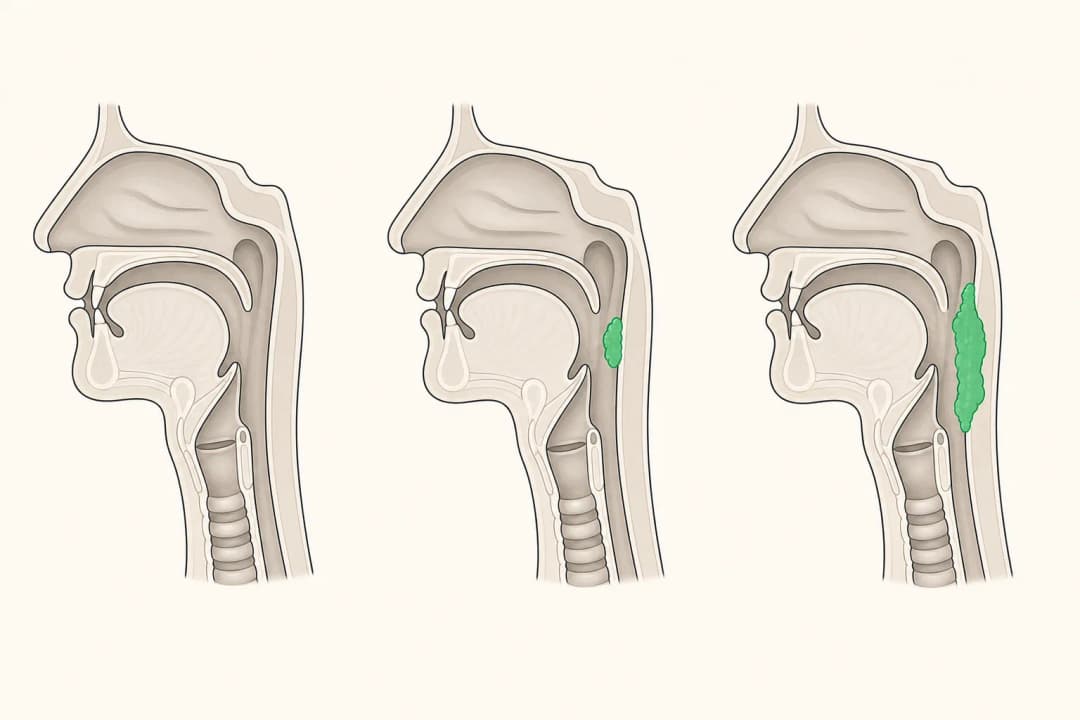
Throat cancer is a cancer of the throat that may affect swallowing, voice, breathing, or nearby tissues.
Throat cancer begins when abnormal cells grow in part of the pharynx or nearby throat structures. The exact site matters because the throat includes areas behind the nose and mouth and around the voice box. Clinicians may also describe some tumours as pharyngeal or oropharyngeal cancer.
Symptoms
Difficulty swallowing is a very common presentation of throat cancer. A hoarse voice is a common presentation, especially when disease involves structures near the voice box. Other possible changes include a persistent sore throat, ear pain without an ear problem, a neck swelling, coughing, or breathing difficulty. These symptoms also have many non-cancer causes; persistent or worsening changes deserve clinical assessment.
Causes
Throat cancer develops through changes in cells that allow them to grow and survive abnormally. Some tumours are linked with HPV infection, while others arise through accumulated irritation and genetic changes. A person may develop throat cancer without one clear cause.
How it can progress
The course depends on the tumour’s location, size, cell type, and whether it has reached lymph nodes or other tissues. A small, local tumour may need a different approach from one affecting swallowing, speech, breathing, or nearby organs. Staging tests help the team plan treatment and compare findings over time.
Risk factors
Factors that can raise risk include tobacco exposure, heavy alcohol use, HPV infection, and long-term irritation of throat tissues. Risk factors do not determine who will develop cancer, and their absence does not rule it out. Sharing smoking, alcohol, occupational, and sexual-health history helps clinicians interpret findings.
How it is diagnosed
Assessment usually begins with questions about symptoms and an examination of the mouth, throat, neck, and voice. A specialist may use a thin camera to view areas that cannot be seen directly. Imaging can show the tumour and nearby lymph nodes; a biopsy examines tissue and confirms the diagnosis. Further tests may establish the stage and whether HPV-related features are present.
Treatment options
Treatment is selected around the tumour’s site, stage, cell features, and your general health. Radiotherapy may target cancer cells in the throat, sometimes with chemotherapy. Surgery can remove a tumour and may include reconstruction or treatment of lymph nodes. Chemotherapy can be given with radiation or used when disease needs treatment throughout the body. The team explains expected effects on swallowing, voice, nutrition, and appearance before treatment begins.
Living with throat cancer
Swallowing and voice support can make daily life easier during and after treatment. A speech and language therapist may assess safe swallowing, communication, and exercises. A dietitian can help maintain nutrition when eating becomes difficult. Mouth care, hydration, rest, and practical help with appointments are useful parts of a personalised plan.
Possible complications
Throat cancer or its treatment can affect swallowing, speech, taste, saliva, hearing, breathing, or neck movement. Weight loss, dehydration, infection, and treatment-related fatigue may also occur. Report sudden breathing trouble, inability to swallow fluids, or rapidly increasing swelling urgently.
Reducing risk
Stopping tobacco, limiting alcohol, and discussing HPV prevention can reduce exposure to recognised risks. Protecting the mouth and throat from workplace irritants and attending health reviews for persistent symptoms may support earlier assessment. No prevention step can remove every possibility of cancer.
Who can help?
Care may involve an ear, nose and throat specialist, head and neck surgeon, radiation oncologist, medical oncologist, radiologist, pathologist, dietitian, and speech and language therapist. Ask how the proposed plan will address swallowing, voice, nutrition, and follow-up.
Questions people ask
Does a hoarse voice mean throat cancer?
Hoarse voice has many causes. A hoarse voice is a common presentation of throat cancer, so persistent or changing hoarseness should be assessed, particularly when it occurs with swallowing trouble or a neck swelling.
How is throat cancer confirmed?
A biopsy is used to examine tissue and confirm cancer. Examination, camera assessment, imaging, and additional tests help identify the site and stage.
Can throat cancer affect eating?
It can affect swallowing, taste, saliva, or jaw and neck movement. Speech and language therapy and dietetic support can help maintain safe swallowing and nutrition.
Related
Related reading
Keep reading
Cancer care in the UAE
Hospitals & Medical Centers in Abu Dhabi
Most UAE cancer care is delivered inside hospital services rather than by standalone oncology clinics, so these are licensed hospitals & medical centers listed in Abu Dhabi. Confirm the specific cancer service exists before you travel, and know that asking for a second opinion is routine.
Ahalia Hospital Musaffah Building - Musaffah - Musaffah Industrial - Abu Dhabi - United Arab Emirates
Accepts: Daman, Thiqa, AXA, Cigna +26 more
Al Ruwais Industrial City - Abu Dhabi - United Arab Emirates
Accepts: Daman, Thiqa, AXA, Cigna +30 more
Abu Dhabi, Abu Dhabi
Accepts: Daman, Thiqa, AXA, Cigna +30 more
Second opinions are routine in cancer care and asking for one does not affect your treatment. How to arrange a second opinion in the UAE.
Ordered by verification status and how complete each clinic's public record is, then alphabetically. This is a directory listing, not a ranking — Zavis does not rate or recommend providers.
A factual listing drawn from the DHA, DOH and MOHAP licence registers. It is not a referral, an endorsement, or advice that any of these providers is right for you.
Medical disclaimer. This page is general health information, not medical advice, and it cannot diagnose you. Always consult a licensed healthcare provider about your own symptoms and treatment. In an emergency in the UAE, call 998 for an ambulance.