
Sinusitis: symptoms, causes and treatment
At a glance
- What is inflamed
- The lining of the nose and sinuses
- Common trigger
- A viral respiratory illness or allergy
- Urgent signs
- Eye swelling, visual change or severe worsening symptoms
What happens in sinusitis
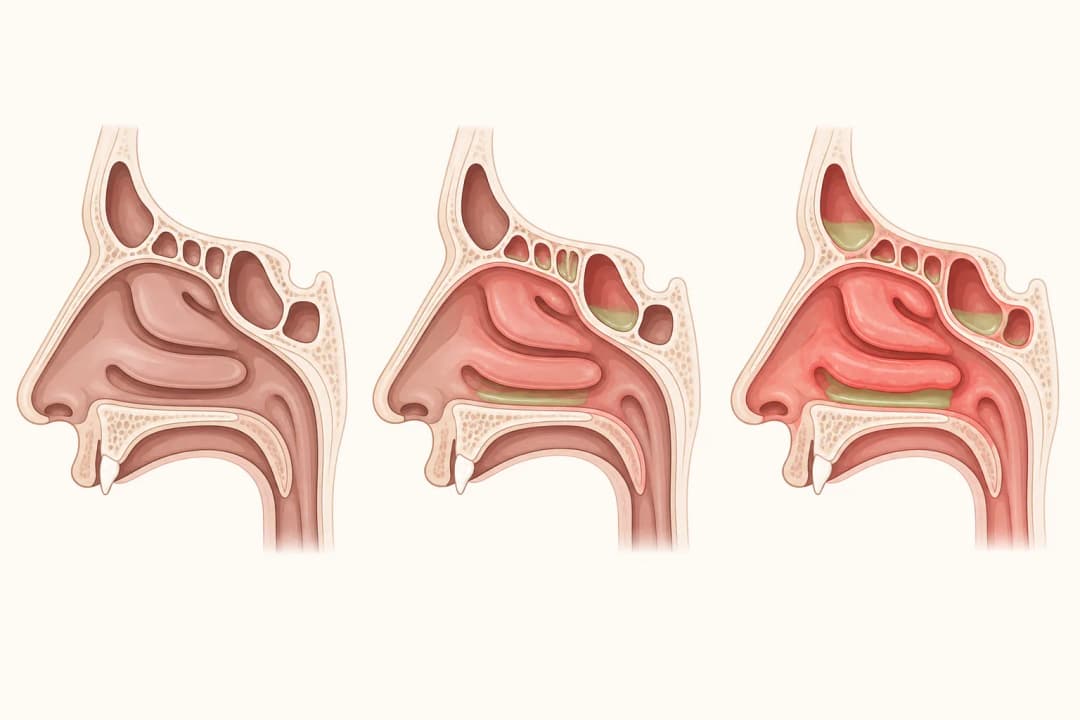
Sinusitis is inflammation of the air-filled spaces around the nose, often causing congestion and facial pressure.
Swelling can narrow the drainage openings of the sinuses, allowing mucus to build up. The condition is sometimes called a sinus infection, although inflammation can follow a viral illness, allergy or an anatomical blockage as well as a bacterial infection.
Common symptoms
A blocked nose and facial pain or pressure are very common presentations of sinusitis. Headache, cough, earache, postnasal drip, runny nose and nosebleed are common presentations. Thick nasal mucus, reduced smell, upper-tooth discomfort and pressure that worsens when bending forward can also occur.
Why sinuses become inflamed
Many episodes follow a common cold, when the lining of the nose and sinuses swells. Allergic rhinitis can produce similar swelling. Nasal polyps, a deviated nasal septum, smoke exposure, dental infection and changes in pressure during flying or diving can sometimes contribute to blocked drainage.
Acute and ongoing symptoms
Acute symptoms often settle as the triggering illness improves. Some episodes last longer, recur, or persist because ongoing inflammation keeps the sinus openings narrow. A change from gradual improvement to a sharp deterioration, or symptoms that repeatedly return, merits clinical assessment.
Factors that can increase the chance of sinusitis
Recent viral infections, uncontrolled allergies, nasal structural differences, smoking and exposure to irritants can make sinus drainage less effective. People with immune problems or significant long-term illness should seek advice earlier if they develop severe facial pain, fever or a worsening nasal infection.
How sinusitis is assessed
A GP usually asks about symptom timing, nasal discharge, allergies, dental symptoms and prior episodes. Examination may include the nose, throat, ears and face. Persistent, recurrent or unusual symptoms can lead to referral for nasal examination, imaging or an assessment for allergy and structural causes.
Treatment options
Supportive care may include fluids, rest, saline nasal rinses and pain relief that is suitable for you. A clinician may recommend a nasal steroid spray when inflammation is prominent. Antibiotic treatment is reserved for selected cases where bacterial infection is considered likely; it does not treat viral inflammation.
Managing symptoms at home
Use saline rinses only with clean, appropriately prepared water and keep devices clean. Avoid smoke and other irritants, sleep with the head slightly raised if drainage is troublesome, and follow instructions for nasal sprays. Do not use decongestant sprays beyond the advised period, as rebound blockage can occur.
When complications are a concern
Complications are uncommon but sinus infection can spread beyond the sinuses. Seek urgent care for swelling or redness around an eye, vision change, severe frontal headache, stiff neck, confusion, persistent vomiting, or rapidly worsening facial swelling. These signs need assessment without waiting for routine care.
Reducing recurrences
Managing allergies, avoiding tobacco smoke, treating dental problems and washing hands during respiratory-virus seasons may reduce triggers. If episodes recur, keep a note of timing, exposures and treatments that helped. This record can help a clinician identify patterns such as allergy, workplace irritation or a structural nasal issue.
When to see a clinician
Arrange a GP consultation for symptoms that are severe, do not improve, keep returning, or interfere with sleep and daily activity. An ear, nose and throat specialist may help when symptoms are persistent or a structural cause is suspected. Urgent eye or neurological symptoms need emergency assessment.
Prescribing reference
Medications used for sinusitis
- AmoxicillinBroad-spectrum penicillin antibiotic — one of the most prescribed worldwide · Prescription only
- Amoxicillin-ClavulanateAmoxicillin combined with clavulanic acid for resistant bacterial infections · Prescription only
- AzithromycinMacrolide antibiotic with convenient 3–5 day dosing · Prescription only
- LevofloxacinFluoroquinolone for serious respiratory and urinary infections · Prescription only
- PseudoephedrineDecongestant that shrinks nasal passages to relieve stuffiness · Over the counter
- Full prescribing referenceRx status, monitoring and specialties for sinusitis.
Questions people ask
Does coloured nasal mucus always mean I need antibiotics?
No. Mucus colour alone does not establish a bacterial infection. A clinician considers the symptom pattern, severity, progression and examination before deciding whether antibiotics may help.
Can allergies cause sinusitis symptoms?
Yes. Allergic rhinitis can swell the nasal lining and interfere with sinus drainage, producing congestion, pressure and postnasal drip. Treating the allergy may form part of the management plan.
Related
Related reading
Keep reading
Find care
General Clinics & Polyclinics in Abu Dhabi
Where sinusitis: symptoms, causes and treatment is assessed depends on what is causing it. These are licensed general clinics & polyclinics listed in Abu Dhabi.
27 Ar Ruwwad St - Shakhbout City - MSH4 - Abu Dhabi - United Arab Emirates
Accepts: Daman, Thiqa, Cigna, MetLife +20 more
Al Ruwais, Al Dhafrah
Accepts: Daman, Thiqa, AXA, Cigna +16 more
Al Bahyah - Al Bahyah Old - Abu Dhabi - United Arab Emirates
Accepts: Daman, Thiqa, Cigna, Allianz Care +18 more
Abu Dhabi
Accepts: Daman, Thiqa, AXA, Cigna +27 more
Ordered by verification status and how complete each clinic's public record is, then alphabetically. This is a directory listing, not a ranking — Zavis does not rate or recommend providers.
A factual listing drawn from the DHA, DOH and MOHAP licence registers. It is not a referral, an endorsement, or advice that any of these providers is right for you.
Medical disclaimer. This page is general health information, not medical advice, and it cannot diagnose you. Always consult a licensed healthcare provider about your own symptoms and treatment. In an emergency in the UAE, call 998 for an ambulance.