
Shingles: Symptoms, Treatment and When to Get Help
Updated
At a glance
- Also called
- Herpes zoster
- Typical pattern
- Painful rash on one side along a nerve
- Spread
- Blister-fluid contact can transmit chickenpox virus
What is shingles?
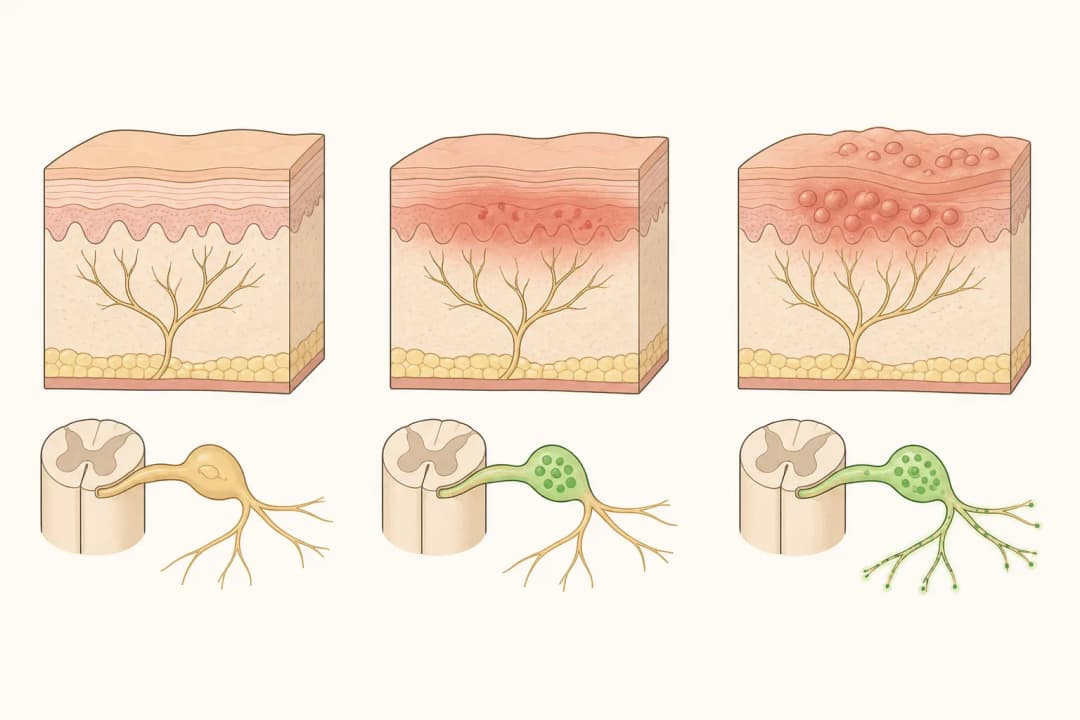
Shingles, or herpes zoster, occurs when the chickenpox virus becomes active again in a nerve. It usually causes pain, tingling, or burning followed by a stripe of blisters on one side of the body. The rash can affect the face or eye area, where prompt medical assessment is especially important.
Symptoms of shingles
Shingles very commonly presents with painful skin and clusters of blisters. Burning skin, sensitivity, itching, headache, tiredness, or fever may appear before or during the rash. Chest pain can occur when the rash follows a chest nerve, but new or severe chest pain must be assessed urgently because it can have causes unrelated to shingles. The rash usually does not cross the body's midline.
What causes it?
After chickenpox, the virus remains inactive in nerve tissue. Later reactivation produces inflammation along that nerve and changes in the skin it supplies. A person with shingles can pass the virus to someone who has never had chickenpox or vaccination through direct contact with blister fluid; that person would develop chickenpox rather than shingles.
How shingles develops
Pain or altered sensation may precede the rash. Blisters then appear, become cloudy, and crust as the skin heals. Avoid scratching and keep the rash covered when possible. Pain can continue after the skin clears, known as postherpetic neuralgia, and needs clinical management if it interferes with sleep or daily activity.
Who is at greater risk?
Risk rises with increasing age and with conditions or medicines that weaken immune responses. Previous chickenpox is the usual background for reactivation. A person can develop shingles even without remembering chickenpox, so absence of that memory does not exclude it.
How it is diagnosed
A clinician usually recognises shingles from the one-sided pattern, nerve-related pain, and grouped blisters. If the rash is atypical, a sample from a blister may help confirm the cause. Face, eye, ear, or widespread rashes require prompt assessment because nerve involvement can threaten function.
Treatment options
Antiviral treatment can limit viral activity and is most useful when started promptly after symptoms begin. A GP consultation can assess the rash, pain, medicines, and any risk to the eye or other nerves. Pain relief and gentle skin care may also be advised. Do not apply unprescribed creams to open blisters.
Caring for the rash
Keep blisters clean and dry, wear loose clothing, and wash hands after touching the area. Avoid direct contact between the rash and pregnant people who have not had chickenpox, newborns, and people with weakened immunity until lesions have crusted. Rest and use prescribed pain treatment as directed.
Complications and urgent signs
Possible problems include prolonged nerve pain, bacterial infection of broken skin, and eye or ear complications. Seek urgent help for a rash near the eye, vision change, facial weakness, hearing change, confusion, severe headache, weakness, or breathing difficulty. Treat new chest pain as an emergency symptom rather than assuming it is shingles.
Prevention
Shingles vaccination can reduce the chance of shingles and related nerve pain for eligible people; suitability depends on age, health, and local guidance. Vaccination does not treat an active rash. Ask a clinician about the appropriate schedule and any precautions.
Getting specialist help
A GP can assess a new painful blistering rash and arrange treatment quickly. Dermatology or eye review may be needed for an atypical rash, persistent pain, or involvement of the face, eye, or ear. Take a list of medicines and mention immune conditions.
Questions people ask
Can shingles spread to another person?
The rash does not spread shingles, but blister fluid can transmit the virus to someone without immunity, causing chickenpox.
When should I seek urgent care?
Seek urgent assessment for a rash near the eye, vision changes, facial weakness, severe illness, widespread blisters, or new severe chest pain.
Related
Related reading
Keep reading
Find care
General Clinics & Polyclinics in Dubai
Where shingles: symptoms, treatment and when to get help is assessed depends on what is causing it. These are licensed general clinics & polyclinics listed in Dubai.
Elite Business Bay Residence - Shop 03 & 04, 34 Marasi Dr - Business Bay - Dubai - United Arab Emirates
Accepts: Tabby
Airport View Building, Al Garhoud, Dubai
Accepts: Daman, Thiqa, AXA, Cigna +25 more
IBIS Building, 5th Floor, Unit 5003, Deira, Dubai
Accepts: AXA, Cigna, MetLife, Allianz Care +18 more
- Aarna Elite Medical CenterVerified
Madeira Building, Shop 1 & 2, Al Jadaf, Dubai, UAE
Ordered by verification status and how complete each clinic's public record is, then alphabetically. This is a directory listing, not a ranking — Zavis does not rate or recommend providers.
A factual listing drawn from the UAE health regulators' public licence registers. It is not a referral, an endorsement, or advice that any of these providers is right for you.
Medical disclaimer. This page is general health information, not medical advice, and it cannot diagnose you. Always consult a licensed healthcare provider about your own symptoms and treatment. In an emergency in the UAE, call 998 for an ambulance.