
Osgood-Schlatter Disease
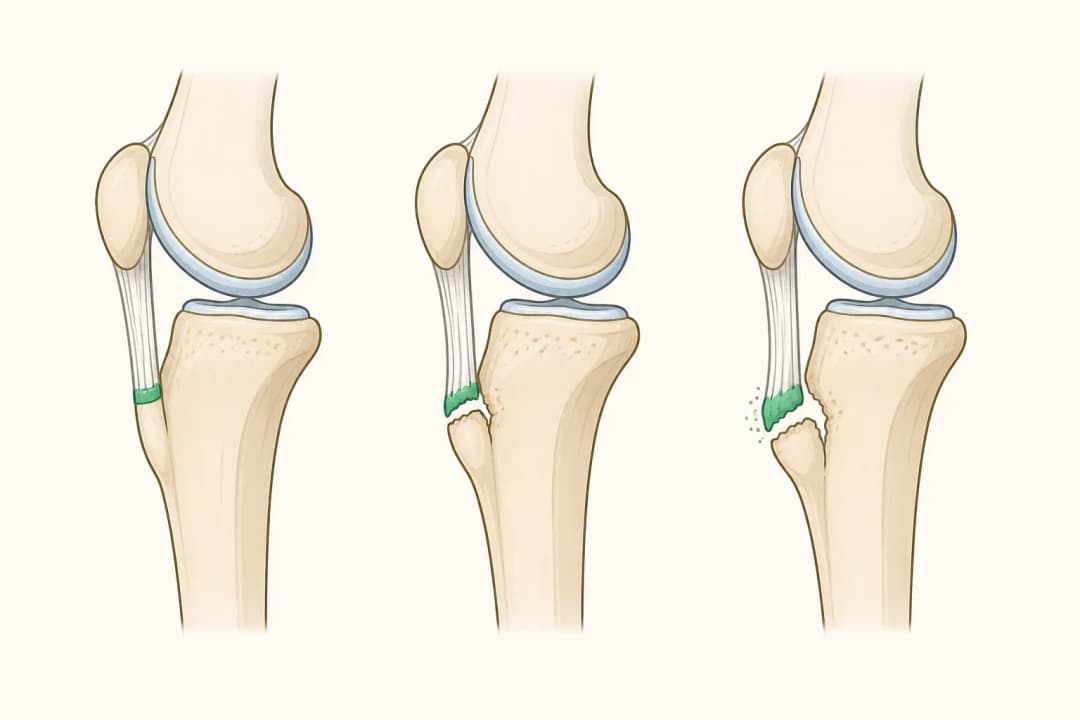
At a glance
- Also known as
- Tibial tubercle apophysitis
- Typical location
- The bony bump just below the kneecap
- Common trigger
- Repeated running, jumping, or kicking during growth
What is Osgood-Schlatter disease?
Osgood-Schlatter disease is irritation of the growth area beneath the kneecap where the tendon attaches to the shin.
It is also called tibial tubercle apophysitis or the knee bump in teenagers. It commonly appears during periods of growth when running and jumping place repeated traction on this area. The condition is usually managed without surgery, with activity adjusted to the child’s symptoms.
Symptoms
Pain and tenderness are usually located at the bony prominence just below the kneecap. The area may look or feel more prominent, and discomfort can increase with running, jumping, kneeling, squatting, or climbing stairs. Kneecap Pain may be described more generally, so the exact location matters during assessment.
Some children also report aching after sport or stiffness when they first move. Growing Pains are typically felt in the muscles of both legs at night, so pain focused at one tender bump with activity deserves a separate assessment.
Possible causes
The quadriceps muscle pulls through the kneecap tendon onto the shin during activities such as sprinting, jumping, and kicking. Repeated loading can irritate the developing attachment point, particularly while the bones and soft tissues are changing during growth.
Course and progression
Symptoms often come and go with training load. They may settle when activity is reduced and return after a sudden increase in running or jumping. The bony prominence can remain noticeable even after pain improves. A gradual return to sport is guided by comfortable movement, strength, and the ability to perform sport-specific tasks.
Factors that can increase risk
Risk is higher during a rapid growth phase and with sports that involve repeated sprinting, jumping, kicking, or deep knee bending. Tight thigh muscles, reduced hip or leg strength, poor recovery between sessions, and a sudden increase in practice can add load to the tendon attachment.
How it is diagnosed
A clinician asks about growth, sport, training changes, pain location, and activities that provoke symptoms. They examine the knee for tenderness at the tibial tubercle, swelling, range of motion, thigh flexibility, strength, walking, and movement quality.
The diagnosis is often clinical. An X-ray or other imaging may be considered after a significant injury, when symptoms are unusual, or when another knee problem needs to be excluded.
Treatment options
Treatment usually combines temporary activity modification with rehabilitation. Paediatric Physiotherapy can assess the child’s movement, adjust training demands, and prescribe progressive stretches and strengthening for the thigh, hip, and lower leg. The aim is to maintain fitness while avoiding repeated pain-provoking load.
Hot and Cold Therapy may provide comfort after activity; use a wrapped cold pack for a short period and protect the skin. A clinician or pharmacist can advise whether pain medicine is appropriate for the child, taking age, health conditions, and other medicines into account.
Living with symptoms
A child may be able to remain active by choosing lower-impact exercise while symptoms settle. Keep coaches and caregivers informed, warm up before sport, and increase one training demand at a time. Pain that changes walking or persists after rest is a reason to reduce the load and arrange review.
When symptoms need review
Seek medical assessment after a major injury, inability to bear weight, marked swelling, locking, fever, or pain that is not centred at the usual tender bump. A sudden pop with immediate difficulty straightening the knee also needs prompt review.
Reducing flare-ups
Increase sport volume gradually, include recovery time, and practise landing and running mechanics with appropriate coaching. Strengthening the hips and thighs, maintaining flexibility, and using footwear suited to the activity may reduce avoidable strain, although flares can still occur during growth.
Finding the right specialist
A paediatric physiotherapist can help balance sport participation with symptom control. A primary-care clinician, sports-medicine clinician, or orthopaedic specialist can assess persistent pain, an atypical location, or signs of another knee injury. Take the training schedule and a record of aggravating activities to the visit.
Questions people ask
Can a child continue playing sport?
Often, activity can be modified rather than stopped completely. The child should stay within tolerable symptoms and build back gradually with guidance.
Does the knee bump disappear?
The prominence may remain noticeable after the pain settles because it is part of the bone’s shape. Ongoing pain or changing symptoms should be reviewed.
Related
Related reading
Keep reading
Find care
Physiotherapy & Rehabilitation in Dubai
Where osgood-schlatter disease is assessed depends on what is causing it. These are licensed physiotherapy & rehabilitation listed in Dubai.
Office 1510, SIT Tower, Dubai Silicon Oasis, Dubai, United Arab Emirates
Accepts: Daman, Thiqa, AXA, Cigna +23 more
- Physio Expert DubaiVerified
Renew and Revive Polyclinic, Al Wasl Rd, opposite J3 Mall, Umm Suqeim 2, Dubai, United Arab Emirates
Accepts: Insurance accepted
Kent Healthcare LLC, Nashwan Building - 208C Al Mankhool Rd, Al Raffa, Dubai, United Arab Emirates
Accepts: Thiqa, AXA, Cigna, MetLife +23 more
Index Building, Nad Al Hamar Road, Dubai Festival City, Dubai
Accepts: Thiqa, AXA, Cigna, MetLife +30 more
Ordered by verification status and how complete each clinic's public record is, then alphabetically. This is a directory listing, not a ranking — Zavis does not rate or recommend providers.
A factual listing drawn from the DHA, DOH and MOHAP licence registers. It is not a referral, an endorsement, or advice that any of these providers is right for you.
Medical disclaimer. This page is general health information, not medical advice, and it cannot diagnose you. Always consult a licensed healthcare provider about your own symptoms and treatment. In an emergency in the UAE, call 998 for an ambulance.