
Meningitis
Updated
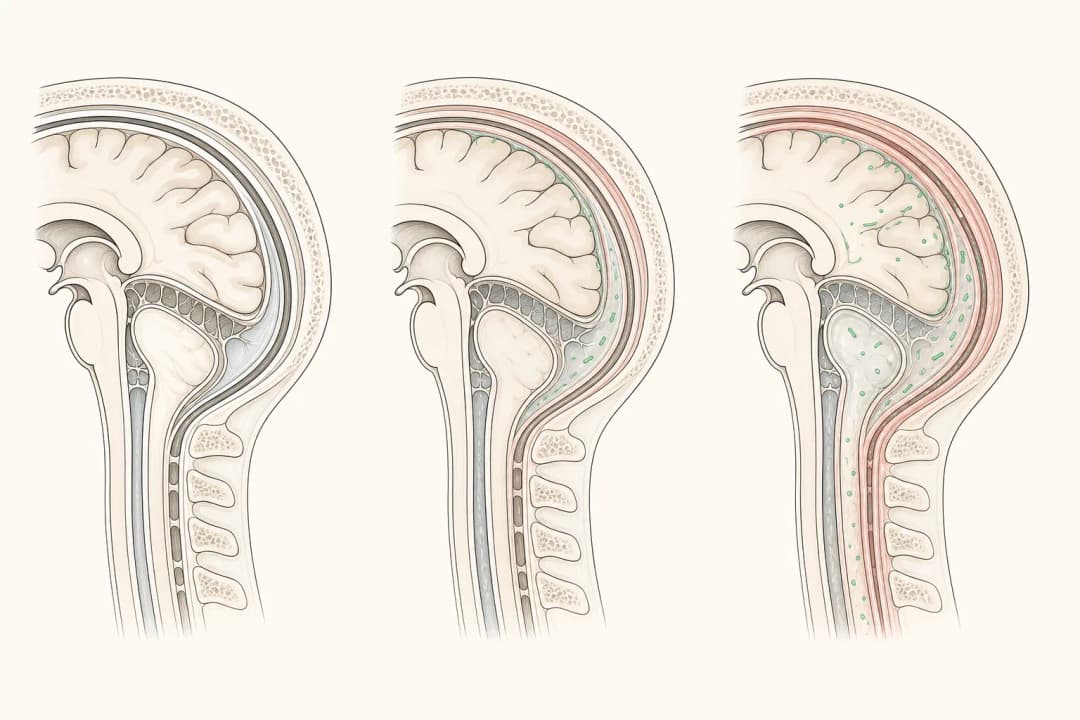
At a glance
- What it affects
- The lining around the brain and spinal cord
- Urgency
- Concerning symptoms need emergency assessment
- Prevention
- Vaccines protect against selected causes
Why meningitis is urgent
Meningitis is inflammation of the lining around the brain and spinal cord and needs urgent assessment when suspected.
It may be caused by an infection, though non-infectious causes exist. The illness can worsen quickly, so a person with concerning symptoms should be assessed urgently rather than waiting to see whether they settle.
Symptoms and warning signs
Neck stiffness is a very common presentation of meningitis. Fever, headache, light sensitivity, vomiting and seizures are common presentations. A person may also become drowsy, confused, unusually irritable, develop a rash, or have cold hands and feet.
Symptoms do not always arrive together. In babies and young children, poor feeding, a high-pitched cry, unusual sleepiness, a bulging soft spot or limpness can be warning signs. Seek emergency care immediately for a seizure, loss of consciousness, confusion, a rapidly worsening illness or a rash that does not fade under pressure.
Possible causes
Viruses and bacteria are common infectious causes. Bacterial meningitis can be particularly severe and is treated urgently. Fungi and other organisms can cause meningitis in particular circumstances, while some medicines, inflammatory disorders and cancers can cause non-infectious inflammation.
How illness may develop
The pace varies with the cause and the individual. Some viral cases improve with supportive care, while bacterial illness can deteriorate over a short period. Recovery may include fatigue, headaches, concentration difficulty, hearing changes or emotional adjustment, and follow-up helps address these needs.
Who may need closer attention
Age, an immune system weakened by illness or treatment, certain long-term conditions, a recent head injury or neurosurgery, and close exposure to some infections can affect risk. These factors are reasons to communicate symptoms early; they do not diagnose meningitis.
Tests used in hospital
Clinicians assess vital signs, mental state, skin, neck and neurological function. Blood tests can look for infection and inflammation. A lumbar puncture may examine fluid from around the spinal cord, while imaging may be used when it is needed to assess the brain safely. Treatment may begin before every result is available.
Treatment and monitoring
Care depends on the cause and severity. Hospital treatment may include antimicrobial medicine, fluids, oxygen, seizure treatment and close monitoring. Viral meningitis may need rest, fluids and symptom relief, but the decision belongs to the clinical team after urgent assessment. Do not use leftover antibiotics or delay emergency care.
After the acute illness
After discharge, follow the care plan and report new fever, worsening headache, confusion, seizure activity or reduced responsiveness immediately. Arrange support for rest and gradual return to routine. Hearing, balance, mood and concentration concerns can be discussed at follow-up.
Possible lasting effects
Some people recover without ongoing problems, while others need support for hearing, balance, seizures, memory, learning or mood changes. Early recognition of these changes allows referral for rehabilitation, audiology or other specialist care.
Reducing preventable risk
Recommended vaccines can protect against selected causes of meningitis. Follow local vaccination advice and seek clinical guidance after close exposure to an infection that may require preventive treatment. Hand hygiene and avoiding shared utensils when unwell can reduce spread of some infections.
Getting the right care
Suspected meningitis is an emergency, so contact emergency services or go to an emergency department. A GP can support follow-up after recovery, but should not replace urgent assessment of warning signs.
Questions people ask
Can meningitis start without every classic symptom?
Yes. Symptoms can vary, and urgent assessment is needed when a person is seriously unwell or has warning signs.
Is a stiff neck always meningitis?
No. Neck stiffness has other causes, but stiffness with fever, severe headache, confusion or drowsiness needs urgent medical assessment.
Related
Related reading
Keep reading
Find care
General Clinics & Polyclinics in Dubai
Where meningitis is assessed depends on what is causing it. These are licensed general clinics & polyclinics listed in Dubai.
Elite Business Bay Residence - Shop 03 & 04, 34 Marasi Dr - Business Bay - Dubai - United Arab Emirates
Accepts: Tabby
Airport View Building, Al Garhoud, Dubai
Accepts: Daman, Thiqa, AXA, Cigna +25 more
IBIS Building, 5th Floor, Unit 5003, Deira, Dubai
Accepts: AXA, Cigna, MetLife, Allianz Care +18 more
- Aarna Elite Medical CenterVerified
Madeira Building, Shop 1 & 2, Al Jadaf, Dubai, UAE
Ordered by verification status and how complete each clinic's public record is, then alphabetically. This is a directory listing, not a ranking — Zavis does not rate or recommend providers.
A factual listing drawn from the UAE health regulators' public licence registers. It is not a referral, an endorsement, or advice that any of these providers is right for you.
Medical disclaimer. This page is general health information, not medical advice, and it cannot diagnose you. Always consult a licensed healthcare provider about your own symptoms and treatment. In an emergency in the UAE, call 998 for an ambulance.