
Genitourinary Syndrome of Menopause
Updated
At a glance
- Main driver
- Lower oestrogen after menopause
- Common areas
- Vagina, vulva, urethra and bladder
- Treatment focus
- Restore comfort and reduce tissue irritation
What is genitourinary syndrome of menopause?
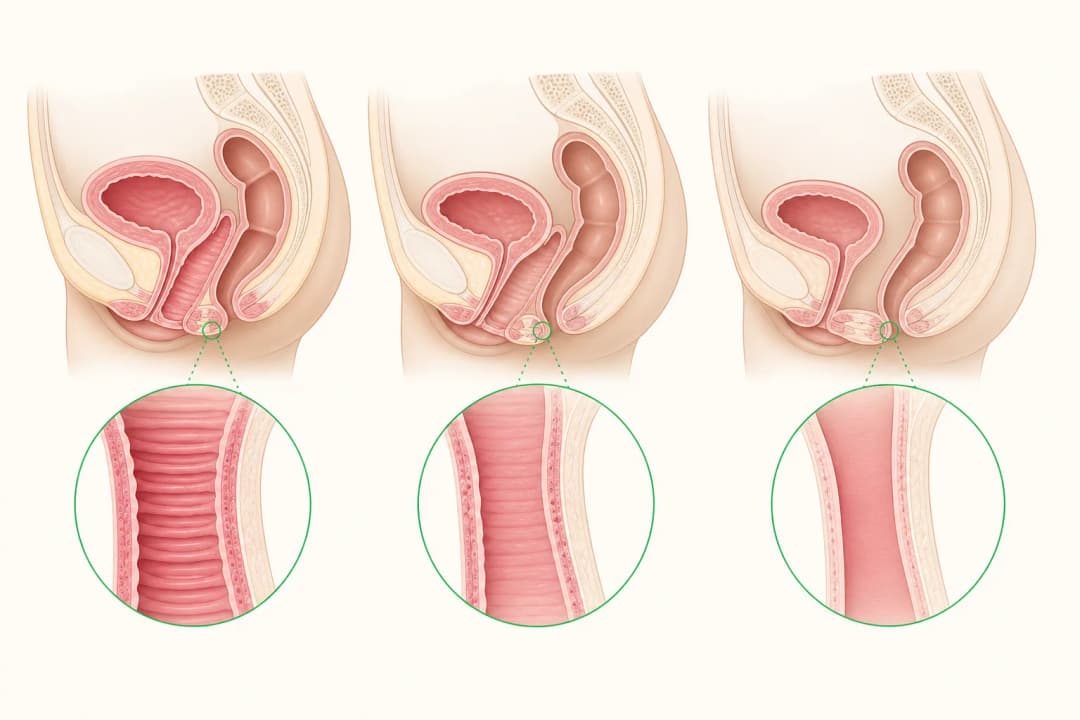
Genitourinary syndrome of menopause causes vaginal, vulval and urinary changes when lower oestrogen makes these tissues drier, thinner and less flexible.
Genitourinary syndrome of menopause, also called vaginal atrophy or GSM, describes changes in the vagina, vulva, urethra and bladder after oestrogen levels fall. The tissues may become drier, thinner and less elastic, while natural lubrication and blood flow can change. Symptoms can affect comfort, sex and urination.
Symptoms of GSM
Vaginal dryness and pain during sex are very common presentations of GSM. Vaginal itching, burning, soreness, urinary urgency, frequent urination or repeated urinary infections may also occur. Bleeding after sex can be a presentation of fragile vaginal tissue. Bleeding after menopause should always be assessed, even when GSM seems likely.
Why GSM develops
The main driver is reduced oestrogen during and after menopause. Similar changes can follow removal of the ovaries, some cancer treatments or medicines that lower oestrogen. Irritants such as fragranced washes can add to burning, but they are not the underlying cause.
How symptoms may progress
Without treatment, dryness and loss of elasticity may persist or gradually make penetration and pelvic examinations harder. Symptoms can vary from week to week. Starting care early, using suitable moisturising support and addressing pain can help protect comfort and sexual function.
Who is more likely to develop GSM?
Risk is higher after menopause and when ovarian oestrogen production is reduced by surgery, treatment or certain medicines. Smoking, reduced sexual activity and conditions that irritate the vulva may worsen symptoms, but GSM can affect anyone after hormonal change.
How GSM is diagnosed
Diagnosis usually starts with questions about dryness, pain, urinary symptoms, bleeding and medicines. A clinician may inspect the vulva and vagina and test urine when infection is possible. Bleeding after menopause requires assessment to identify causes beyond GSM; examination or further tests may be needed.
Treatment options
Treatment depends on symptoms, medical history and preferences. Vaginal moisturisers can support regular comfort, while lubricants may reduce friction during sex. Vaginal oestrogen therapy delivers oestrogen locally to affected tissues and may improve dryness, soreness and urinary symptoms. Vaginal dilator therapy can gradually support comfortable examination or penetration when tightness or pain is present. Ask about any unexplained bleeding before treatment.
Living with GSM
Use gentle, unscented products and avoid douching. Allow time for arousal, use lubricant for sexual activity and stop if pain increases. Pelvic-floor support can help when muscles tighten in response to discomfort. Discuss low sex drive or relationship strain openly; these are treatable parts of the experience.
Possible effects
Untreated symptoms may lead to painful sex, reduced intimacy, skin irritation and avoidance of examinations. Urinary symptoms can recur and affect sleep or confidence. Any bleeding after menopause needs prompt clinical review rather than being attributed to dryness alone.
Reducing symptoms
GSM cannot always be prevented because it follows hormonal change. Regular attention to dryness, avoiding irritants and treating symptoms early may limit discomfort. Keep a record of bleeding, urinary changes and treatments so new symptoms are recognised promptly.
Finding the right clinician
A menopause-focused gynaecologist, family doctor or specialist nurse can assess GSM and coordinate treatment. Take details of menopause timing, cancer history, medicines, bleeding and urinary infections. Ask when symptoms should be reviewed and what to do if bleeding returns.
Questions people ask
Is GSM the same as a vaginal infection?
No. GSM can cause itching, burning and urinary discomfort, but examination or tests may be needed to distinguish it from infection.
Should bleeding after menopause be checked?
Yes. Bleeding after menopause needs clinical assessment, even if dryness or GSM is also present.
Related
Related reading
Keep reading
Find care
Physiotherapy & Rehabilitation in Dubai
Where genitourinary syndrome of menopause is assessed depends on what is causing it. These are licensed physiotherapy & rehabilitation listed in Dubai.
Office 1510, SIT Tower, Dubai Silicon Oasis, Dubai, United Arab Emirates
Accepts: Daman, Thiqa, AXA, Cigna +14 more
- Physio Expert DubaiVerified
Renew and Revive Polyclinic, Al Wasl Rd, opposite J3 Mall, Umm Suqeim 2, Dubai, United Arab Emirates
Accepts: Insurance accepted
Kent Healthcare LLC, Nashwan Building - 208C Business Block, Al Mankhool Rd - above Emirates NBD Bank - Al Raffa - Dubai
Accepts: Thiqa, AXA, Cigna, MetLife +14 more
Index Building, Nad Al Hamar Road, Dubai Festival City, Dubai
Accepts: Thiqa, AXA, Cigna, MetLife +23 more
Ordered by verification status and how complete each clinic's public record is, then alphabetically. This is a directory listing, not a ranking — Zavis does not rate or recommend providers.
A factual listing drawn from the UAE health regulators' public licence registers. It is not a referral, an endorsement, or advice that any of these providers is right for you.
Medical disclaimer. This page is general health information, not medical advice, and it cannot diagnose you. Always consult a licensed healthcare provider about your own symptoms and treatment. In an emergency in the UAE, call 998 for an ambulance.