
Female Pattern Hair Loss: Signs, Diagnosis and Treatment
Updated
At a glance
- Medical name
- Female androgenetic alopecia
- Typical pattern
- Widening part and reduced crown density
- Scarring
- The typical condition is non-scarring
- Monitoring tip
- Compare consistent photographs over time
What is female pattern hair loss?
Female pattern hair loss gradually reduces hair density, often widening the central part while preserving the frontal hairline.
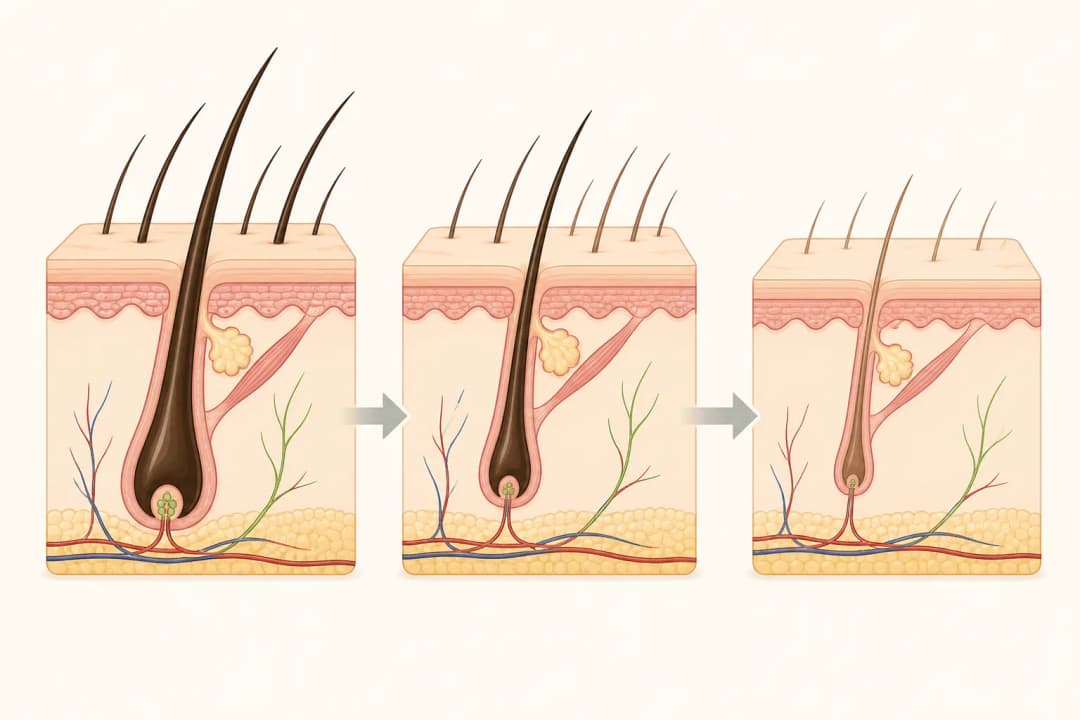
Its medical name is female androgenetic alopecia. Susceptible hair follicles produce progressively finer, shorter hairs, so the scalp becomes more visible even when individual hairs continue to grow. The condition does not cause scarring of the follicle.
What the pattern looks like
Female pattern hair loss commonly presents with reduced volume over the crown and a broader central part. A ponytail may feel thinner, and styling can become harder as hairs vary in thickness. The scalp usually looks normal rather than red, scaly or scarred.
Sudden handfuls of shedding, sharply defined bald patches, broken hairs, scalp pain or loss of eyebrows point toward another or additional cause and warrant assessment.
How follicle miniaturisation develops
Inherited follicle sensitivity and hormonal signalling contribute to gradual miniaturisation. Genetics can come from either side of the family, and a clear family history is not always present. The growth phase shortens over time, producing hairs that provide less scalp coverage.
Pattern loss can coexist with temporary shedding after illness, major stress, nutritional deficiency or hormonal change. Treating a second cause may improve that added shedding without removing the underlying pattern tendency.
How it changes over time
The change is generally gradual and may be easier to recognise in photographs than from day-to-day observation. Density can remain stable for periods and then decline further. Treatment aims to slow miniaturisation and preserve functioning follicles; any improvement requires continued monitoring and maintenance.
Who may be more susceptible
A family tendency increases susceptibility, and the pattern may become more noticeable with hormonal transitions and age. Signs such as irregular periods, new coarse facial hair or persistent acne can prompt evaluation for androgen excess. Tight hairstyles and chemical damage do not cause follicle miniaturisation, but they can add breakage or traction loss.
How the diagnosis is made
A dermatologist examines the distribution, hair-shaft thickness and scalp surface, often using magnification. Questions cover the pace of change, shedding, medicines, diet, recent illness, menstrual history and family patterns. A gentle pull test can help assess active shedding.
Blood tests may be selected when symptoms suggest anaemia, thyroid disease, nutritional deficiency or hormonal imbalance. A scalp biopsy is reserved for cases where the pattern is unclear or scarring alopecia must be excluded.
Treatment choices
Topical minoxidil is a common starting treatment. Early temporary shedding or scalp irritation can occur, and benefit is maintained only while treatment continues. Keep it away from the face and wash hands after application to limit unwanted hair growth elsewhere.
A dermatologist may consider oral minoxidil or spironolactone for selected patients after reviewing blood pressure, medicines, pregnancy plans and relevant health conditions. These prescriptions require individualized safety advice. Platelet-rich plasma, mesotherapy and hair transplantation may be discussed, but suitability and expected benefit vary with follicle health and diagnosis.
Hair care and confidence
Gentle detangling, lower-heat styling and looser hairstyles reduce avoidable breakage. Volumising cuts, scalp concealers, fibres, toppers or wigs can improve coverage without affecting medical treatment. Monthly photos in the same lighting and part position are more useful than daily hair counting for tracking gradual change.
Effects beyond density
Female pattern hair loss does not damage general physical health, but visible thinning can affect self-esteem, social comfort and mood. Anxiety about shedding may lead to frequent product changes that irritate the scalp. Emotional support is a valid part of care when hair loss is causing persistent distress.
Can progression be prevented?
Inherited susceptibility cannot be removed, yet early diagnosis may preserve more density by allowing treatment before miniaturisation advances. Avoid crash dieting, address identified deficiencies and reduce traction from tight styles. Supplements are not a substitute for testing because excess intake can also worsen hair concerns or interact with medicines.
Preparing for a dermatology appointment
Seek assessment when thinning is progressing, the cause is uncertain or the scalp has pain, scale or inflammation. Bring a medication and supplement list, details of recent illnesses or dietary changes, and older photographs showing the hairline and part. Mention pregnancy or plans to conceive because this changes which medicines are appropriate.
Questions people ask
Will female pattern hair loss cause complete baldness?
The usual pattern is progressive thinning over the top and crown rather than complete loss of scalp hair. Marked or unusual loss should be reassessed for another condition.
How soon can I judge whether treatment is helping?
Hair cycles change slowly, so visible response takes months rather than days. Your clinician can set a review point and compare standardized photographs, shedding and scalp findings.
Can I use hair-loss medicine while pregnant?
Some medicines used for pattern hair loss are unsuitable during pregnancy or while trying to conceive. Discuss current treatment and pregnancy plans with the prescribing clinician before use or continuation.
Related
Related reading
Keep reading
Find care
Dermatology & Skin Care in Dubai
Where female pattern hair loss: signs, diagnosis and treatment is assessed depends on what is causing it. These are licensed dermatology & skin care listed in Dubai.
Wafi Mall - 1st Floor - Code “B”/ Entrance - Gate 3 Oud Metha Rd - inside the mall - Umm Hurair Second - Dubai Healthcare City - Dubai - United Arab Emirates
Accepts: Insurance Accepted
- Dr. Faiez Ghanam ClinicVerified
Facing Old Dubai Zoo, Villa #6, 122 Jumeirah Beach Road, Jumeirah 1, Dubai, United Arab Emirates
Accepts: Daman, Thiqa, AXA, MetLife +14 more
Al Ferdous 4, Al Wasl Road 603, AL SAFFA FIRST, Dubai
Accepts: Daman, Thiqa, AXA, Cigna +15 more
The mall, Jumeira Street 856a, UM SUQAIM SECOND, Dubai
Accepts: Thiqa, AXA, Bupa Global, Dubai Insurance Company +5 more
Ordered by verification status and how complete each clinic's public record is, then alphabetically. This is a directory listing, not a ranking — Zavis does not rate or recommend providers.
A factual listing drawn from the UAE health regulators' public licence registers. It is not a referral, an endorsement, or advice that any of these providers is right for you.
Medical disclaimer. This page is general health information, not medical advice, and it cannot diagnose you. Always consult a licensed healthcare provider about your own symptoms and treatment. In an emergency in the UAE, call 998 for an ambulance.