
Cancer of Unknown Primary
Updated
At a glance
- Also known as
- CUP
- Key test
- Biopsy with imaging and tumour analysis
- Treatment focus
- The cancer’s location, cell type and biology
What is cancer of unknown primary?
Cancer of unknown primary, sometimes called CUP, is diagnosed when cancer cells are found but the original tumour cannot be located after appropriate investigations. Doctors can still learn about the cancer from a biopsy, scans, laboratory tests and the features of the cells. The results help guide treatment and explain what may happen next.
Symptoms and signs
Cancer of unknown primary may present with a new lump or swelling, a neck lump, or unexplained weight loss. A neck lump is a common presentation of cancer of unknown primary when cancer is found in lymph nodes in the neck. New lumps and swelling can reflect affected lymph nodes or another involved area, while weight loss may occur with illness. These symptoms also have many non-cancer causes, so they need assessment rather than self-diagnosis.
Why the primary tumour may not be found
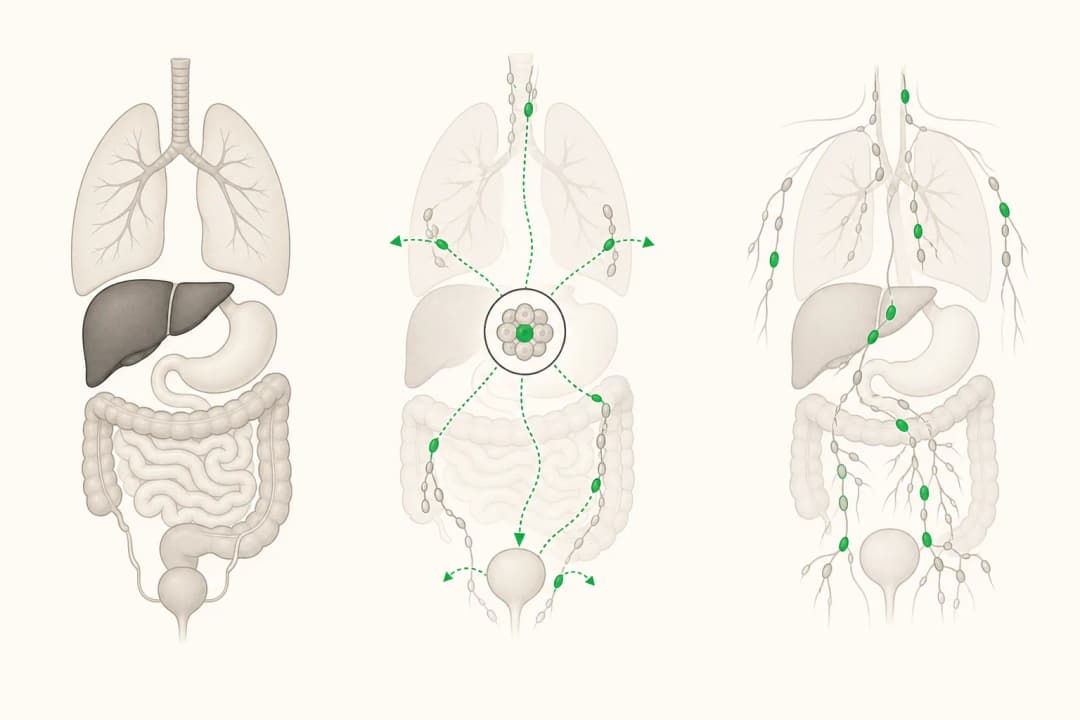
The starting tumour may be very small, may have changed after spreading, or may no longer be visible on scans. Cancer can also be discovered first in a lymph node, bone or another organ. A biopsy confirms that abnormal cells are cancerous; their appearance and molecular features may suggest the tissue type even when the starting site remains uncertain.
How it can progress
The course depends on where the cancer is found, how widely it has spread, its cell type and its molecular features. The care team may classify it into a group with a more predictable pattern or a less specific pattern. Follow-up appointments and repeat tests help show whether treatment is controlling the disease or whether the plan needs changing.
Risk factors
There is no single risk factor that explains every case of cancer of unknown primary. Risk can be influenced by the type of cancer cells, age, previous cancers, tobacco exposure, alcohol exposure and inherited or acquired genetic changes. Having a risk factor does not establish a diagnosis, and people without recognised risks can also develop cancer.
How it is diagnosed
Assessment usually starts with a physical examination, blood tests and imaging. A biopsy is examined by a pathologist, and additional stains or molecular tests may narrow the likely tissue of origin. A PET-CT scan can look across the body for areas of active disease. Genomic tumour profiling may identify changes that help match treatment to the cancer’s biology.
Treatment options
Treatment is chosen around the cancer’s location, cell type, extent and test results. It may include chemotherapy, surgery or radiotherapy for a particular area, and medicines selected for a molecular change when suitable. Chemotherapy treats cancer cells throughout the body. Your oncology team will explain the purpose, schedule, likely effects and how response will be checked.
Living with the diagnosis
Keep a written list of symptoms, medicines and questions for appointments. Tell the team about appetite changes, fatigue, nausea, pain or emotional distress because supportive care can address these alongside cancer treatment. A balanced routine, gentle activity when appropriate and help from trusted people can make appointments and treatment easier to manage.
Possible complications
Complications depend on the organs involved and the treatment used. They may include pain, pressure on nearby structures, reduced appetite, fatigue or changes in organ function. New weakness, breathing difficulty, confusion, uncontrolled pain or inability to keep fluids down needs prompt medical advice; sudden severe symptoms require urgent care.
Can it be prevented?
Because the original tumour is not identified, there is no specific prevention method for cancer of unknown primary. General cancer-risk reduction includes avoiding tobacco, limiting alcohol, protecting skin from excess ultraviolet exposure and attending recommended screening. These steps support health but cannot prevent every cancer.
Finding specialist care
Care is usually coordinated by a medical oncologist with input from radiology, pathology, surgery and palliative or supportive-care professionals. Ask which test results define your cancer, what treatment goal is being considered and who to contact between visits. A second oncology opinion can help when the diagnosis or treatment choices remain unclear.
Questions people ask
Does an unknown primary mean the cancer cannot be treated?
No. Doctors can use the biopsy, spread pattern and molecular findings to select treatment even when the starting tumour is not located.
Why might more than one scan be needed?
Different scans show anatomy and activity in different ways, helping the team map disease and look for a possible primary site.
Related
Related reading
Keep reading
Cancer care in the UAE
Hospitals & Medical Centers in Abu Dhabi
Most UAE cancer care is delivered inside hospital services rather than by standalone oncology clinics, so these are licensed hospitals & medical centers listed in Abu Dhabi. Confirm the specific cancer service exists before you travel, and know that asking for a second opinion is routine.
Ahalia Hospital Musaffah Building - Musaffah - Musaffah Industrial - Abu Dhabi - United Arab Emirates
Accepts: Daman, Thiqa, AXA, Cigna +13 more
Al Ruwais Industrial City - Abu Dhabi - United Arab Emirates
Accepts: Daman, Thiqa, AXA, Cigna +18 more
Abu Dhabi, Abu Dhabi
Accepts: Daman, Thiqa, AXA, Cigna +21 more
Second opinions are routine in cancer care and asking for one does not affect your treatment. How to arrange a second opinion in the UAE.
Ordered by verification status and how complete each clinic's public record is, then alphabetically. This is a directory listing, not a ranking — Zavis does not rate or recommend providers.
A factual listing drawn from the UAE health regulators' public licence registers. It is not a referral, an endorsement, or advice that any of these providers is right for you.
Medical disclaimer. This page is general health information, not medical advice, and it cannot diagnose you. Always consult a licensed healthcare provider about your own symptoms and treatment. In an emergency in the UAE, call 998 for an ambulance.