
Topical Hydroquinone vs Tranexamic Acid for Melasma
At a glance
- Main distinction
- Hydroquinone acts directly on pigment production; tranexamic acid addresses pigment signalling.
- Essential support
- Light protection is part of treatment, not an optional extra.
- Review need
- Unexpected colour change or significant irritation needs prompt clinical advice.
Find care
General Clinics & Polyclinics in Abu Dhabi
Licensed general clinics & polyclinics listed in Abu Dhabi. Appearing here means a provider holds a UAE licence in this category — not that it offers topical hydroquinone vs tranexamic acid for melasma, which is worth confirming with the clinic before you book.
27 Ar Ruwwad St - Shakhbout City - MSH4 - Abu Dhabi - United Arab Emirates
Accepts: Daman, Thiqa, Cigna, MetLife +20 more
Al Ruwais, Al Dhafrah
Accepts: Daman, Thiqa, AXA, Cigna +16 more
Al Bahyah - Al Bahyah Old - Abu Dhabi - United Arab Emirates
Accepts: Daman, Thiqa, Cigna, Allianz Care +18 more
Abu Dhabi
Accepts: Daman, Thiqa, AXA, Cigna +27 more
The New EMI State Tower - 3rd Floor 303 Kan’ad Street - Hamdan Bin Mohammed St - Al Danah - Zone 1 - Abu Dhabi - United Arab Emirates
Accepts: Daman, Thiqa, Cigna, MetLife +22 more
Taj Resorts RV-1, Al Nasser Properties - Mafraq-2 - Mafraq Industrial Area - Abu Dhabi - United Arab Emirates
Accepts: Daman, Thiqa, AXA, Cigna +14 more
Ordered by verification status and how complete each clinic's public record is, then alphabetically. This is a directory listing, not a ranking — Zavis does not rate or recommend providers.
A factual listing drawn from the DHA, DOH and MOHAP licence registers. It is not a referral, an endorsement, or advice that any of these providers is right for you.
Two approaches to uneven pigment
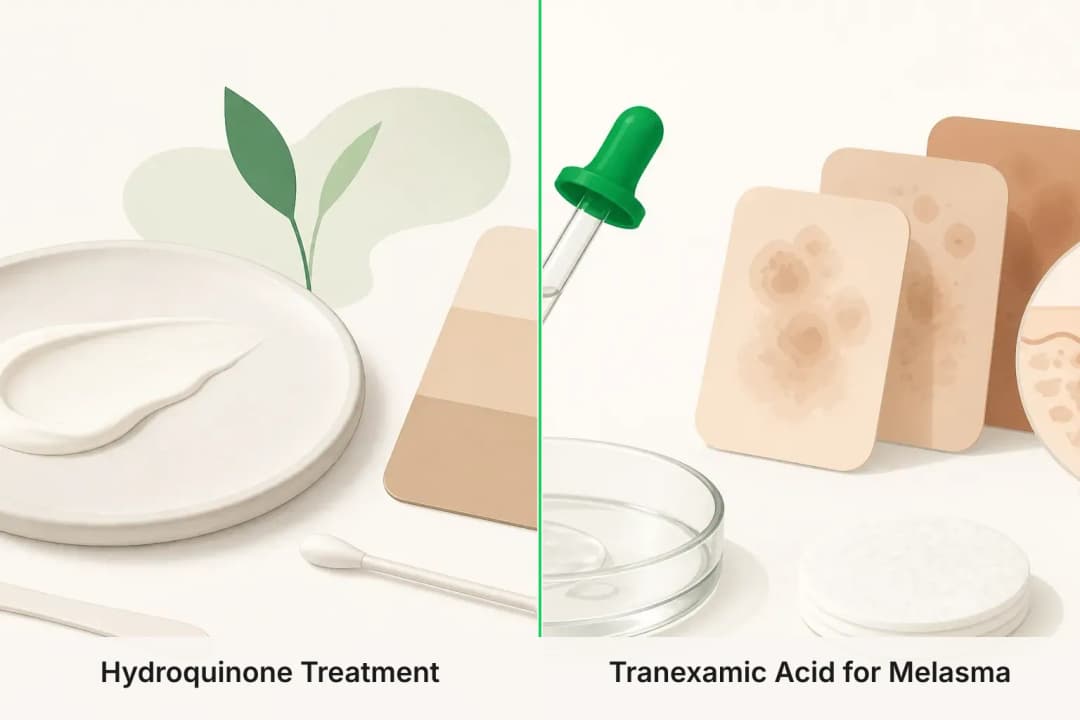
Melasma is influenced by pigment-producing cells and triggers such as sunlight and visible light. Hydroquinone works directly on pigment production in the skin. Tranexamic acid is used in selected plans to reduce signals that can sustain pigmentation. Neither option replaces consistent light protection, and the best choice depends on the pattern, skin sensitivity, previous treatment, and clinician assessment.
When hydroquinone may be considered
A clinician may consider topical hydroquinone when the diagnosis is melasma and a direct pigment-reducing treatment is appropriate. It is usually applied only as instructed and reviewed rather than used indefinitely. Irritation can make pigmentation more noticeable, so introduce no extra scrubs, acids, or lightening products without advice. Stop and seek guidance for marked redness, swelling, blistering, or a new unusual colour change.
When tranexamic acid may be considered
Tranexamic acid may be discussed when a clinician wants another way to address persistent pigment signalling, including for people who cannot tolerate or should not continue a particular topical course. The formulation and route matter; do not assume that a product intended for one route is suitable for another. Tell the clinician about clotting history, blood clots, stroke, migraine with neurological symptoms, pregnancy, and medicines that affect clotting.
Risks and protection from triggers
Hydroquinone can cause irritation and, with inappropriate prolonged use, a difficult-to-treat dark or blue-grey colour change. Tranexamic acid requires medical screening because clotting-related history and some medicines may affect whether it is suitable, particularly when treatment is not purely topical. Daily broad-spectrum sunscreen, shade, hats, and attention to heat and visible-light exposure support either plan. Patch testing or a gradual start may be advised for sensitive skin.
When pigment needs a fresh diagnosis
Not every brown or grey patch is melasma. A single changing spot, a lesion that bleeds or crusts, or pigment with significant itch or inflammation should be examined rather than treated with a lightening cream. Post-inflammatory pigmentation, medication-related changes, and other pigment disorders may need different management. If the pattern is unclear, diagnosis comes before choosing a pigment treatment.
How a clinician builds the plan
The recommendation is based on the pigment pattern, depth suggested by examination, skin tone, previous reactions, pregnancy status, medicines, and ability to maintain light protection. A clinician may select one treatment, combine compatible measures, or use a planned sequence with review. Melasma often needs maintenance because triggers can reactivate pigment. Ask how long to use the product, what changes should prompt a pause, and when progress will be reviewed. Explore [Hydroquinone Treatment](/treatments/medical-dermatology/topical-hydroquinone-therapy/) and [Tranexamic Acid for Melasma](/treatments/medical-dermatology/tranexamic-acid-for-melasma/).
Questions people ask
Can I use hydroquinone for as long as I want?
No. It should follow a clinician-guided course and review because prolonged or unsuitable use can cause irritation and persistent colour change.
Is tranexamic acid suitable for everyone with melasma?
No. A clinician must consider the formulation, route, clotting history, pregnancy, and medicines before recommending it.
Related
Related reading
Keep reading
Medical disclaimer. This page is general health information, not medical advice, and it cannot diagnose you. Always consult a licensed healthcare provider about your own symptoms and treatment. In an emergency in the UAE, call 998 for an ambulance.