
Pulsed Dye Laser Treatment vs Sclerotherapy
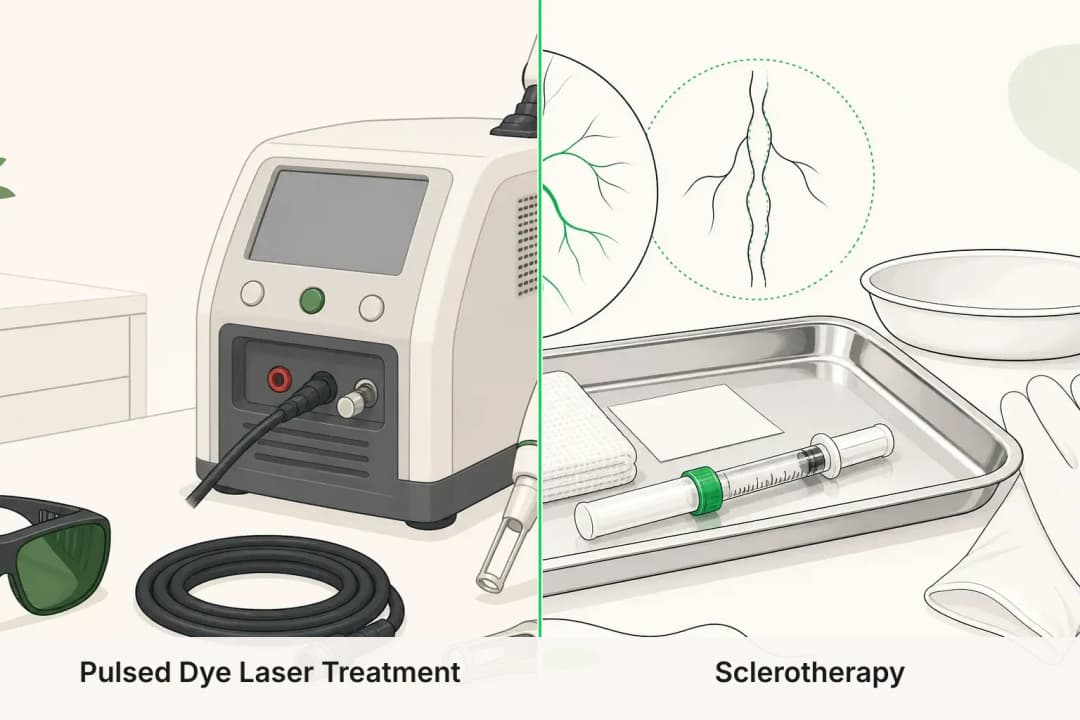
At a glance
- Treatment method
- Laser uses light through the skin; sclerotherapy uses an injected solution.
- Assessment priority
- Leg symptoms can require circulation assessment before a cosmetic procedure.
- Aftercare
- Follow procedure-specific activity, skin-care, and sun-protection advice.
Find care
Dermatology & Skin Care in Dubai
Licensed dermatology & skin care listed in Dubai. Appearing here means a provider holds a UAE licence in this category — not that it offers pulsed dye laser treatment vs sclerotherapy, which is worth confirming with the clinic before you book.
Wafi Mall - 1st Floor - Code “B”/ Entrance - Gate 3 Oud Metha Rd - inside the mall - Umm Hurair Second - Dubai Healthcare City - Dubai - United Arab Emirates
Accepts: Insurance Accepted
Al Ferdous 4, Al Wasl Road 603, AL SAFFA FIRST, Dubai
Accepts: Daman, Thiqa, AXA, Cigna +24 more
The mall, Jumeira Street 856a, UM SUQAIM SECOND, Dubai
Accepts: Thiqa, AXA, Bupa Global, Dubai Insurance Company +10 more
The Arcade, 4 Street 8, Al Garhoud, Dubai
Accepts: Daman, Thiqa, AXA, Cigna +26 more
Office # 102, SMJ-1, 1st Floor - شارع الشيخ زايد - الصفا 1 - الصفا - دبي - United Arab Emirates
Accepts: AXA, Cigna, MetLife, Allianz Care +19 more
Commercial Entrance, The Onyx Tower - 2 Sheikh Zayed Rd - Al Thanyah Third - The Greens - Dubai - United Arab Emirates
Accepts: Daman, Thiqa, AXA, Cigna +23 more
Ordered by verification status and how complete each clinic's public record is, then alphabetically. This is a directory listing, not a ranking — Zavis does not rate or recommend providers.
A factual listing drawn from the DHA, DOH and MOHAP licence registers. It is not a referral, an endorsement, or advice that any of these providers is right for you.
Two different ways to treat visible vessels
Pulsed dye laser treatment targets blood within superficial vessels with light, while sclerotherapy uses an injected solution to close selected veins.
A laser treatment is performed from outside the skin, with short pulses directed at a mapped area. Sclerotherapy involves placing a prescribed solution into an appropriate vein using a fine needle. The visible vessel type, its depth, location, skin tone, and any symptoms are more useful for deciding than a preference for laser or injections alone.
When pulsed dye laser treatment may be considered
Pulsed dye laser treatment may be discussed for superficial red vessels or diffuse redness when a clinician considers the vessel pattern suitable for light-based treatment. It can be useful for people who prefer an external treatment and understand that the skin may look red or bruised while it settles.
Tell the clinician about a history of pigment changes, photosensitivity, cold sores near the treatment site, recent tanning, and any medicines or skin products that make your skin more reactive.
When sclerotherapy may be considered
Sclerotherapy may be considered for selected visible veins when an injection approach matches the vessel type and the clinician has assessed circulation. It can be a practical option when the concern is a vein rather than surface redness, particularly when the treating clinician can clearly map the area.
You may be asked about previous clots, pregnancy, allergy history, mobility, and any compression garment advice. Follow the individual aftercare instructions, including activity and sun-exposure guidance for the treated area.
Reactions and warning signs
Laser treatment can cause temporary redness, swelling, tenderness, bruising, blistering, or changes in skin colour. Sclerotherapy can cause local stinging, bruising, inflammation, skin staining, or small firm areas along a treated vein. Each procedure has uncommon but more serious complications that should be discussed during consent.
Urgent assessment is needed for sudden leg swelling, severe or worsening pain, chest pain, shortness of breath, coughing blood, a cold or pale limb, or rapidly spreading skin discolouration. These signs are driven by urgency and should not be watched at home.
When treatment should wait
Neither procedure should substitute for a vascular assessment when a leg is newly swollen, painful, warm, or has a non-healing sore. Visible veins can occur alongside vein disease, and symptoms such as persistent swelling or skin changes may need investigation before cosmetic treatment.
Active skin infection, an open wound, unexplained bleeding, or a new rapidly changing vascular-looking mark also needs assessment first. Do not attempt home injections or use unregulated vein-removal products.
How treatment selection is made
A clinician examines the vessels and asks whether they itch, ache, bleed, or change with standing. For leg veins, the review may include circulation history and whether imaging or referral is appropriate before a procedure. For facial redness, the pattern, triggers, and other skin findings help determine whether a laser is likely to address the visible concern.
The final plan balances vessel characteristics, medical safety, expected downtime, skin response history, and your treatment goals. Ask which changes are expected after the chosen procedure and which require same-day contact.
Questions people ask
Is a laser always used for spider veins?
No. A clinician chooses based on vessel characteristics, location, skin considerations, and whether circulation assessment is needed.
Can visible veins be treated if my leg is swollen or painful?
New swelling or pain needs timely medical assessment before cosmetic treatment, particularly when the limb is warm, discoloured, or symptoms are worsening.
Related
Related reading
Keep reading
Medical disclaimer. This page is general health information, not medical advice, and it cannot diagnose you. Always consult a licensed healthcare provider about your own symptoms and treatment. In an emergency in the UAE, call 998 for an ambulance.