
Physiotherapy vs Shockwave Therapy: Which May Help?
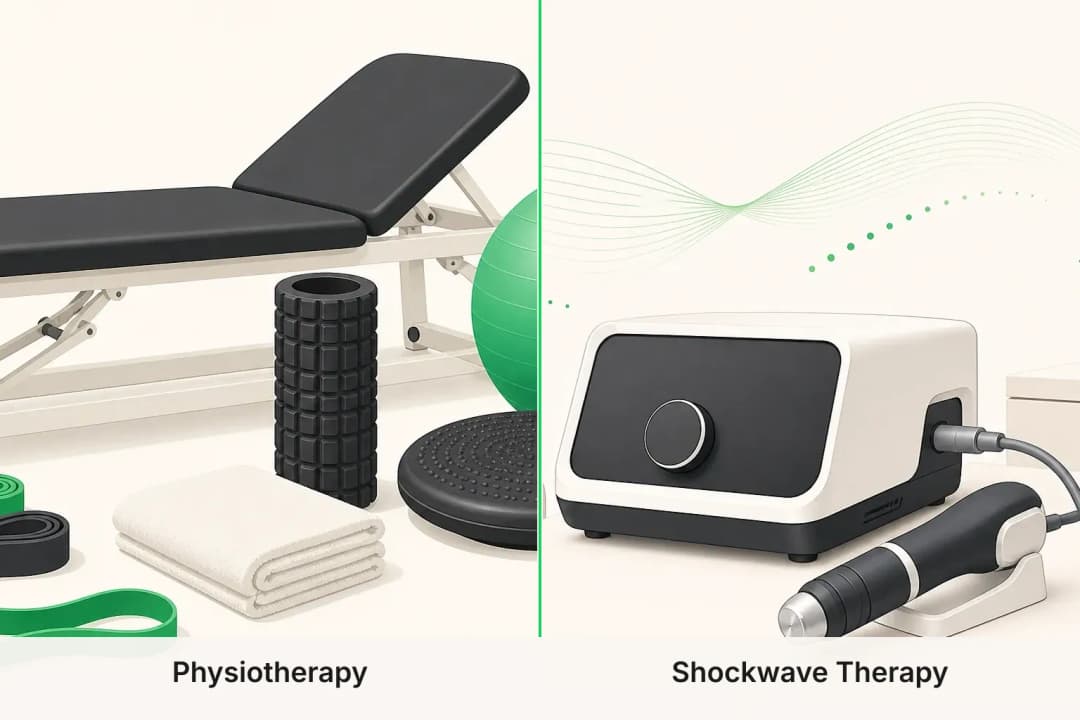
At a glance
- Physiotherapy
- A tailored programme centred on movement, function and progressive activity.
- Shockwave therapy
- Focused mechanical pulses delivered through the skin to a selected area.
- Can they be combined?
- Sometimes, when the diagnosis, safety checks and rehabilitation plan support that choice.
Find care
Physiotherapy & Rehabilitation in Dubai
Licensed physiotherapy & rehabilitation listed in Dubai. Appearing here means a provider holds a UAE licence in this category — not that it offers physiotherapy vs shockwave therapy: which may help?, which is worth confirming with the clinic before you book.
Office 1510, SIT Tower, Dubai Silicon Oasis, Dubai, United Arab Emirates
Accepts: Daman, Thiqa, AXA, Cigna +23 more
- Physio Expert DubaiVerified
Renew and Revive Polyclinic, Al Wasl Rd, opposite J3 Mall, Umm Suqeim 2, Dubai, United Arab Emirates
Accepts: Insurance accepted
Kent Healthcare LLC, Nashwan Building - 208C Al Mankhool Rd, Al Raffa, Dubai, United Arab Emirates
Accepts: Thiqa, AXA, Cigna, MetLife +23 more
Index Building, Nad Al Hamar Road, Dubai Festival City, Dubai
Accepts: Thiqa, AXA, Cigna, MetLife +30 more
x24-1, England Z St 41/a, WARSAN FIRST, Dubai
Accepts: Daman, Thiqa, AXA, Cigna +24 more
Hilal Bin Sultan, 19a Street 19, AL RIGGA, Dubai
Accepts: Daman, AXA, Cigna, MetLife +21 more
Ordered by verification status and how complete each clinic's public record is, then alphabetically. This is a directory listing, not a ranking — Zavis does not rate or recommend providers.
A factual listing drawn from the DHA, DOH and MOHAP licence registers. It is not a referral, an endorsement, or advice that any of these providers is right for you.
At a glance
Physiotherapy builds a broader recovery plan, while shockwave therapy delivers focused mechanical pulses to a selected painful area.
Physiotherapy is an active, adaptable programme that may combine assessment, movement practice, hands-on techniques, education and home exercises. Shockwave therapy is a focused treatment in which a device delivers mechanical pulses through the skin to a chosen area. They answer different clinical needs, and a clinician may use them together when appropriate.
When physiotherapy may be a better fit
A physiotherapy-led plan may suit you when pain affects walking, lifting, balance, posture or everyday tasks; when weakness or restricted movement is part of the problem; or when the cause needs a fuller functional assessment. The therapist can grade activity, teach safer movement, and review progress rather than treating only the sorest spot. This approach is also useful when recovery depends on changing habits, rebuilding capacity or returning gradually to sport or work.
When shockwave therapy may be considered
Shockwave therapy may be considered when a clinician has identified a local musculoskeletal problem and a focused treatment is appropriate, particularly when symptoms have persisted despite a suitable exercise plan or activity changes. It does not replace diagnosis or rehabilitation. The treated area can feel tender during or after a session, so the plan should explain how to pace loading and when to report an unexpected reaction.
Risks and practical limits
Physiotherapy can temporarily increase muscle soreness or joint discomfort when exercises are progressed. Poorly matched exercises, excessive loading or an unrecognised condition can delay recovery. Shockwave therapy can cause short-lived pain, tenderness, bruising, swelling or skin irritation around the treatment area. It may not be suitable in every situation, including some bleeding, nerve, pregnancy or implanted-device circumstances; the clinician should check your history and medicines first. Neither option should be used to push through severe, rapidly worsening or unexplained symptoms.
When neither should be the next step
A new major injury, visible deformity, inability to bear weight, progressive weakness, loss of bladder or bowel control, fever with a hot swollen joint, or pain after significant trauma needs timely medical assessment rather than a routine treatment choice. Persistent symptoms may also need a different diagnosis, imaging, medication review or specialist opinion before either therapy is selected.
How a clinician decides
The decision usually starts with the symptom pattern, examination findings, functional goals and likely tissue involved. The clinician considers how long the problem has been present, what has already been tried, medicines and health conditions, and whether the area can safely tolerate loading or pulses. Agree on a measurable goal, such as walking farther or using the arm more comfortably, then review the response. If a focused treatment is chosen, ask how it fits with exercise and what activity limits apply afterward.
Questions people ask
Is shockwave therapy a substitute for physiotherapy?
Usually not. Shockwave therapy targets a selected area, while physiotherapy addresses movement, strength, function and self-management; a clinician may combine them.
Which option should I choose first?
The safer starting point depends on the diagnosis, examination, goals, symptom duration and health history, so an assessment should guide the sequence.
Related
Related reading
Keep reading
Medical disclaimer. This page is general health information, not medical advice, and it cannot diagnose you. Always consult a licensed healthcare provider about your own symptoms and treatment. In an emergency in the UAE, call 998 for an ambulance.