
Palpitations vs Shortness of Breath
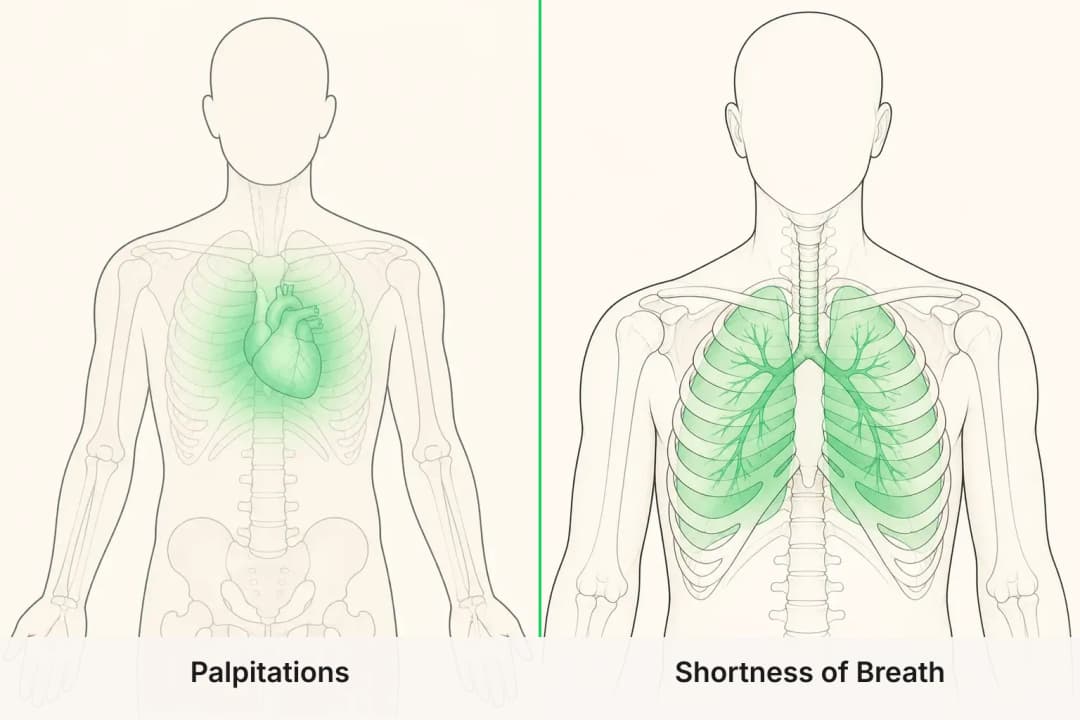
At a glance
- Palpitations
- Awareness of heartbeat
- Shortness of breath
- Breathing feels difficult or effortful
- Emergency signs
- Severe breathing difficulty, chest pain, fainting, or blue or grey lips
Find care
General Clinics & Polyclinics in Abu Dhabi
Licensed general clinics & polyclinics listed in Abu Dhabi. Appearing here means a provider holds a UAE licence in this category — not that it offers palpitations vs shortness of breath, which is worth confirming with the clinic before you book.
27 Ar Ruwwad St - Shakhbout City - MSH4 - Abu Dhabi - United Arab Emirates
Accepts: Daman, Thiqa, Cigna, MetLife +20 more
Al Ruwais, Al Dhafrah
Accepts: Daman, Thiqa, AXA, Cigna +16 more
Al Bahyah - Al Bahyah Old - Abu Dhabi - United Arab Emirates
Accepts: Daman, Thiqa, Cigna, Allianz Care +18 more
Abu Dhabi
Accepts: Daman, Thiqa, AXA, Cigna +27 more
The New EMI State Tower - 3rd Floor 303 Kan’ad Street - Hamdan Bin Mohammed St - Al Danah - Zone 1 - Abu Dhabi - United Arab Emirates
Accepts: Daman, Thiqa, Cigna, MetLife +22 more
Taj Resorts RV-1, Al Nasser Properties - Mafraq-2 - Mafraq Industrial Area - Abu Dhabi - United Arab Emirates
Accepts: Daman, Thiqa, AXA, Cigna +14 more
Ordered by verification status and how complete each clinic's public record is, then alphabetically. This is a directory listing, not a ranking — Zavis does not rate or recommend providers.
A factual listing drawn from the DHA, DOH and MOHAP licence registers. It is not a referral, an endorsement, or advice that any of these providers is right for you.
How the sensations differ
Palpitations are an awareness of the heartbeat, while shortness of breath is a feeling that breathing takes more effort.
Palpitations may feel like pounding, fluttering, skipping, or a fast rhythm in the chest, throat, or neck. Breathlessness can feel like air hunger, chest tightness, or difficulty taking a satisfying breath. They can happen separately or together, so timing and associated symptoms matter more than the label alone.
Focus on palpitations when the heartbeat change is central
Use the palpitations description when the most striking feature is a sudden awareness that the heart is racing, thumping, fluttering, or missing beats. Note whether it starts and stops abruptly, follows caffeine, nicotine, alcohol, stress, fever, poor sleep, or a new medicine, and whether your pulse feels regular.
A short diary can help a clinician: record the activity, body position, duration, pulse if available, and symptoms such as dizziness, chest discomfort, sweating, or breathlessness. Bring a medication and supplement list because some products can affect heart rate or rhythm.
Focus on shortness of breath when breathing limits activity
Use the shortness-of-breath description when the main problem is needing to pause while walking, climbing stairs, speaking, or lying flat because breathing feels difficult. Describe whether the feeling came on suddenly or gradually and whether cough, wheeze, fever, leg swelling, or chest pain is present.
Breathlessness can relate to the lungs, heart, blood, airway irritation, physical conditioning, or emotional stress. A change from your usual tolerance for everyday activity is useful clinical information, even if the sensation settles after rest.
When to seek urgent help
Seek emergency care now for severe or rapidly worsening breathing difficulty, chest pressure or pain, fainting, confusion, blue or grey lips, or palpitations with collapse. These features need prompt assessment because they can occur with serious heart or lung problems.
Arrange timely medical assessment for new recurrent palpitations, breathlessness at rest, symptoms that wake you from sleep, or swelling of the legs. Do not drive yourself if you feel faint, have severe symptoms, or cannot breathe comfortably.
When another description fits better
Chest pain, a cough, wheezing, dizziness, panic, fatigue, or ankle swelling may be more useful starting points when they are the dominant concern. A person may have more than one symptom, and choosing one word does not determine the cause.
If an episode follows exercise, illness, a stressful event, or an environmental exposure, include that context. It helps distinguish a brief response to a trigger from a pattern that needs wider assessment.
What a clinician may check
A clinician will usually ask about onset, triggers, medical history, medicines, and accompanying symptoms. They may listen to the heart and lungs, check pulse, blood pressure, oxygen level, and look for swelling or signs of infection.
Depending on the pattern, assessment may include an electrocardiogram, blood tests, or tests of lung function or imaging. The choice depends on what is found during the history and examination, not on one symptom alone.
Questions people ask
Can palpitations cause shortness of breath?
They can occur together. A fast or irregular heartbeat may be accompanied by breathlessness, and both symptoms deserve assessment when they are new, recurrent, or accompanied by warning signs.
What should I write down before an appointment?
Record when the episode began, what you were doing, how long it lasted, the heartbeat or breathing sensation, triggers, medicines, and associated symptoms such as chest discomfort or dizziness.
Related
Related reading
Keep reading
Medical disclaimer. This page is general health information, not medical advice, and it cannot diagnose you. Always consult a licensed healthcare provider about your own symptoms and treatment. In an emergency in the UAE, call 998 for an ambulance.