
Mid-urethral sling vs pelvic-floor physiotherapy
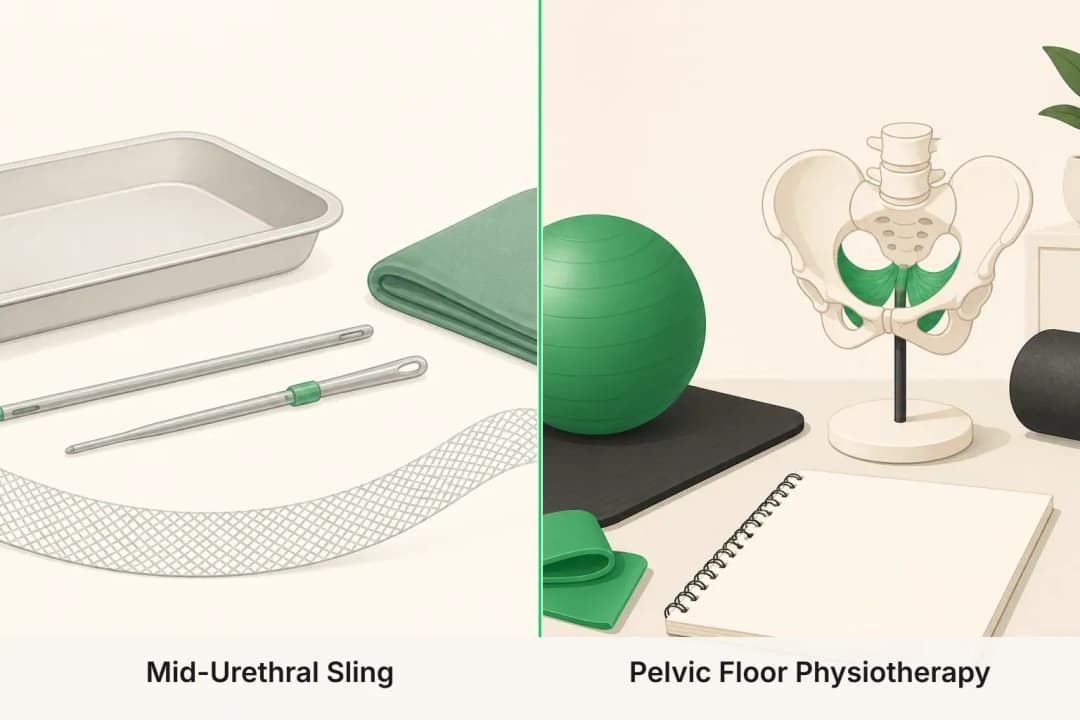
At a glance
- Sling
- Procedure-based urethral support.
- Physiotherapy
- Training for pelvic-floor control.
- Before choosing
- Confirm the type of leakage.
Find care
Physiotherapy & Rehabilitation in Dubai
Licensed physiotherapy & rehabilitation listed in Dubai. Appearing here means a provider holds a UAE licence in this category — not that it offers mid-urethral sling vs pelvic-floor physiotherapy, which is worth confirming with the clinic before you book.
Office 1510, SIT Tower, Dubai Silicon Oasis, Dubai, United Arab Emirates
Accepts: Daman, Thiqa, AXA, Cigna +23 more
- Physio Expert DubaiVerified
Renew and Revive Polyclinic, Al Wasl Rd, opposite J3 Mall, Umm Suqeim 2, Dubai, United Arab Emirates
Accepts: Insurance accepted
Kent Healthcare LLC, Nashwan Building - 208C Al Mankhool Rd, Al Raffa, Dubai, United Arab Emirates
Accepts: Thiqa, AXA, Cigna, MetLife +23 more
Index Building, Nad Al Hamar Road, Dubai Festival City, Dubai
Accepts: Thiqa, AXA, Cigna, MetLife +30 more
x24-1, England Z St 41/a, WARSAN FIRST, Dubai
Accepts: Daman, Thiqa, AXA, Cigna +24 more
Hilal Bin Sultan, 19a Street 19, AL RIGGA, Dubai
Accepts: Daman, AXA, Cigna, MetLife +21 more
Ordered by verification status and how complete each clinic's public record is, then alphabetically. This is a directory listing, not a ranking — Zavis does not rate or recommend providers.
A factual listing drawn from the DHA, DOH and MOHAP licence registers. It is not a referral, an endorsement, or advice that any of these providers is right for you.
The central difference
A mid-urethral sling supports the urethra with a procedure, while pelvic-floor physiotherapy builds coordinated muscle control through guided exercises.
Stress urinary incontinence causes leakage when pressure rises, such as with coughing, lifting or exercise. A sling is a procedure that places a supportive strip beneath the urethra. Physiotherapy uses assessment, education and personalised training to improve pelvic-floor contraction, relaxation and timing. The right starting point depends on severity, examination findings, goals and willingness to practise.
When a sling may be considered
A sling may be considered when leakage remains troublesome despite suitable conservative care, or when you value a procedure-based approach after discussing alternatives. A specialist assesses the type of incontinence, bladder symptoms, pelvic anatomy and previous operations. Tell the team if you may become pregnant, because future pregnancy can affect treatment planning.
When physiotherapy may be a good first step
Physiotherapy may fit if you prefer non-surgical care, have not yet had a structured programme, or need help identifying the correct muscles. A therapist can address breath holding, straining, urgency overlap, movement habits and pelvic-floor overactivity. Progress depends on accurate technique and consistent practice, not simply squeezing harder.
Risks and practical trade-offs
A sling can cause temporary discomfort, difficulty emptying the bladder, new urgency or infection; uncommon complications can involve the implant or nearby tissues. Physiotherapy usually avoids procedural risks but may not control leakage enough on its own, and incorrect exercises can increase tension or pain. Seek review for inability to pass urine, fever, worsening pelvic pain or blood in the urine.
When another assessment is needed
Neither option should be selected without confirming that leakage is stress incontinence. Urgency, continuous leakage, pelvic pain, recurrent infections, blood in urine, prolapse or neurological symptoms may point to another or additional problem. A bladder diary, examination and testing can clarify the pattern before treatment is chosen.
How the recommendation is shaped
A clinician considers the leakage pattern, impact on daily life, pelvic-floor findings, bladder emptying, prolapse, prior surgery, general health and pregnancy plans. Ask what improvement is realistic, how long to try supervised physiotherapy, what recovery involves after a sling, and what alternatives remain if the first choice does not help.
Questions people ask
Can physiotherapy still help after a sling?
It may help with muscle coordination, pressure management or remaining symptoms; your clinician or therapist can tailor the programme.
Is a sling suitable for every type of incontinence?
No. It is aimed at stress leakage, so urgency or other causes need separate assessment.
Related
Related reading
Keep reading
Medical disclaimer. This page is general health information, not medical advice, and it cannot diagnose you. Always consult a licensed healthcare provider about your own symptoms and treatment. In an emergency in the UAE, call 998 for an ambulance.